
Reviewed · SMITHSONIAN MUSEUM TOURS
Guided African American History Tour with Reserved Museum Entry
Washington’s monuments tell a familiar national story, but this tour asks you to look again. It connects the Lincoln and Martin Luther King, Jr. memorials with Black Lives Matter Plaza, Mary McLeod Bethune, the African American Civil War Memorial, and the National Museum of African American History and Culture.
I like the way the tour links major landmarks to less familiar figures, from Mary McLeod Bethune and Robert Smalls to Benjamin Banneker and Alice Ball. I also like the easy mix of bus travel and short guided walks. The main caution is the museum entry: it is not guaranteed, and the tour itself allows only about an hour there before you continue on your own.
- A history lesson with a clear route: The tour moves from the White House area to Lincoln Park, the memorials, and the Smithsonian museum.
- Strong guides make the difference: Guides including Dre, Elvis, Jeff, and De’Andre are praised for humor, detail, and the ability to answer unusual questions.
- Reserved museum access is the finale: You receive a complimentary timed-entry reservation after completing the city tour, then explore independently.
- A practical bus-and-walking format: Most outdoor stops last about 20 minutes, with live commentary during the drives.
- A thoughtful choice for families: The material can be adapted to children, teenagers, and older adults, though some subjects are serious.
- Plan around the clock: Arrive at least 20 minutes early, bring time for lunch, and expect a group of up to 55 people.
A Different Way to Read Washington’s Monuments
The tour begins at 10:00 a.m. at the United States Navy Memorial and Naval Heritage Center on Pennsylvania Avenue. You meet the guide and group there, then set off by bus and on foot. The bus provides a useful break between outdoor sites, especially if you are visiting Washington in hot, cold, or wet weather.
This is not simply a parade of famous statues. The guide frames each place through African American life and political struggle. That approach gives the familiar monuments more weight. You do not just see Lincoln as the president associated with emancipation or King as the voice of the Civil Rights movement. You get a broader discussion of what freedom meant in practice, who was left out, and how Black Americans shaped the country before and after those famous moments.
The group can reach 55 people, so this is not a private walk with constant conversation. Still, the strongest guides, especially Dre and Elvis, appear to handle a wide range of ages and questions well. You should expect a lively lecture with chances to ask questions rather than a quiet, intimate stroll.
From the Navy Memorial to Black Lives Matter Plaza
The Navy Memorial is mainly a meeting point, not the central subject of the tour. You receive an introduction there before walking toward the White House and Black Lives Matter Plaza. The plaza provides an immediate connection between past struggles and present public life.
At the White House, the stop is outside only. You will not enter the building, and admission is not part of the tour. The value here is the guide’s explanation of the area and its place in African American political history. The nearby plaza also gives the tour a modern setting for discussing protest, public speech, and the way Washington records national debate.
This first section is partly on foot, so comfortable shoes matter. The tour includes several walks and outdoor stops, even though the bus handles much of the distance. Listen closely during the opening section, because guides may introduce people and events that reappear at later monuments.
More African American history tours in Washington DC:
- African American History Tour with Museum of African American History Ticket
★ 4.5 · 390 reviews - Washington, DC: African American History Tour & Museum Entry
★ 4.9 · 312 reviews - Washington DC: Walking Tour and African American Museum
★ 4.6 · 157 reviews
Lincoln Park and the Figures Beyond the Famous Names
Lincoln Park brings two important works together: the Emancipation Memorial and the statue of Mary McLeod Bethune. The stop lasts about 20 minutes and is guided outdoors.
The Emancipation Memorial raises difficult questions about how emancipation was represented and who controlled the story. It is a useful place to consider the gap between a legal declaration and actual freedom. The guide’s role matters here, since a quick photograph tells you very little about the choices behind the monument.
The Bethune statue shifts attention toward Black leadership, education, and public service. Bethune was an educator and activist who became a major adviser in government. One guide described her as the highest-paid government adviser in United States history, a detail that helps show the scale of her influence.
I especially like this stop because it prevents the tour from becoming a procession of presidents and generals. You see how Black women helped shape public life, and you get a person to remember beyond the better-known names on the National Mall.
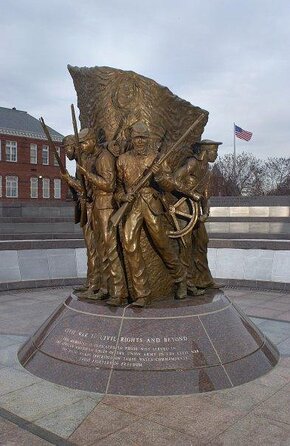
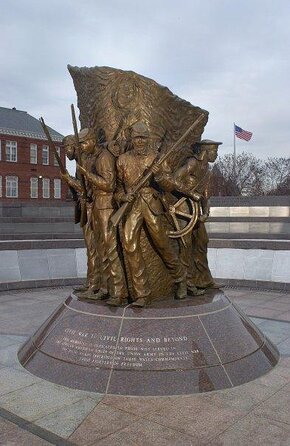
The African American Civil War Memorial and Museum
The tour continues to the African American Civil War Memorial and Museum. The scheduled commentary takes place outside, and admission to the museum itself is not included in this stop.
This is an important distinction. You are not getting a full museum visit here. Instead, the guide uses the memorial and exterior of the building to explain Black military service during the Civil War and the complicated road from military participation to citizenship.
The subject can correct a common omission in standard Civil War tours. Black men served in the Union Army, but the legal and social conditions surrounding that service were far from equal. One guide also discusses the fact that Black men had to pay to serve, a detail that adds uncomfortable complexity to the usual freedom narrative.
If you want to visit the museum inside, you would need to make separate plans. The tour’s included museum experience comes later at the National Museum of African American History and Culture.
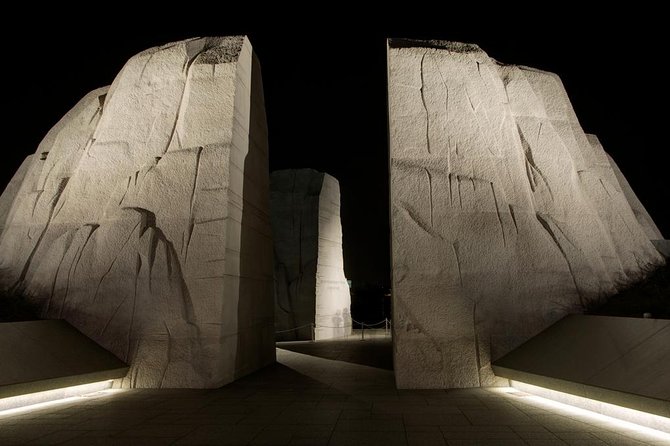
The Martin Luther King, Jr. Memorial
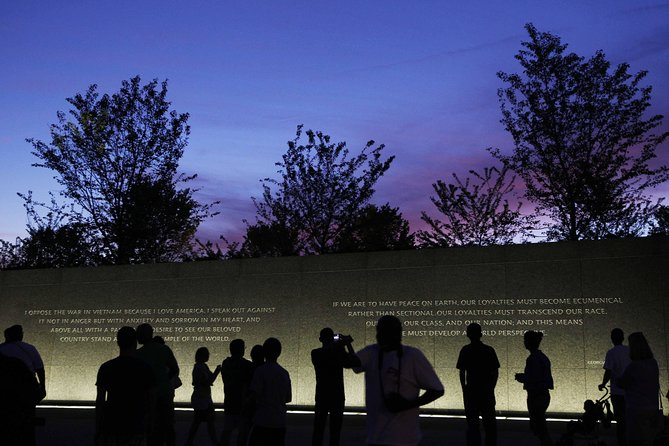
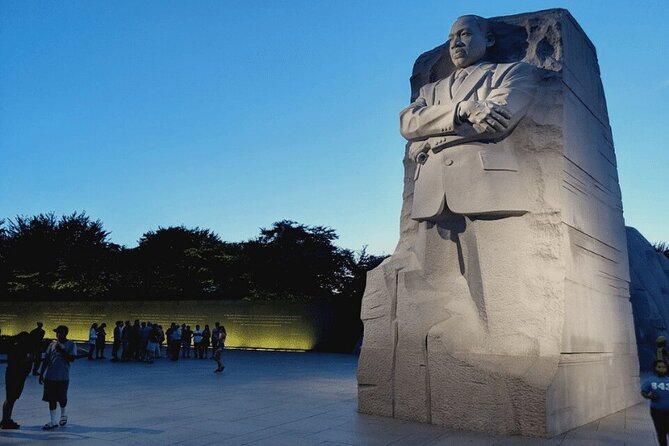
The Martin Luther King, Jr. Memorial is one of the tour’s main stops. You have about 20 minutes there with the guide, enough for an introduction, a close look at the memorial, and a discussion of King’s role in the Civil Rights movement.
The guide may place King within a larger network of organizers, writers, preachers, workers, and local communities rather than presenting him as a lone figure. That wider view is useful. It shows how public leaders depend on thousands of people whose names do not appear on the monument.
Some guides also connect King’s Washington story with Freedom Plaza and the march to the National Mall. You may hear about the King Suite at the Waldorf Astoria and other less familiar parts of his time in the city. The details vary by guide, but the overall goal is consistent: to connect the monument to the real work, planning, conflict, and sacrifice behind the Civil Rights movement.
The stop is outdoors, so the experience depends partly on the weather. You should also expect the guide to move the group along. Twenty minutes is enough for a focused visit, not for a long personal reflection or extended photography session.
More Smithsonian museum tours in Washington DC:
- Smithsonian Museum of Natural History – Exclusive Guided Tour
★ 5.0 · 446 reviews - Smithsonian Museums Walking Tour with Reserved Air & Space Entry
★ 5.0 · 297 reviews - Smithsonian Museum of American History Exclusive Guided Tour
★ 5.0 · 245 reviews - The Smithsonian National Air & Space Museum Exclusive Guided Tour
★ 5.0 · 214 reviews
Lincoln Memorial Through an African American Lens
The Lincoln Memorial follows, also with about 20 minutes of guided time. You see the famous seated statue and the steps associated with major speeches and demonstrations.
The guide uses Lincoln as a starting point for a more complicated discussion of emancipation. The Emancipation Proclamation did not free every enslaved person everywhere, and the political process did not end racial injustice. That distinction helps you understand why Lincoln can be both a symbol of freedom and part of a story that remained unfinished.
The memorial also connects to King’s 1963 speech and the broader Civil Rights campaign. Seen after the King Memorial, the sequence has a clear purpose. You first consider the promise of emancipation, then the long struggle to make that promise meaningful.
This is one of the tour’s most familiar locations, so you can visit it independently on another day if you want more time. On the tour, the advantage is context. You do not have to work out the connection between the statues, the speeches, and African American political history by yourself.
The Bus Commentary Adds the Missing Connections
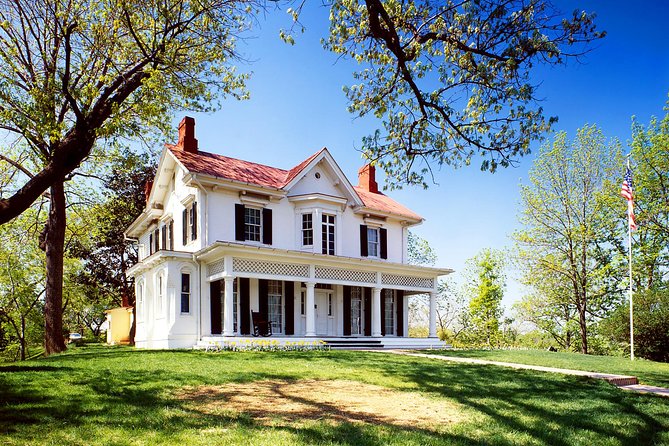
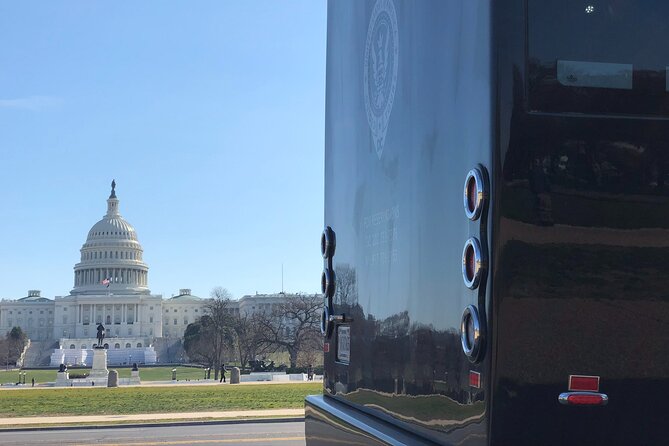
The bus is not just transport between photo stops. Live commentary continues on board, and this is where the route can expand beyond the monuments.
The guides bring in stories about people such as Robert Smalls, Benjamin Banneker, Jesse Russell, Alice Ball, Archer Alexander, and James Harvey III. You may also hear about Black surgeons connected to Abraham Lincoln, Freedman’s Village near Arlington, redlining, eminent domain, Herring Hill, NoMa, Chinatown, Georgetown, Howard University, and NASA’s Hidden Figures.
That range is one of the tour’s strongest features. It shows that African American history is not confined to a few memorials. It is part of the city’s neighborhoods, scientific work, military service, government, business, and public art.
The amount of detail can be both a strength and a challenge. A guide such as Dre may deliver a fast, fact-filled presentation that rewards careful listening. If you prefer a slow tour with one theme at a time, the material may feel dense. If you enjoy connecting people and events across centuries, the bus commentary gives the outing much of its value.
Guide quality is central. Dre is repeatedly singled out for his passion, humor, and ability to answer obscure questions. Elvis is praised for adjusting his presentation for children, teenagers, and older adults. Jeff, Antonio, De’Andre, and others are also named for their clear explanations and friendly manner. You cannot choose a specific guide unless the operator allows it, but the range of strong guide reports suggests that the human part of the tour matters as much as the route.
The National Museum of African American History and Culture
The tour ends at the National Museum of African American History and Culture on Constitution Avenue. The company provides a complimentary reservation for museum entry after the sightseeing portion is complete.
The stated museum visit is about one hour, but that is only the scheduled portion of the tour. You are welcome to explore the museum independently for the rest of the day if entry is available and you follow the museum’s rules. This makes the ending flexible. You can stay for more exhibits, leave for lunch, or return later according to your plans.
The museum reservation is useful because timed access can be difficult to arrange during a busy Washington visit. Yet you need to understand exactly what you are receiving. This is not an official Smithsonian tour, and the company does not have a special reservation agreement with the museum. It obtains public timed-entry passes, and museum entry is not guaranteed.
You may still face a wait at the museum. Availability can change, and the Smithsonian controls its own entry procedures. The museum reservation is therefore a helpful benefit, not a promise that removes all uncertainty. If the museum is the main reason you are booking, keep your schedule flexible and contact the Smithsonian directly with questions.
One practical detail matters: the museum entry is provided only after you complete the sightseeing tour. You cannot treat the bus tour as an optional prelude and simply use the booking for museum access.
Is $89 a Fair Price?
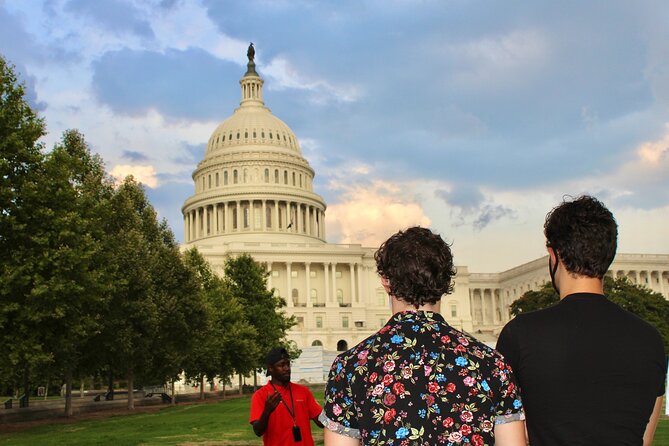
At $89 per person, the tour is not the cheapest way to see Washington’s monuments. You could walk between several sites for little money, and many memorials have no admission charge.
The price makes more sense if you value interpretation, transportation, and help with museum access. You are paying for about three and a half hours with a local guide, bus travel between scattered locations, bottled water, guided outdoor stops, and a public timed-entry reservation for the African American History and Culture Museum.
I would consider it good value for a first visit, for a family that wants structure, or for anyone who wants African American history placed at the center of a Washington sightseeing day. It is less attractive if you already know the monuments well, prefer exploring alone, or mainly want a long museum visit.
Group discounts may improve the price for larger parties. Lunch is not included, and the tour does not provide hotel pickup or drop-off. Allow extra time for food and for the museum after the formal city tour ends.
Who Will Get the Most From This Tour?
This experience suits you if you want more than names, dates, and photographs. It gives you a way to ask who built the city, who was excluded from its public story, and how African American achievements shaped national life.
Families can use it as an introduction to difficult subjects, though parents should be ready for discussions of slavery, war, segregation, racism, and political violence. The guides are reported to adjust their presentation for different ages, but the content remains serious.
It also works well for visitors with limited time in Washington. In one morning and early afternoon, you cover several key sites without navigating the city alone. The tradeoff is a fixed pace and limited time at each stop.
Most people can participate, and service animals are allowed. The tour is near public transportation, but hotel pickup and drop-off are not included. Arrive at least 20 minutes before the 10:00 a.m. departure for check-in and assigned seating. Seats are first come, first served, so arriving early is sensible if sitting with your group matters.
What to Know Before You Book
Bring comfortable shoes, water, and a plan for lunch. Bottled water is supplied, but food is not included. Snacks are allowed on the bus, though full meals are not.
Expect outdoor stops in addition to the bus ride. Weather can affect the schedule, and the experience requires good weather. If poor weather cancels the tour, you are offered another date or a full refund. The same applies if the minimum number of participants is not reached.
You can cancel for a full refund up to 24 hours before the start time. Cancellations or changes made within 24 hours are not refunded or accepted.
The overall rating is 4.7 from 1,180 ratings, with 92 percent recommending the experience. More important than the numbers is the repeated praise for the guides’ command of the subject, humor, and ability to make connections beyond the usual textbook story. The occasional complication is practical rather than cultural: museum access can change, and a large group may not feel personal.
Should You Book It?
Book this tour if you want a guided introduction to African American history in Washington and like the convenience of a bus connecting the major sites. The strongest reason to go is the guide’s interpretation, especially if you get someone such as Dre or Elvis, not simply the list of monuments.
Do not book it expecting a private tour, a full guided museum visit, or guaranteed Smithsonian entry. For most first-time visitors, families, and out-of-town visitors who want a meaningful framework for the city, $89 is a reasonable price. Keep the rest of the day open after the tour, and you can turn the museum stop into a longer, more independent visit.
FAQ
How long does the tour last?
The guided city experience lasts approximately 3 hours and 30 minutes. The museum portion is scheduled for about one hour, but you may explore the museum independently for the rest of the day if entry is available.
Where does the tour begin?
It begins at the United States Navy Memorial and Naval Heritage Center, at 701 Pennsylvania Avenue NW in Washington, DC.
What time should I arrive?
The tour starts at 10:00 a.m. You should arrive at least 20 minutes early for check-in.
Where does the tour end?
The city tour ends at the National Museum of African American History and Culture, at 1400 Constitution Avenue NW.
Is transportation included?
Yes. The experience includes bus transportation between parts of the route, along with live commentary on board. Hotel pickup and drop-off are not included.
Which landmarks are included?
The route includes Black Lives Matter Plaza and the White House exterior, Lincoln Park, the Emancipation Memorial, the Mary McLeod Bethune Statue, the African American Civil War Memorial and Museum exterior, the Martin Luther King, Jr. Memorial, and the Lincoln Memorial.
Is museum admission included?
The tour includes a complimentary reservation for entry to the National Museum of African American History and Culture after the sightseeing tour. Entry is not guaranteed, and the reservation is not an official Smithsonian tour.
Can I stay at the museum after the tour?
Yes. You may explore the museum independently for the rest of the day, subject to availability and the museum’s entry rules.
Is lunch included?
No. Lunch is not included. Snacks are allowed on the bus, but food is not allowed there beyond snacks.
What is the cancellation policy?
You can cancel at least 24 hours before the start time for a full refund. Cancellations or changes made less than 24 hours before the start time are not accepted and are not refunded.
More History Tours in Washington DC
- DC Monuments & History Guided E-Cart Tour-Blankets
★ 4.5 · 450 reviews - Historic Georgetown: History, Gossip, & Architecture Walking Tour
★ 5.0 · 321 reviews - DC’s Original Food and History Walking Tour
★ 5.0 · 255 reviews - Tastes of Georgetown Food & History Small Group Walking Tour
★ 4.5 · 203 reviews
More Museum Tours in Washington DC
- National Mall Tour with 10 Stops & U.S. Capitol or Museum Entry
★ 4.5 · 331 reviews - Capitol Combo: U.S. Capitol + Library Congress or Capitol Museum
★ 4.5 · 294 reviews - U.S. Capitol Tour with Library of Congress or Capitol Museum
★ 4.0 · 286 reviews - Museum of the Bible Admission Ticket
★ 4.5 · 233 reviews
Just added in Washington DC
- Washington DC: Express Morning or Night-Time Monuments Tour★ 3.2 · 3 reviews
- Washington, DC: Georgetown Architecture Walking Tour★ 5.0 · 8 reviews
- Washington D.C.: Georgetown Guided Secret Food Tour★ 3.9 · 7 reviews
- Washington DC: E-Bike Rental★ 4.3 · 7 reviews
- Washington DC: Christmas Eve Gourmet Brunch or Dinner Cruise★ 4.2 · 6 reviews
- Washington DC Day Tour – Private Tour★ 4.1 · 3 reviews
- Washington DC: After Dark Night-Time Sightseeing Tour★ 3.8 · 6 reviews
- Washington DC: Best of Capitol Hill Guided Bike Tour★ 3.2 · 7 reviews
Smithsonian Museum Tours, compared.
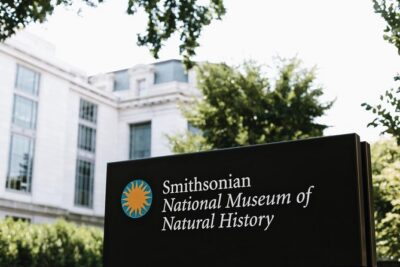
Smithsonian Museum of Natural History – Exclusive Guided Tour
Read our review →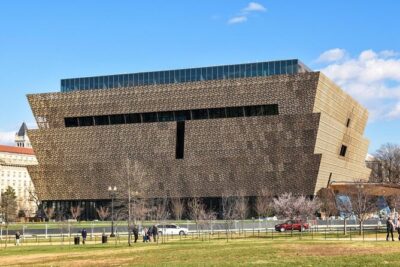
African American History Tour with Museum of African American History Ticket
Read our review →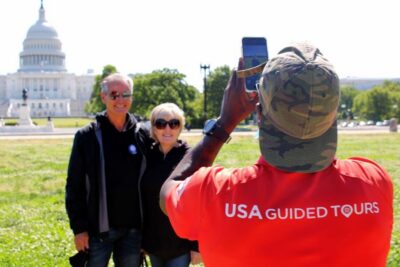

Smithsonian Museums Walking Tour with Reserved Air & Space Entry
Read our review →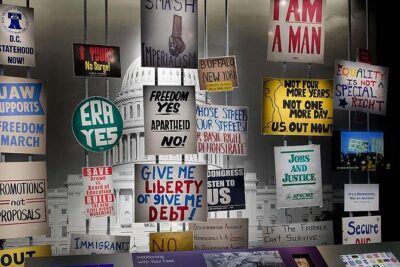
Smithsonian Museum of American History Exclusive Guided Tour
Read our review →
The Smithsonian National Air & Space Museum Exclusive Guided Tour
Read our review →
Smithsonian Museum of Natural History Small Group Tour: 8ppl Max
Read our review →
Smithsonian National Museum of Natural History Guided Tour
Read our review →Browse the lists this tour appears in