
Reviewed · SMITHSONIAN MUSEUM TOURS
Smithsonian Museum of Natural History Small Group Tour: 8ppl Max
The Hope Diamond is only the opening act. In two hours, a guide leads you through a museum holding 126.5 million objects, from Egyptian mummies and enormous mammals to a 45-ton whale replica and a live coral reef. The small group cap of eight makes it easier to ask questions and stay with the guide.
I like the way the tour gives you a clear route through a building the size of 18 football fields. I also like the guide-led storytelling, especially when guides such as Brenda, Leigh, Meghan, Richard, and Kate turn displays into memorable stories for children and adults. The trade-off is simple: two hours can introduce the museum, but it cannot cover every gallery.
Key points at a glance
- The Hope Diamond anchors the tour: See the famous blue 46-carat diamond, along with the Dom Pedro Aquamarine and other minerals.
- The group never exceeds eight people: That keeps the experience more personal than a large museum walk.
- The route covers a wide sweep of subjects: Expect mummies, gems, dinosaurs, mammals, ocean life, and the museum’s famous whale replica.
- The guide adds value beyond a map: Guides explain the stories behind objects and help you understand how the museum fits together.
- The museum admission itself is free: Your $89.67 pays for the two-hour guided experience, not entry to the building.
- Plan for walking and security: Wear comfortable shoes, bring only a small bag, and provide a mobile phone number with your country code when booking.
Making Sense of an 18-Football-Field Museum
Washington’s National Museum of Natural History is not a place you casually finish in an hour. Its galleries cover an immense range of time and subjects, and the building can easily leave you wandering from one display to another without a clear sense of priority.
That is where this tour earns its keep. Your art historian guide provides a route through the major sights, moving from minerals and ancient cultures to animals and the sea. You still see only a fraction of the collection, but the visit has shape and purpose.
The group size matters here. With no more than eight people, you are not trying to hear a guide over a crowd. You can ask about a particular object, pause for a closer look, or tell the guide that your children are more interested in dinosaurs than gems. Guides have been praised for adjusting their explanations to families, including Brenda’s ability to keep young children involved and Amanda’s attention to a grandson in one family group.
The museum admission is listed as free, so this is not a ticket that gets you through a locked door. You are paying $89.67 per person for direction, interpretation, and a more efficient two-hour visit. That makes the tour a better buy for a first visit or a short stay than for someone who enjoys wandering alone and reading every label.
More Smithsonian museum tours in Washington DC:
- Guided African American History Tour with Reserved Museum Entry
★ 4.5 · 1,180 reviews - Smithsonian Museum of Natural History – Exclusive Guided Tour
★ 5.0 · 446 reviews - African American History Tour with Museum of African American History Ticket
★ 4.5 · 390 reviews
The Hope Diamond and Washington’s Famous Minerals
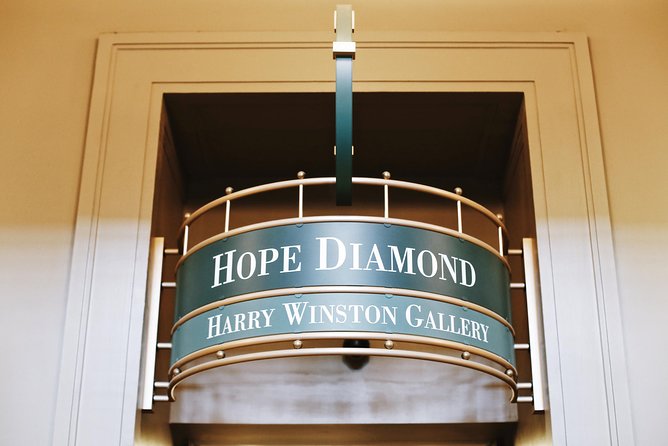
The mineral galleries provide the tour’s most sparkling beginning. The Hope Diamond is the headline object, a blue 46-carat stone with a long history of famous ownership, including Marie Antoinette.
The useful part of seeing it with a guide is the conversation around the stone. You get more than a quick look at a blue jewel behind glass. Guides have used the diamond to discuss its size, color, owners, and place in popular culture, while also pointing out other important specimens nearby.
The Dom Pedro Aquamarine gives the mineral section a second focal point. Described as the largest gem of its kind, it has a tall, glowing presence that looks very different from the compact Hope Diamond. Together, the two stones show why this gallery is not simply a room of expensive objects. Color, structure, size, and the way light travels through a mineral all change how you see it.
If jewelry and geology are not your main interests, this may be the least exciting part of the route. Still, the guide’s stories help keep the section from feeling like a parade of names and stones. The tour also moves on before one subject takes over the whole visit.
Egyptian Mummies and the Meaning of Death Rituals
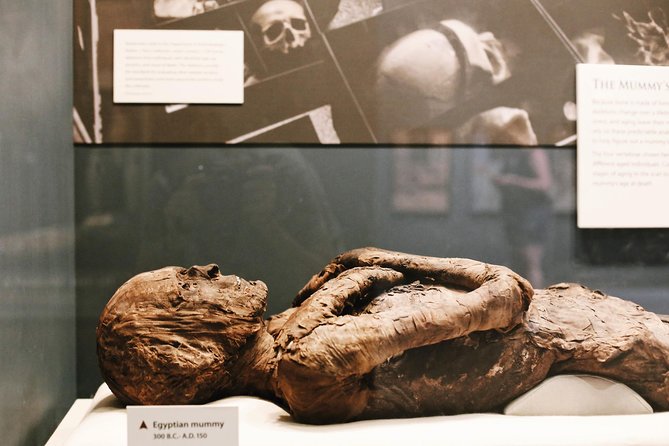
The Egyptian displays shift the mood. Here, the focus is not on glitter but on the ways people prepared for death and remembered the dead.
You will see real mummies from Ancient Egypt and learn about the rituals connected to them. This section gives the tour a human scale. Instead of looking only at an object’s age, you begin to think about the beliefs and customs behind it.
This is also one of the areas where a guide can make a major difference. A label may identify an artifact, but a clear explanation can connect the mummy to burial practice, religious ideas, and daily life. Kate’s tour, for example, used characters and role-play to help bring the museum’s story to life. That style may appeal to families, though visitors who prefer a quiet, self-directed visit may find it more theatrical than necessary.
The tour’s route through this area is part of its broader design. You move from stones formed by natural forces to people trying to understand death and the world beyond it. That movement across subjects is what gives a general museum tour its value.
Dinosaurs, Elephants, and the Museum’s Big Animals
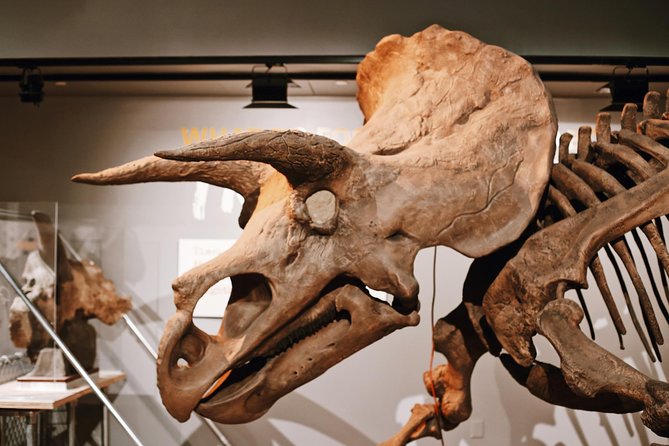
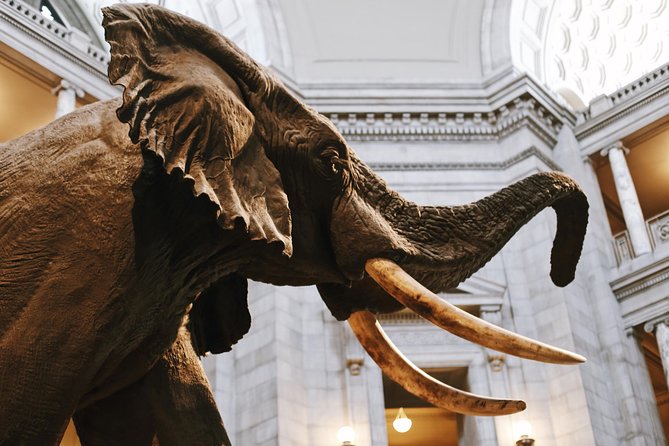
The animal halls provide the visual punch. You may see polar bears, elephants, giraffes, and dinosaurs, all arranged to show the variety of life on Earth.
The point is not simply to collect a list of famous specimens. Your guide helps connect the animals to the larger story of natural history. A child may come for the dinosaur displays, while an adult may be more interested in how the museum presents animal behavior, adaptation, or scientific study.
The T-Rex is one of the major highlights for many families, and the animal displays give children something immediate to enjoy even when the explanations become more detailed. Guides such as Tony and Brenda have been praised for keeping younger children interested while still offering useful information to adults.
The drawback is that popular exhibits can attract attention from many people at once. This is still a public museum, not a private room. A small group helps you stay organized, but it does not guarantee an empty gallery or uninterrupted time in front of every display.
More museum tours in Washington DC:
- National Mall Tour with 10 Stops & U.S. Capitol or Museum Entry
★ 4.5 · 331 reviews - Washington, DC: African American History Tour & Museum Entry
★ 4.9 · 312 reviews - Smithsonian Museums Walking Tour with Reserved Air & Space Entry
★ 5.0 · 297 reviews - Capitol Combo: U.S. Capitol + Library Congress or Capitol Museum
★ 4.5 · 294 reviews
Ocean Hall, a Coral Reef, and a 45-Ton Whale
The tour then leaves the land animals behind and reaches Ocean Hall. This is one of the most varied parts of the route, with a live coral reef exhibit and Phoenix, a 45-ton whale replica based on a real whale tracked by the museum.
The whale gives the gallery an instant sense of scale. It is hard to understand how large a whale is until you stand beneath or beside a full-size form. The coral reef display provides a very different experience, showing a living system rather than a single enormous animal.
This pairing makes Ocean Hall especially good for mixed-age groups. Children get a large, memorable object, while adults can spend time with the environmental and scientific displays. Since the guide controls the route, you get an introduction to the major sights without losing the thread of the visit.
Some museum rooms have quiet or restricted speaking rules. Your guide will explain those limits before you enter, so you should be ready to listen closely and save questions for a permitted area. That is a minor practical point, but it matters when you are used to chatting freely during a guided visit.
Why the Eight-Person Limit Matters
The small group format is the tour’s clearest practical advantage. Eight people is small enough for a guide to keep track of the group without turning the visit into a private tour priced for one party.
A smaller group also changes the rhythm. You can ask why a display matters, request a little more time at the Hope Diamond, or tell the guide which subjects interest your family. The strongest guide experiences described in the supplied material share this personal quality. Richard contacted his group by text beforehand, clarified the meeting plan, and adjusted his explanations during the visit. Meghan also tailored the tour to a visitor’s interests and continued answering questions after the main route.
The guide quality matters more than the small number alone. The experience includes a professional art historian guide, and the most successful guides combine facts with a good sense of pacing. Leigh has been praised for being articulate and entertaining, while Rebecca was valued for mixing humor with stories and adjusting to the group.
There is no guarantee that you will receive a particular guide. The named guides show the level of service the company has provided, but assignments can vary. If you want a highly interactive tour, tell the guide early what you hope to see.
What Two Hours Can and Cannot Do
Two hours is enough for a strong orientation. It is not enough to read every panel, visit every gallery, or study all 126.5 million objects. You should think of this experience as a guided introduction, followed by independent time if your schedule allows.
The route covers the museum’s headline material: minerals, mummies, major animals, dinosaurs, and ocean life. That broad selection works well for a first visit because you leave with a sense of the building’s range and a list of areas you may want to revisit.
Several people have found the tour especially useful because the museum is so large. One visitor who initially planned to explore alone felt better oriented after seeing much of the museum with a guide, then continued independently afterward. That is the ideal strategy if you have the time: use the two-hour tour to get your bearings, then return to the galleries that caught your attention.
If you have only a brief window in Washington, the guided route protects you from spending half your visit finding the next room. If you have an entire day and enjoy slow museum visits, you may prefer to use the free admission and explore without a guide.
Price, Timing, and Practical Details
The price is $89.67 per person, and the average booking lead time is 34 days. That advance pattern suggests you should not leave this experience until the final moment if your Washington schedule is fixed.
The main value is efficiency. The museum itself does not charge admission, so the fee is for the guide’s time and interpretation. For a family or couple who wants context and a planned route, that can be worthwhile. For a group of three, the total cost is significant, especially since one family found the price far higher than expected for what they thought would be a VIP experience. This is not a private Smithsonian tour, and it does not include hotel pickup or drop-off.
Meet at 1010 Madison Drive NW. You will need to arrange your own transport, with taxi or rideshare suggested. The tour ends back at the meeting point.
Wear comfortable clothing and shoes. A moderate amount of walking is involved, and a moderate level of physical fitness is expected. Wheelchair users and people with walking disabilities should note that accommodations are not provided.
Security rules also shape the visit. Large bags and suitcases are not allowed inside. Bring only a handbag or small, thin backpack. You must provide a mobile phone number with the country code when booking, which allows the operator to contact you about meeting arrangements.
The museum can sometimes close or delay opening without advance warning. If opening is delayed by more than an hour, an alternative will be offered, but the stated terms do not provide a refund or discount in that situation. Collections and room access can also change during the year.
Who Will Get the Most From This Tour?
I would choose this tour for a first-time Smithsonian visitor who wants an organized introduction rather than a full day of independent reading. It also suits families, since the guide can keep children moving while explaining the displays in an approachable way.
It is a good fit if you enjoy asking questions, want stories behind the objects, or have only two hours before another Washington plan. The small group gives you a better chance of personal attention than a large coach-style museum visit.
I would think twice if you already know the museum well, want to focus on one narrow subject, or expect a private VIP experience. You are sharing the route with up to seven other people, and the tour covers highlights rather than every collection.
Cancellation is free up to 24 hours before the start time. Within 24 hours, the cost is not refunded, and changes are not accepted.
Should You Book the Smithsonian Natural History Tour?
Book it if you want the museum to make sense quickly. The Hope Diamond, Egyptian mummies, dinosaurs, giant mammals, coral reef, and Phoenix the whale give you a strong cross-section of the collection, while the guide supplies the connections that labels alone cannot provide.
The best reason to pay $89.67 is not admission. It is the time saved and the chance to ask questions in a group capped at eight. I would especially recommend it to families, first-time visitors, and anyone who tends to feel lost in very large museums.
Skip it if you prefer to wander at your own speed or want an all-day examination of a few galleries. The museum is free to enter, and two hours will leave plenty unseen. For most first visits, though, this tour offers a useful route, lively explanations, and a better starting point for exploring the building on your own.
FAQ
How long does the Smithsonian Natural History Museum tour last?
The guided experience lasts approximately two hours.
How many people can join the tour?
The tour has a maximum of eight travelers.
What does the tour include?
It includes a two-hour visit with a professional art historian guide and a small group of no more than eight people.
Is museum admission included in the tour price?
The museum admission is listed as free. The $89.67 price covers the guided experience.
Where does the tour meet?
The meeting point is 1010 Madison Drive NW, Washington, DC 20004. The tour ends back at the meeting point.
Can I cancel for a full refund?
Yes. You can cancel at least 24 hours before the local start time for a full refund. Cancellations or changes made within 24 hours are not accepted for a refund.
More History Tours in Washington DC
- DC Monuments & History Guided E-Cart Tour-Blankets
★ 4.5 · 450 reviews - Historic Georgetown: History, Gossip, & Architecture Walking Tour
★ 5.0 · 321 reviews - DC’s Original Food and History Walking Tour
★ 5.0 · 255 reviews - Smithsonian Museum of American History Exclusive Guided Tour
★ 5.0 · 245 reviews
Just added in Washington DC
- Washington, DC: Georgetown Architecture Walking Tour★ 5.0 · 8 reviews
- Washington D.C.: Georgetown Guided Secret Food Tour★ 3.9 · 7 reviews
- Washington DC: Express Morning or Night-Time Monuments Tour★ 3.2 · 3 reviews
- Washington DC: E-Bike Rental★ 4.3 · 7 reviews
- Washington DC: Christmas Eve Gourmet Brunch or Dinner Cruise★ 4.2 · 6 reviews
- Washington DC Day Tour – Private Tour★ 4.1 · 3 reviews
- Washington DC: After Dark Night-Time Sightseeing Tour★ 3.8 · 6 reviews
- Washington DC: Best of Capitol Hill Guided Bike Tour★ 3.2 · 7 reviews
Smithsonian Museum Tours, compared.
Guided African American History Tour with Reserved Museum Entry
Read our review →
Smithsonian Museum of Natural History – Exclusive Guided Tour
Read our review →
African American History Tour with Museum of African American History Ticket
Read our review →

Smithsonian Museums Walking Tour with Reserved Air & Space Entry
Read our review →
Smithsonian Museum of American History Exclusive Guided Tour
Read our review →
The Smithsonian National Air & Space Museum Exclusive Guided Tour
Read our review →
Smithsonian National Museum of Natural History Guided Tour
Read our review →Browse the lists this tour appears in