
Reviewed · SMITHSONIAN MUSEUM TOURS
African American History Tour with Museum of African American History Ticket
Washington, DC makes more sense when you connect its grand monuments with the people who built, challenged, and changed the country. This small-group African American history tour does exactly that, moving from the Capitol and White House to the Lincoln and Martin Luther King, Jr. memorials, then into neighborhoods and landmarks many sightseeing tours skip.
I like the way guide Kenny turns facts into family stories, and I like the tour’s mix of famous sights and less familiar places such as LeDroit Park, Dunbar High School, and the African American Civil War Memorial. The same-day museum ticket is another strong point, especially since the National Museum of African American History and Culture can be difficult to fit into a busy DC visit.
The main consideration is the schedule. Frederick Douglass House visits are offered Tuesday, Wednesday, and Saturday, while Thursday and Friday may include the Mary McLeod Bethune House instead. Some stops are drive-bys, and the tour can involve walking and stairs, so check the day’s plan before booking.
Key points at a glance
- A 3.5-hour route with a personal feel: The group is limited to 21 people, and the air-conditioned vehicle saves time between distant sites.
- Kenny’s storytelling is central: He explains difficult history with warmth, humor, and plenty of local detail.
- Frederick Douglass or Mary McLeod Bethune: Your visit depends on the day, with house access offered on a set schedule.
- Major monuments meet lesser-known sites: The route includes the Capitol, White House, Lincoln Memorial, King Memorial, LeDroit Park, and Howard University.
- The museum ticket comes at the end: You receive same-day admission to the National Museum of African American History and Culture after the tour.
- Good value at $90: You get transportation, bottled water, a guide, and museum admission in one half-day experience.
Why this tour adds more than a standard monument loop
A typical DC sightseeing outing gives you polished buildings and famous statues. This tour adds the stories behind them, including enslaved labor at the Capitol and White House, the long effect of Supreme Court decisions on people of color, and the African American leaders who shaped the city beyond the National Mall.
That wider view is the best reason to book. You are not only looking at the place where Barack Obama was inaugurated. You are also hearing about the people who built the Capitol, the institutions that fought segregation, and the neighborhoods where Black arts, education, and political life took root.
The small-group format matters here. With a maximum of 21 people, the guide can answer questions and adjust the conversation more easily than on a large motorcoach. The vehicle also makes the route practical. The stops stretch from central DC to Southeast Washington and the historic neighborhoods near Howard University.
At $90 per person, the price is fair if you want both a guided city tour and museum admission. You are paying for about three and a half hours of transportation and interpretation, plus access to one of the country’s most important museums. It is less compelling if you only want a quick monument photo tour or plan to spend the entire day at the museum on your own.
More African American history tours in Washington DC:
- Guided African American History Tour with Reserved Museum Entry
★ 4.5 · 1,180 reviews - Washington, DC: African American History Tour & Museum Entry
★ 4.9 · 312 reviews - Washington DC: Walking Tour and African American Museum
★ 4.6 · 157 reviews
The Capitol and White House: power built by enslaved labor
The tour begins at US Navy Memorial Plaza on Pennsylvania Avenue at 9:30 a.m. From there, the Capitol stop gives you a useful first lesson in how African American history fits into the official story of the United States.
You have about 20 minutes near the Capitol. The guide points out the grounds connected with Barack Obama’s inauguration and explains how enslaved people helped build both the Capitol and the White House. You also hear how the Supreme Court, when it met inside the Capitol, made decisions that shaped the lives of people of color for decades.
This is an exterior visit, so do not expect an interior Capitol tour. That is not a weakness for this particular experience. The point is to connect the building’s symbolism with the people whose labor and legal struggles are often left out of a quick photograph.
The White House stop lasts about 15 minutes. You see the official residence and workplace of the president while hearing about African American workers involved in its construction and the significance of Barack Obama becoming the first African American president.
The short timing means these stops are introductions rather than full historical lectures. Still, they give you a useful framework for the memorials that follow.
Constitution Hall and Marian Anderson’s defining concert
The route also brings up Constitution Hall and the story of Marian Anderson, the celebrated African American contralto. In 1939, the Daughters of the American Revolution refused to let Anderson perform there because of her race.
With help from First Lady Eleanor Roosevelt, Anderson instead sang on the steps of the Lincoln Memorial on Easter Sunday, April 9, 1939. About 75,000 people attended. The event helped expose racial discrimination to a national audience and became an important moment in the civil rights struggle.
The tour does not present Constitution Hall as an isolated building. It shows how a denied performance became a public confrontation with segregation, then connects that story to the Lincoln Memorial. That link is one of the better examples of the tour’s approach: buildings matter, but the human choices made around them matter more.
Lincoln Memorial and Martin Luther King, Jr. Memorial
You get about 30 minutes at the Lincoln Memorial, enough time to see the monument, take photographs, and hear about major African American events held there. Along with Marian Anderson’s concert, the guide discusses the March on Washington and Robert Moten’s role in the dedication ceremony.
The Lincoln Memorial is already one of DC’s most powerful stops. This added context makes it more than a tribute to Abraham Lincoln. You begin to see it as a stage for demands for equality, public speeches, and moments when African Americans claimed the nation’s ideals for themselves.
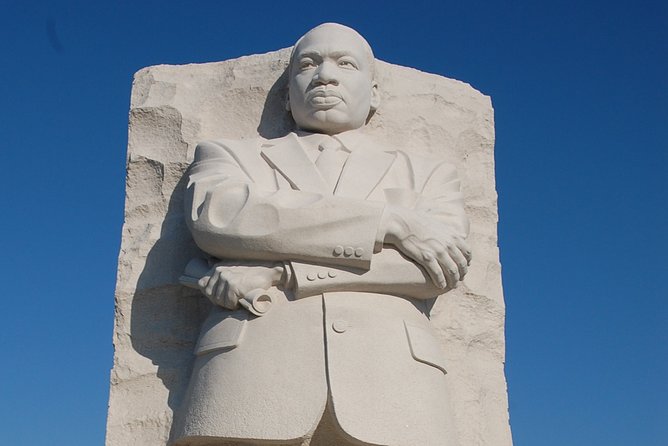
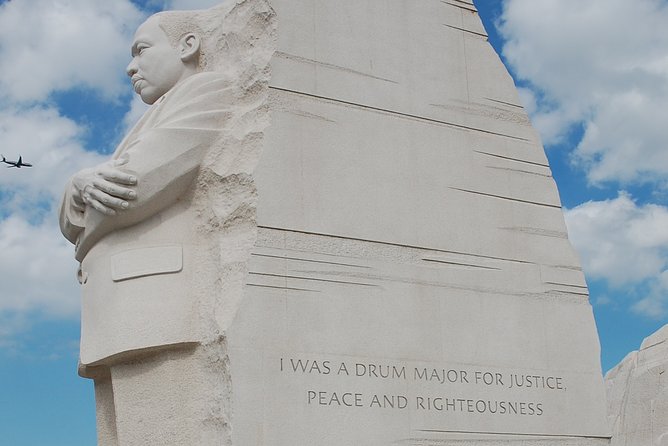
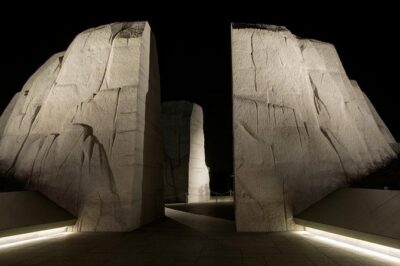
The Martin Luther King, Jr. Memorial follows with about 15 minutes. The guide explains the inscription wall, which contains 14 quotations and statements, as well as the Mountain of Despair and the Stone of Hope.
The stop is brief, but the memorial itself carries plenty of weight. One useful point is the connection between its carved words and the unfinished work of civil rights. You can look at the stone and the quotations while considering how much has changed, and how much remains unsettled.
More Smithsonian museum tours in Washington DC:
- Smithsonian Museum of Natural History – Exclusive Guided Tour
★ 5.0 · 446 reviews - Smithsonian Museums Walking Tour with Reserved Air & Space Entry
★ 5.0 · 297 reviews - Smithsonian Museum of American History Exclusive Guided Tour
★ 5.0 · 245 reviews - The Smithsonian National Air & Space Museum Exclusive Guided Tour
★ 5.0 · 214 reviews
Frederick Douglass House or Mary McLeod Bethune House
The schedule matters most at the historic homes.
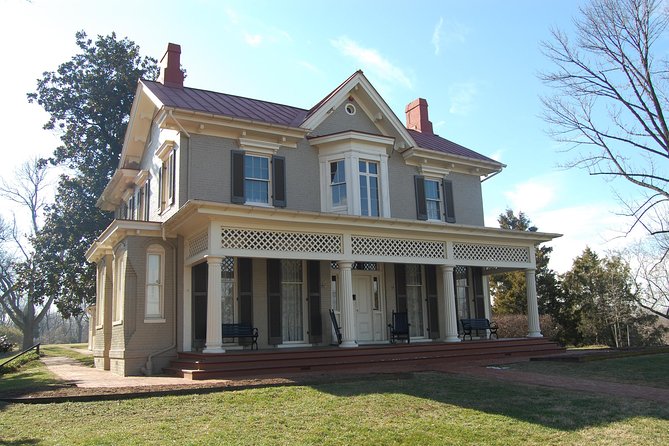
On Tuesday, Wednesday, and Saturday, the tour includes a walking visit inside the Frederick Douglass National Historic Site. You get about 20 minutes connected with the house, and the visit includes stairs. The home offers a more personal setting for understanding Douglass, the former enslaved person who became an author, editor, orator, and major abolitionist voice.
Several parts of the experience depend on timing and access. On other days, the vehicle may pass the Douglass home while Kenny explains its history rather than taking you inside. Thursday and Friday may include the Mary McLeod Bethune Council House instead. The Bethune house is toured Thursday through Saturday when time permits, and the schedule can change based on operating hours and reservations.
This is the one part of the tour I would check carefully before paying. The difference between a drive-by and an interior visit is substantial. If Frederick Douglass is your main reason for booking, select Tuesday, Wednesday, or Saturday and confirm the start time.
The Mary McLeod Bethune Council House is an especially meaningful alternative. Bethune bought the French Second Empire-style home in 1943 and used it as the headquarters of the National Council of Negro Women. The organization, founded in 1935, promoted the rights and welfare of African American women and their families.
The nearby National Council of Negro Women headquarters at 633 Pennsylvania Avenue also connects the tour to women’s leadership in Washington. The organization has occupied that building since 1953, and the site is a National Historic Landmark. These stops help correct the usual male-heavy version of civil rights history.
LeDroit Park, Howard University, and Black Broadway
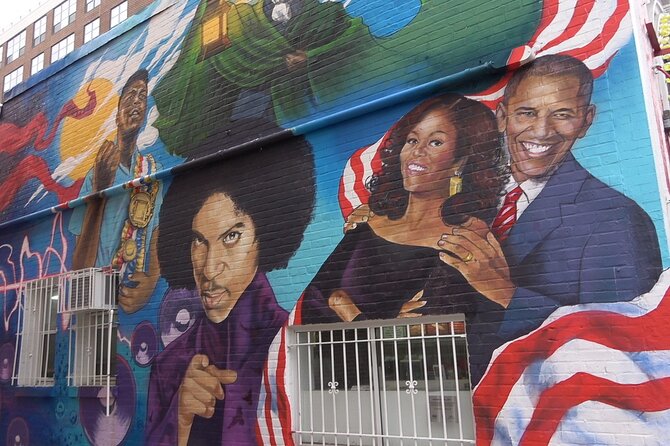
The drive through LeDroit Park is one of the tour’s strongest features for anyone who wants more than the National Mall. The neighborhood was first developed for white Howard University professors, then sold to both Black and white buyers, making it one of Washington’s early integrated neighborhoods.
LeDroit Park was also home to figures such as Mary Church Terrell and Duke Ellington. In the early twentieth century, the area became known as Black Broadway because of its theaters, nightclubs, and music venues.
You may not spend a long time on foot here. Much of this part is viewed from the vehicle, with Kenny providing the setting and pointing out the neighborhood’s role in Washington’s cultural life. That is still valuable because it shows how African American history is built into ordinary residential streets, not only monumental spaces.
The route also passes Howard University, founded in 1867. The university has 13 schools and counts Thurgood Marshall, Elijah Cummings, Taraji P. Henson, and Toni Morrison among its graduates.
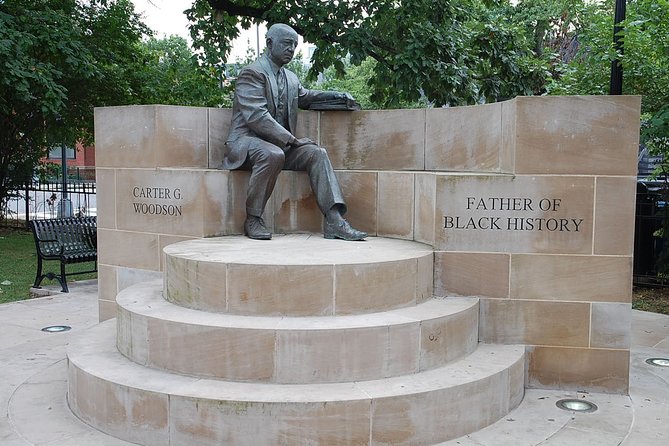
Another drive-by is the Carter G. Woodson House. Woodson, often called the Father of Black History, helped establish the study of African American history and is credited with creating Black History Month. These are quick looks, but they add names and institutions to the larger story.
African American military service and the fight for freedom
At the African American Civil War Memorial, you have about 10 minutes to examine the site. The memorial honors the 209,000 African American troops and sailors who served during the Civil War.
The plaques list the names of United States Colored Troops from 166 regiments. You can also see the Spirit of Freedom statue by sculptor Ed Hamilton. The memorial was dedicated in 1998 and gives the military service of African Americans a visible place in the city.
The stop is short, so it is worth using the time well. Read a few names, look closely at the sculpture, and ask questions. The guide may provide the broad story, while the memorial itself supplies the personal scale.
Dunbar High School adds another education link. Founded in 1870, it was the first public high school in the United States for African Americans. Its graduates and associated figures include Mary McLeod Bethune and poet Paul Laurence Dunbar.
The Howard Theatre and Washington’s music scene
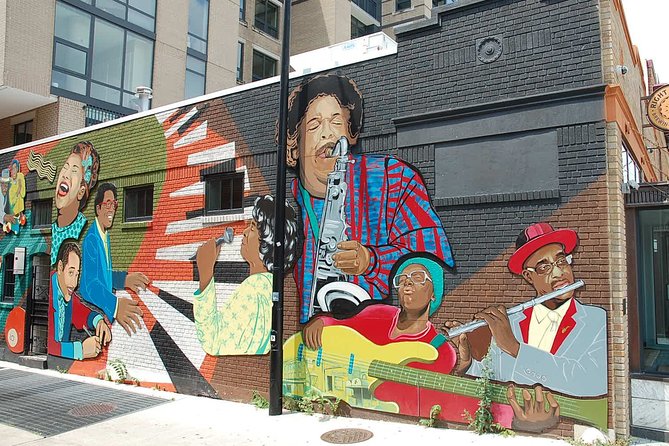
The Howard Theatre opened in 1910 and was one of the first theaters in the country designed and operated by African Americans. During segregation, it became a major venue for Black performers and audiences.
The theater hosted Duke Ellington, Billie Holiday, Ella Fitzgerald, and Marvin Gaye. It also played a role in the Chitlin’ Circuit, the network of venues where African American musicians, comedians, and performers could work when many mainstream theaters excluded them.
You generally see the Howard Theatre as part of the route rather than attending a performance. Even so, the stop rounds out the tour. African American history in DC is not only about court cases and marches. It is also about music, comedy, nightlife, and the businesses that gave artists a place to work.
Ending at the National Museum of African American History and Culture
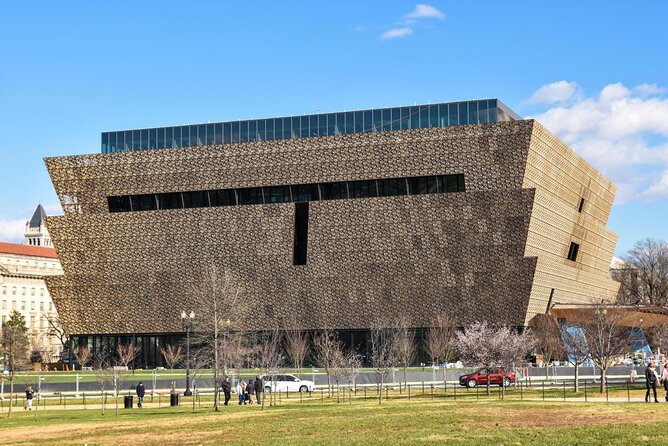
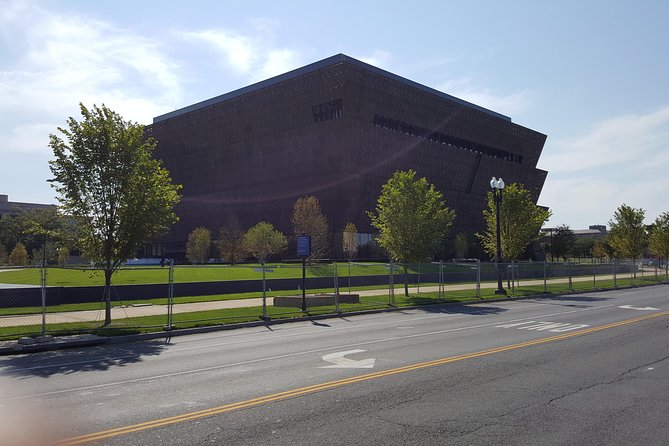
The tour ends at the National Museum of African American History and Culture on Constitution Avenue. You receive same-day museum admission as part of the experience, and once inside, you can stay until the museum closes at 5:30 p.m.
The guided portion at the museum lasts about an hour, but the ticket gives you more time to continue on your own. Plan to begin on the lower floors, where the museum presents the earlier history of slavery and African American life. Starting at the bottom helps the later galleries make more sense.
Do not treat the one-hour museum portion as enough time to see everything. The museum is large, with objects, displays, audio, and stories that reward a slower visit. If the museum is your top priority, use the tour to get oriented, then remain after the guide leaves.
This ending is smart. The morning gives you places and names, then the museum brings those themes together with a much larger collection. You finish with the option to keep learning instead of being dropped back at the starting point.
Timing, comfort, and practical details
The vehicle is air-conditioned and bottled water is included, which matters during Washington’s hot and humid months. You still need to prepare for walking, outdoor stops, and stairs at the Douglass house. Rain does not necessarily ruin the tour, but weather affects comfort, and the experience requires good weather to operate.
The tour is offered in English and uses a mobile ticket. Service animals are allowed, and most people can participate. Public transportation is available near the meeting point at US Navy Memorial Plaza, 701 Pennsylvania Avenue NW.
Pay attention to messages before the tour. The start time has occasionally been adjusted when an early reservation at the Douglass House was involved. Since the standard start is 9:30 a.m., a change to 8:30 a.m. would be easy to miss if you do not check your phone and email.
Free cancellation is available up to 24 hours before the start time. Inside that window, changes and refunds are not accepted. If poor weather or an insufficient number of bookings cancels the experience, you are offered another date or a full refund.
Who should book this DC history tour?
I would recommend it to first-time visitors who want the major monuments but also want to understand African American life in Washington beyond the Mall. Families with older children can benefit from the mix of short stops, stories, and vehicle time. Two children, ages 11 and 13, were specifically included in one successful family outing, which suggests the format can work well for that age group.
It also suits repeat visitors. LeDroit Park, the Howard Theatre, Dunbar High School, and the historic homes provide a different view of Washington than the usual Capitol and White House circuit.
You may want another plan if you dislike short stops, drive-bys, or a schedule that changes by day. The route covers a lot in three and a half hours, so you will not have long, unhurried visits at every location. The museum ticket is valuable, but you must be willing to continue independently after the guided portion ends.
Should you book it?
Book this tour if you want a broad, story-led introduction to African American history in Washington and prefer having transportation between scattered sites. Kenny’s warm delivery, humor, and personal approach are a major part of the experience, and the route gives you far more than a standard monument circuit.
At $90, the combination of guide, vehicle, water, historic stops, and museum admission makes sense for many visitors. Choose your date carefully, especially if you want to enter the Frederick Douglass House. If you do, this tour can serve as a strong first day in DC, with enough museum time afterward to keep the history unfolding.
FAQ
How long is the African American History Tour?
The guided tour lasts approximately 3 hours and 30 minutes. It ends at the National Museum of African American History and Culture.
What is included in the $90 price?
The price includes the guided tour, transportation in an air-conditioned vehicle, bottled water, and same-day admission to the National Museum of African American History and Culture.
Where does the tour begin?
The meeting point is US Navy Memorial Plaza at 701 Pennsylvania Avenue NW, Washington, DC 20004.
What time does the tour start?
The listed start time is 9:30 a.m. Start times can occasionally change, so check messages before departure, particularly if the schedule includes an early Frederick Douglass House reservation.
Where does the tour end?
The tour ends at the National Museum of African American History and Culture at 1400 Constitution Avenue NW.
Will I visit the Frederick Douglass House?
An interior walking tour of the Frederick Douglass House is offered on Tuesdays, Wednesdays, and Saturdays. On other days, the vehicle may pass the house and the guide will explain its history.
What happens on Thursdays and Fridays?
Thursday and Friday tours may visit the Mary McLeod Bethune Council House instead. The house is toured Thursday through Saturday when time permits.
Can I stay at the museum after the tour?
Yes. The museum ticket is valid for the same day, and you can remain inside until the museum closes at 5:30 p.m.
What is the cancellation policy?
You can cancel up to 24 hours before the start time for a full refund. Cancellations or changes made less than 24 hours before the experience are not refunded or accepted. If weather or an insufficient number of bookings cancels the tour, you are offered another date or a full refund.
More History Tours in Washington DC
- DC Monuments & History Guided E-Cart Tour-Blankets
★ 4.5 · 450 reviews - Historic Georgetown: History, Gossip, & Architecture Walking Tour
★ 5.0 · 321 reviews - DC’s Original Food and History Walking Tour
★ 5.0 · 255 reviews - Tastes of Georgetown Food & History Small Group Walking Tour
★ 4.5 · 203 reviews
More Museum Tours in Washington DC
- National Mall Tour with 10 Stops & U.S. Capitol or Museum Entry
★ 4.5 · 331 reviews - Capitol Combo: U.S. Capitol + Library Congress or Capitol Museum
★ 4.5 · 294 reviews - U.S. Capitol Tour with Library of Congress or Capitol Museum
★ 4.0 · 286 reviews - Museum of the Bible Admission Ticket
★ 4.5 · 233 reviews
Just added in Washington DC
- Washington DC: Express Morning or Night-Time Monuments Tour★ 3.2 · 3 reviews
- Washington, DC: Georgetown Architecture Walking Tour★ 5.0 · 8 reviews
- Washington D.C.: Georgetown Guided Secret Food Tour★ 3.9 · 7 reviews
- Washington DC: E-Bike Rental★ 4.3 · 7 reviews
- Washington DC: Christmas Eve Gourmet Brunch or Dinner Cruise★ 4.2 · 6 reviews
- Washington DC Day Tour – Private Tour★ 4.1 · 3 reviews
- Washington DC: After Dark Night-Time Sightseeing Tour★ 3.8 · 6 reviews
- Washington DC: Best of Capitol Hill Guided Bike Tour★ 3.2 · 7 reviews
Smithsonian Museum Tours, compared.
Guided African American History Tour with Reserved Museum Entry
Read our review →
Smithsonian Museum of Natural History – Exclusive Guided Tour
Read our review →

Smithsonian Museums Walking Tour with Reserved Air & Space Entry
Read our review →
Smithsonian Museum of American History Exclusive Guided Tour
Read our review →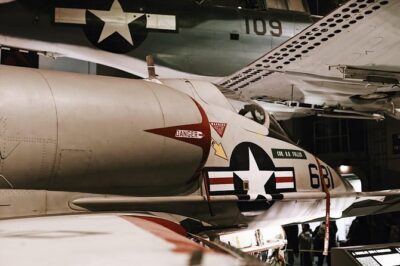
The Smithsonian National Air & Space Museum Exclusive Guided Tour
Read our review →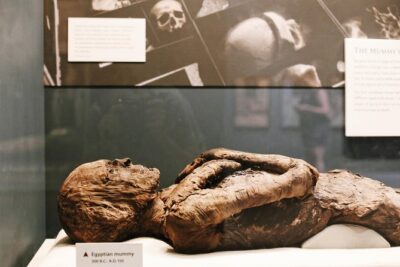
Smithsonian Museum of Natural History Small Group Tour: 8ppl Max
Read our review →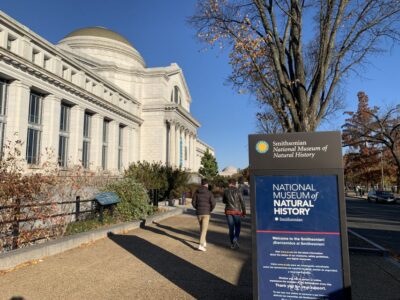
Smithsonian National Museum of Natural History Guided Tour
Read our review →Browse the lists this tour appears in