
Reviewed · SMITHSONIAN MUSEUM TOURS
Washington, DC: Natural History & Air and Space Museum Tour
Dinosaurs, diamonds, spacesuits, and the original 1903 Wright Flyer make this a serious museum day with a childlike sense of wonder. A guide leads you through Washington’s two most popular Smithsonian museums, helping you handle the crowds and focus on the exhibits that matter most.
I like the small group size of no more than eight, which gives the guide room to answer questions. I also like the split between the Natural History Museum and Air and Space Museum: you get bones and bugs in the morning, then planes, rockets, and the Apollo 11 Command Module after a break.
The main drawback is the length. At about 5.5 hours, this is a full half-day on your feet, and the Air and Space Museum is still undergoing renovation. Some rooms or exhibits may be closed, and temporary exhibits are not included.
Key points to know before booking
- Henry the elephant greets you at Natural History: See one of the world’s largest taxidermied elephants before moving on to gems, fossils, and animals.
- The renovated Fossil Hall is a major stop: Expect Mastodon, T-Rex, and Diplodocus displays along the route.
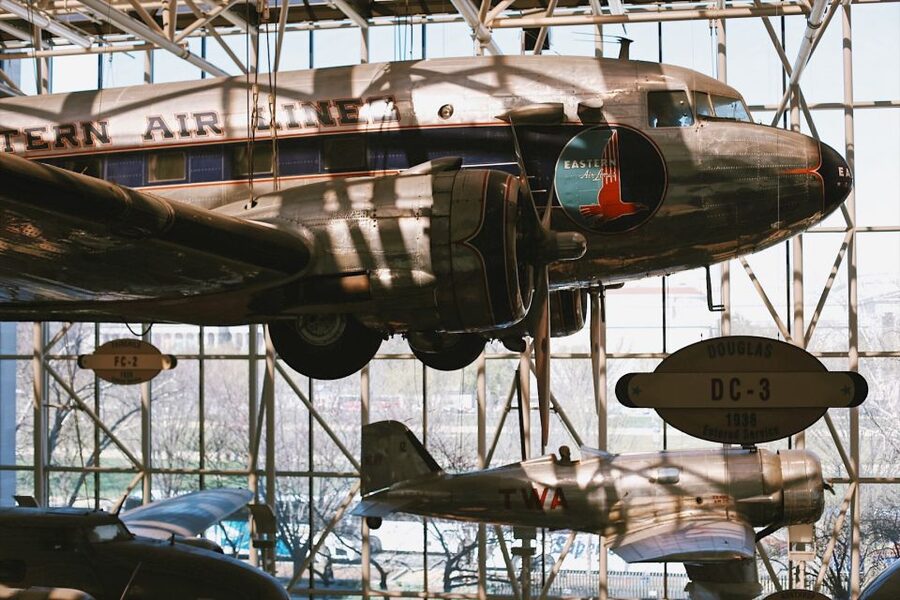
- The 1903 Wright Flyer is the aviation centerpiece: Your guide sets the aircraft in the story of early flight and later commercial aviation.
- Apollo 11 adds real spaceflight drama: The Command Module and other space artifacts show what human space travel demanded.
- Groups stay small: Semi-private tours allow up to eight people, while private options give your party more control.
- The walking route begins and ends at Natural History: You cross the National Mall between museums, so wear comfortable shoes and pack lightly.
Two Smithsonian museums in one carefully planned day
This tour is built for you if the Smithsonian feels too large to tackle without a plan. Both museums can swallow hours, especially when you stop at every case that catches your eye. A guide gives you a route, explains why certain objects matter, and keeps the day moving.
You meet on the large stairs at the Madison Drive NW entrance of the National Museum of Natural History. The stairs face the lawn of the National Mall, making the location fairly clear, but you should still allow time to find the right entrance.
The day includes about 2.5 hours in each museum, with a break between them. The exact starting time depends on availability. Since the two buildings are separated by the Mall, you should expect walking outdoors between visits.
The tour is offered as a private experience or a small-group outing capped at eight people. That limit matters in a crowded museum. A guide can speak to the whole group without making you feel lost in a large procession, and you have a better chance to ask about an exhibit that catches your attention.
More Smithsonian museum tours in Washington DC:
- Guided African American History Tour with Reserved Museum Entry
★ 4.5 · 1,180 reviews - Smithsonian Museum of Natural History – Exclusive Guided Tour
★ 5.0 · 446 reviews - African American History Tour with Museum of African American History Ticket
★ 4.5 · 390 reviews
Natural History Museum: Henry, diamonds, and giant fossils
The Natural History Museum gives you a fast lesson in the scale and variety of the natural world. The route includes animals, insects, stones, bones, and fossils, so the experience keeps changing pace rather than locking you into one subject.
Henry, the museum’s famous taxidermied elephant, provides an immediate sense of scale. He is described as the largest taxidermied elephant in the world, and his position near the start gives the tour a memorable opening. You do not need to be an expert in zoology to appreciate the size of the animal or the effort involved in preserving it.
From there, the guide can help you sort through the museum’s enormous collection. That is where this tour earns its fee. Instead of spending your first hour wondering which hallway to choose, you get context for the selected displays and a route that leaves room for questions.
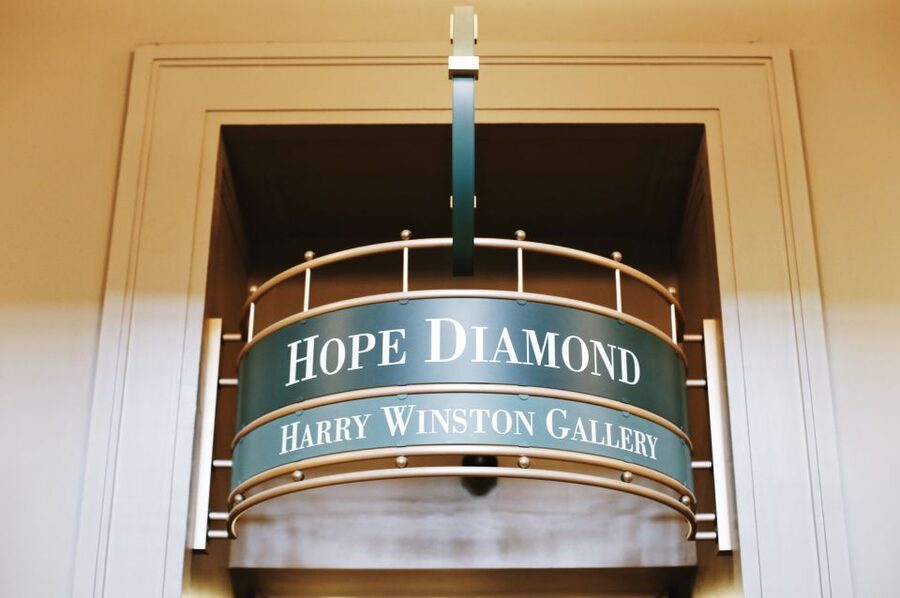
The Hope Diamond is another key stop. It is one of the Smithsonian’s best-known objects, with a long-running reputation for being cursed. The guide can place the diamond in the larger story of gems, wealth, ownership, and public fascination. Its appeal is not only its color or size. It is also the story people have built around it.
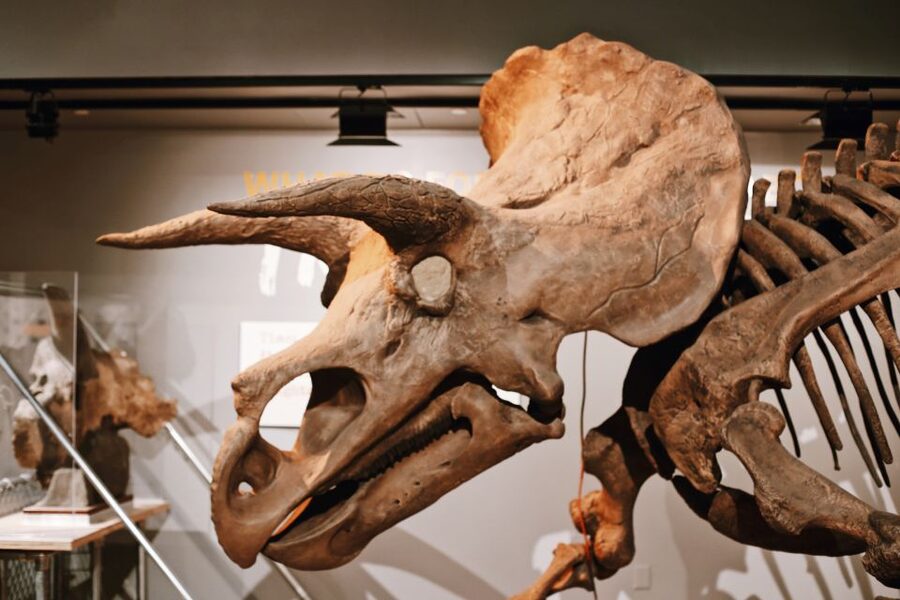
The Fossil Hall is likely to be the high point for anyone drawn to dinosaurs. The renovated space includes Mastodon, T-Rex, and Diplodocus displays looming over the route. These are not small fossils tucked into a corner. The scale of the animals changes how you read the room, especially when the guide explains how scientists use bones to reconstruct creatures that disappeared long ago.
I would particularly recommend this part of the tour for families and first-time visitors. Children get the drama of giant animals, while adults get help connecting the displays to larger questions about extinction, adaptation, and the age of the Earth. The guide’s job is not simply to identify a T-Rex. It is to help you see why the object is worth your limited time.
The museum has far more than can fit into 2.5 hours. That is both the value and the limitation of a guided visit. You see a strong selection, but you will not cover every gallery. If you want to study one narrow subject in detail, a self-guided return visit may still be worthwhile.
Crossing the National Mall for an aviation reset

After Natural History, you get a break before heading to the National Air and Space Museum. The walk across the Mall is short enough to link the two museums, but it is still part of a long day. Comfortable shoes matter, and the tour does not include food or drinks.
This pause is useful because the second museum changes the mood completely. You move from preserved animals and ancient life to machines built by people trying to leave the ground, cross continents, and reach space.
The Air and Space Museum is undergoing renovation, so the experience is not the same as visiting a fully open museum. There is still plenty to see, but some galleries may be unavailable. You should book this tour for the objects and guidance, not on the assumption that every familiar display will be open.
The Wright Flyer and the gamble of early flight
The original 1903 Wright Brothers Flyer receives its own exhibition gallery. That gives the guide a natural starting point for the aviation section and a chance to explain why this fragile-looking machine mattered.
The Wright Brothers were not simply lucky inventors who happened to get airborne. The tour frames their achievement as a practical problem solved by a family from Ohio, at a time when controlled flight was still beyond ordinary engineering. The story makes the Flyer easier to appreciate than a quick glance at the aircraft alone.
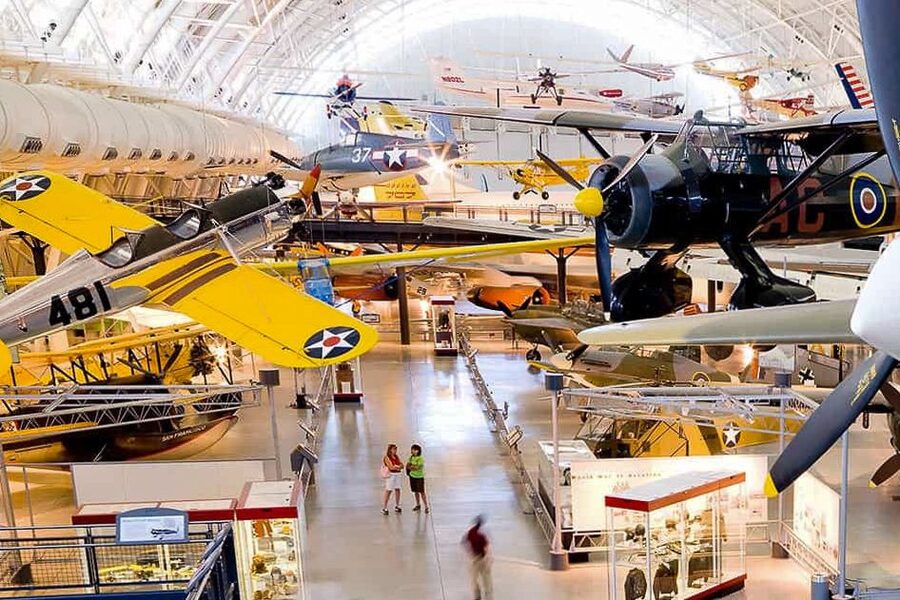
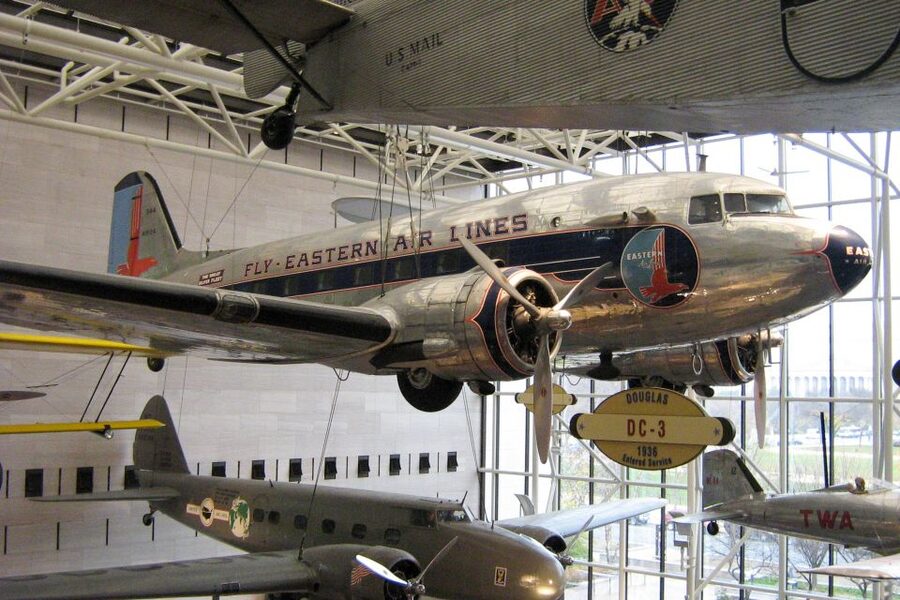
You then move through later stages of aviation. The first military flyer from 1909, also created by the Wright Brothers, shows how quickly flight moved from experiment toward military use. Displays connected with record setting and commercial aviation help you follow that change.
The best part of this section is the human risk. Early aircraft did not offer the comfort or security associated with modern air travel. The people who trusted those machines had to accept a new technology with very little proof that it would protect them.
A guide can make this progression feel like a connected story rather than a row of aircraft. You see the first breakthrough, then the growing confidence in flight, followed by the wider effects on military travel, record attempts, and commercial aviation.
More museum tours in Washington DC:
- National Mall Tour with 10 Stops & U.S. Capitol or Museum Entry
★ 4.5 · 331 reviews - Washington, DC: African American History Tour & Museum Entry
★ 4.9 · 312 reviews - Smithsonian Museums Walking Tour with Reserved Air & Space Entry
★ 5.0 · 297 reviews - Capitol Combo: U.S. Capitol + Library Congress or Capitol Museum
★ 4.5 · 294 reviews
Apollo 11 and the hard reality of space travel
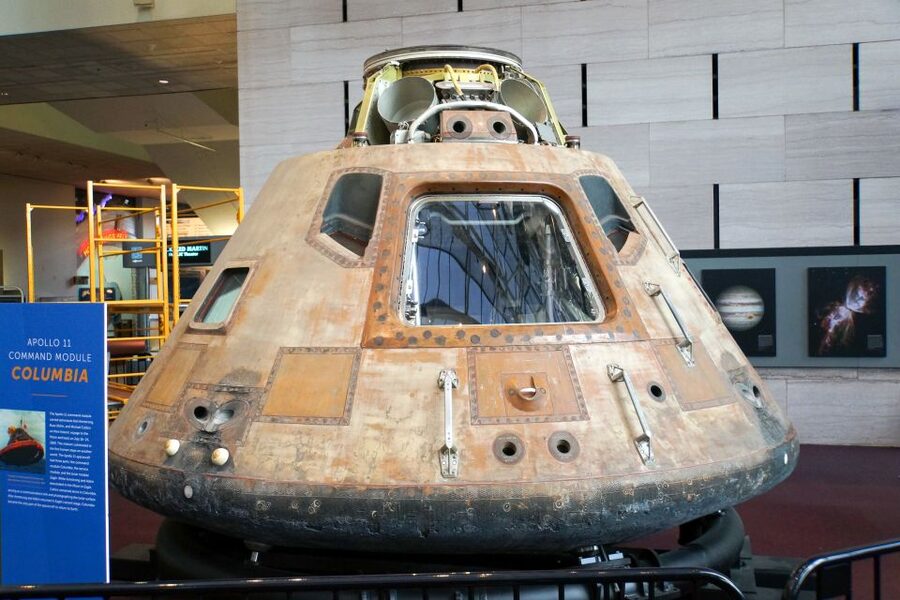
The space section shifts the scale again. Aircraft challenge gravity, but spacecraft carry people into an environment that is far less forgiving. The Apollo 11 Command Module is one of the most important objects on this tour because it connects a famous mission to a physical machine that carried people through space and back to Earth.
You also see actual artifacts tied to human efforts to explore the unknown. The guide helps explain the demands of operating in space, then brings the story back to the basic fact that these missions ended with a return to Earth’s atmosphere and ordinary life.
This part should appeal to you even if you are not a space enthusiast. The objects are valuable because they show the distance between an idea and a working machine. Space travel requires imagination, but it also requires materials, design, testing, and people willing to accept extraordinary danger.
The tour also brings in science fiction, including the Starship Enterprise and the Star Wars X-Wing. These displays add a lighter note after the serious engineering and human cost of real spaceflight. They also point to the link between imagined technology and the scientists who try to build something that once existed only in fiction.
Do not expect the same kind of detail in every gallery. Renovation affects access, and the guide must work with the rooms that are open on the day. Still, the Flyer and Apollo 11 give the tour two strong anchors, one at the beginning of powered flight and one at the edge of human space travel.
What the guide adds to the museum visit

The guide is the reason to book this rather than simply walk into the museums on your own. The tour includes skip-the-ticket-line access, but the larger benefit is interpretation and crowd management.
Tim, Brenda, Leigh, and Doug are among the guides named for this experience. Brenda’s approach includes detailed information about exhibits, historical context, and stories. Leigh is described as spending about four hours with a group, giving insight into both museums. Doug’s style is professional and focused on American history and space. Tim is noted for guiding the route with ease.
Those details suggest a useful range of guiding styles, but your exact experience depends on who leads your departure. The common thread is subject knowledge and an ability to connect individual displays to a larger story. You should feel free to ask questions, especially in a small group where the guide has time to respond.
Some rooms require quiet or restrict speaking. In those areas, the guide gives the information before you enter. This is practical rather than frustrating. You receive the explanation first, then get a chance to look without a running commentary.
Is $166 good value for this museum day?
The price is $166 per person. That is a substantial charge for museums that many people associate with free public access, so value depends on how much help you want.
I would consider the cost reasonable if you are visiting Washington for a short stay, dislike managing large museums, or want a clear overview of both collections in one day. You are paying for a local guide, a five-and-a-half-hour plan, small group access, and the time saved by not building your own route.
The value is stronger for a private group or for people who want detailed explanations. A group of up to eight keeps the experience more personal than a large coach tour. The cost is harder to justify if you prefer to read every label, move slowly, or return to the same exhibit several times.
Temporary exhibits are not included. The Air and Space Museum is also under renovation, which means you should confirm what is open and accept that the route may change.
Free cancellation is available up to 24 hours before the tour, and you can reserve now and pay later. Those policies make it easier to fit the visit into a changing Washington schedule, but they do not remove the need to check the start time carefully.
Practical details that can make or break the day
Bring valid photo identification, such as a passport or ID card. Security allows handbags or small, thin backpacks, but luggage and large bags are not permitted.
Dress appropriately for museum entry and wear shoes suited to several hours of walking. You will cross the National Mall between buildings, and the tour ends back at the original meeting point.
Wheelchair tours are available by request only, so arrange that before booking rather than assuming a standard departure will meet your needs. If the museums close unexpectedly, the operator may offer an alternative when an opening is delayed by more than one hour, but refunds or discounts are not provided in those circumstances.
For urgent matters, use the guide’s phone or text details sent by email from Babylon Tours DC. Check your spam folder if you do not see the message by the morning of the tour.
Who should book this Smithsonian combination?
I would choose this tour if you want the main story of both museums without spending hours planning your own route. It suits families, first-time Washington visitors, and anyone who wants a guide to explain why the Hope Diamond, Wright Flyer, and Apollo 11 Command Module matter.
It is also a good match for small groups that prefer a personal guide. The eight-person limit keeps the day manageable, while the private option gives your party a more focused experience.
I would skip it if you want total freedom, plan to spend an entire day in one museum, or dislike a fixed schedule. The tour gives you highlights rather than complete coverage, and renovation may limit the Air and Space route.
Should you book this tour?
Book it if your priority is context, crowd help, and the essential objects in both museums. The combination of Henry, the Hope Diamond, the renovated Fossil Hall, the 1903 Wright Flyer, and Apollo 11 gives you a strong sweep from prehistoric life to modern space travel.
At $166, this is not the budget way to visit the Smithsonian. It is a practical way to turn two huge museums into one organized day, especially when your Washington schedule is tight. Check the museum status before departure, bring only a small bag, and expect a brisk but rewarding walk through science, invention, and human curiosity.
FAQ
How long does the Natural History and Air and Space Museum tour last?
The experience lasts about 5.5 hours. It includes roughly 2.5 hours at each museum, with a break between them.
Where does the tour begin?
Meet your guide on the large stairs at the Madison Drive NW entrance of the Museum of Natural History, facing the lawn of the National Mall.
Where does the tour end?
The activity ends back at the original meeting point.
What is the maximum group size?
A maximum of eight people is permitted on each tour. Private and small-group options are available.
What should I bring?
Bring valid photo identification, such as a passport or ID card. Only handbags or small, thin backpacks are allowed through security, so do not bring luggage or large bags.
Is the tour available for wheelchair users?
Wheelchair tours are available by request only. Arrange this in advance so the tour can meet your needs.
More History Tours in Washington DC
- DC Monuments & History Guided E-Cart Tour-Blankets
★ 4.5 · 450 reviews - Historic Georgetown: History, Gossip, & Architecture Walking Tour
★ 5.0 · 321 reviews - DC’s Original Food and History Walking Tour
★ 5.0 · 255 reviews - Smithsonian Museum of American History Exclusive Guided Tour
★ 5.0 · 245 reviews
Just added in Washington DC
- Washington DC: Express Morning or Night-Time Monuments Tour★ 3.2 · 3 reviews
- Washington, DC: Georgetown Architecture Walking Tour★ 5.0 · 8 reviews
- Washington D.C.: Georgetown Guided Secret Food Tour★ 3.9 · 7 reviews
- Washington DC Day Tour – Private Tour★ 4.1 · 3 reviews
- Washington DC: E-Bike Rental★ 4.3 · 7 reviews
- Washington DC: Christmas Eve Gourmet Brunch or Dinner Cruise★ 4.2 · 6 reviews
- Washington DC: After Dark Night-Time Sightseeing Tour★ 3.8 · 6 reviews
- Washington DC: Best of Capitol Hill Guided Bike Tour★ 3.2 · 7 reviews
Smithsonian Museum Tours, compared.
Guided African American History Tour with Reserved Museum Entry
Read our review →
Smithsonian Museum of Natural History – Exclusive Guided Tour
Read our review →
African American History Tour with Museum of African American History Ticket
Read our review →

Smithsonian Museums Walking Tour with Reserved Air & Space Entry
Read our review →
Smithsonian Museum of American History Exclusive Guided Tour
Read our review →
The Smithsonian National Air & Space Museum Exclusive Guided Tour
Read our review →
Smithsonian Museum of Natural History Small Group Tour: 8ppl Max
Read our review →Browse the lists this tour appears in