
Reviewed · SMITHSONIAN MUSEUM TOURS
Smithsonian Natural History Museum Semi-Private Guided Tour
The museum’s biggest challenge is its size, and this six-person maximum tackles that problem head-on. In about two hours, your guide leads you from the Hope Diamond and Henry the Elephant to the fossil lab, the largest complete T-Rex fossil found in the United States, and The Last American Dinosaurs exhibit.
I like the small group because it gives you room to ask questions, and I like the focus on working science rather than only famous display cases. You may even end up with a private tour, as happened when a booking for two became an outing for just a father and son. The drawback is the $129 price, since admission to the museum itself is free.
Key points to know before you book
- Six people or fewer: A small group makes it easier to hear the guide and ask questions.
- Two-hour route: The visit covers major highlights without trying to explain every room in the museum.
- Meet at 400 7th Street NW: The tour begins at the Unscripted Welcome Center, not at the museum entrance.
- Famous and working exhibits: You see the Hope Diamond, Henry the Elephant, fossils, and scientists working on real specimens.
- Guide Shane has earned strong praise: His tour has been described as engaging, courteous, and full of useful detail.
- Museum visit ends at 10th Street and Constitution Avenue: Plan your next stop from there rather than returning to the starting point.
Why a guide helps in this enormous museum
The Smithsonian National Museum of Natural History is free, popular, and packed with material. That sounds easy until you face the question of where to start. A two-hour guided route gives you a clear path through the building and helps you spend your time on the displays that matter most.
I see the value here less in gaining entry and more in gaining focus. You are paying for someone to connect the objects, explain what deserves your attention, and keep the visit moving. That can be especially useful if this is your first time in Washington, or if you have children or family members who lose interest when a museum becomes too large to manage.
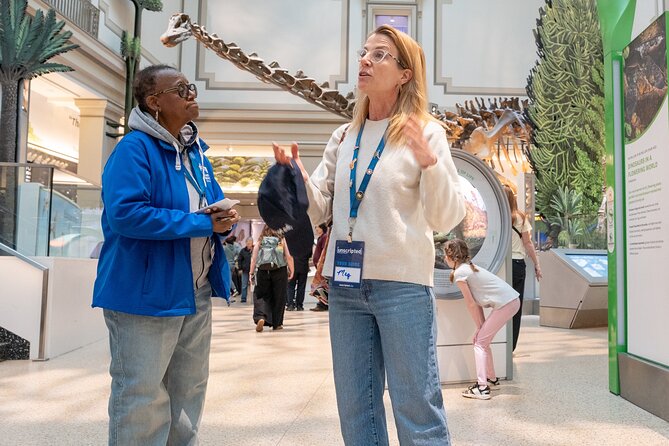
The group limit matters. With six people or fewer, you should be able to hear the guide without standing in a crowd around a display. You also have a better chance to ask why an object matters, not just what it is called.
The experience is not designed to cover every gallery. That is a strength if you want the major sights in two hours, but a limitation if you hope to study one scientific subject at length. Think of it as a guided introduction with selected highlights, not a full museum course.
More Smithsonian museum tours in Washington DC:
- Guided African American History Tour with Reserved Museum Entry
★ 4.5 · 1,180 reviews - Smithsonian Museum of Natural History – Exclusive Guided Tour
★ 5.0 · 446 reviews - African American History Tour with Museum of African American History Ticket
★ 4.5 · 390 reviews
Starting at the Unscripted Welcome Center on 7th Street
The tour begins at the Unscripted Welcome Center at 400 7th Street NW, Suite 102. Allow about ten minutes here before heading to the museum. This opening gives you a chance to meet the guide, discuss the visit, and get oriented before the main portion begins.
That small pause is useful. You are not trying to find your guide while also staring at a map or deciding which entrance to use. Make sure you go to the stated starting point rather than heading directly to the Natural History Museum.
Your mobile ticket is part of the booking setup, so keep your confirmation available on your phone. The tour includes bottled water, a minor detail that is welcome during a busy museum morning or afternoon.
The starting location is near public transportation, making it practical if you are moving around central Washington without a car. The tour finishes at the museum, at 10th Street and Constitution Avenue NW, so you do not return to the welcome center afterward.
Henry the Elephant gives the visit a clear beginning
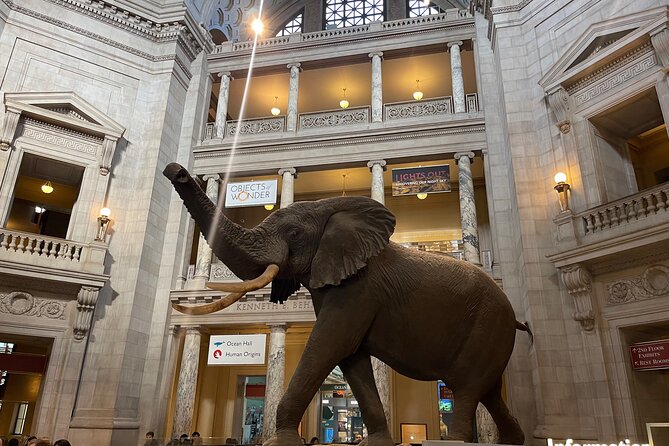
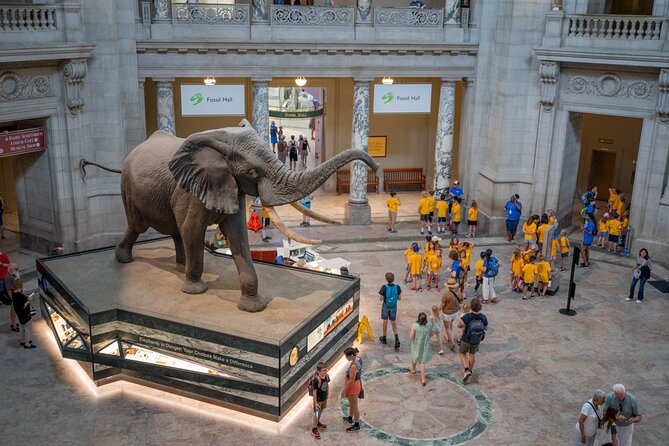
Henry the Elephant is one of the museum’s most recognizable sights, and he gives the tour an immediate sense of scale. A guide can do more than point him out. The useful part is placing a familiar animal within the museum’s wider story about life, science, and the natural world.
Large specimens are easy to photograph and easy to remember, but they can also become quick stops. Listen for the details your guide chooses to add. The point of a guided visit is not simply to collect names. It is to understand why a display has a place in the museum and what you should notice before moving on.
For families, Henry is a strong early stop because he is visually clear. You do not need a long scientific explanation to appreciate the size of the animal. For adults, he works as a marker that the museum visit is underway and that the route will mix familiar icons with more technical exhibits.
The Hope Diamond and the museum’s stones
The Hope Diamond is the most famous object on this route. Its appeal is obvious, but a guide can keep the stop from becoming just a quick look at a blue stone behind glass. You will have a chance to consider its place within the museum’s mineral and gemstone displays.
The gems and crystals section received particularly strong praise, and that makes sense. These objects work well in a guided setting because their colors and shapes catch your eye, while their formation and origin can be harder to understand without context.
The route also includes original stones from the United States Capitol. This adds a Washington connection to the visit. You are not only looking at natural specimens from far away. You are also seeing material tied to a familiar national building a short distance from the museum.
I would give this section time, even if you think you are mainly coming for dinosaurs. The crystals, gemstones, and Capitol stones offer a useful change of pace from skeletons and fossils. They also show how the museum links natural science with human construction, collecting, and public history.
More museum tours in Washington DC:
- National Mall Tour with 10 Stops & U.S. Capitol or Museum Entry
★ 4.5 · 331 reviews - Washington, DC: African American History Tour & Museum Entry
★ 4.9 · 312 reviews - Smithsonian Museums Walking Tour with Reserved Air & Space Entry
★ 5.0 · 297 reviews - Capitol Combo: U.S. Capitol + Library Congress or Capitol Museum
★ 4.5 · 294 reviews
Fossil work areas bring science behind the glass

One of the more unusual parts of the visit is the fossil lab. You may see scientists working on real fossils, which gives the museum a working feel rather than making it seem like a warehouse of finished objects.
That distinction matters. A polished display case shows the end result. A lab can show that scientific work is slower and more careful. Fossils need study, preparation, and interpretation before they become part of an exhibit. Even a short stop can help you understand that what you see in a museum is not the whole process.
The fossil and archaeological areas also include work spaces and bones connected to human and animal history. This was a favorite part for some visitors, and I can see why. The work areas make the subject less distant. Instead of only viewing an ancient object, you can see how people examine evidence from the past.
The exact activity in the lab can vary, so do not treat it as a guaranteed demonstration or lecture. The value is in the chance to see active research within the museum and to ask your guide what the work involves.
The T-Rex and The Last American Dinosaurs exhibit
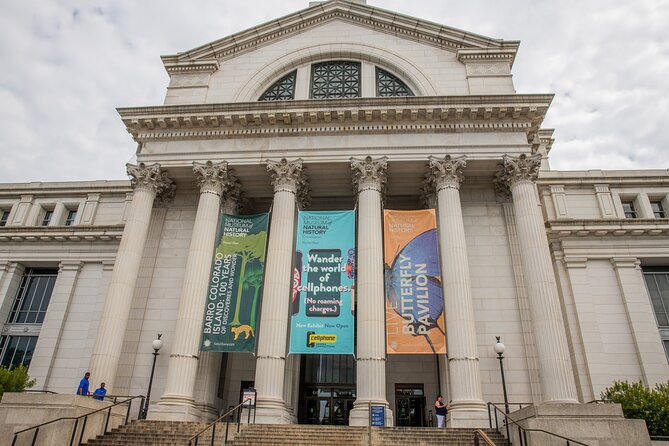
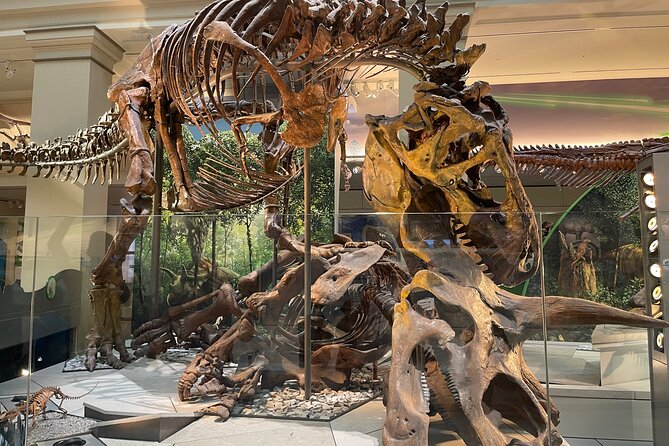
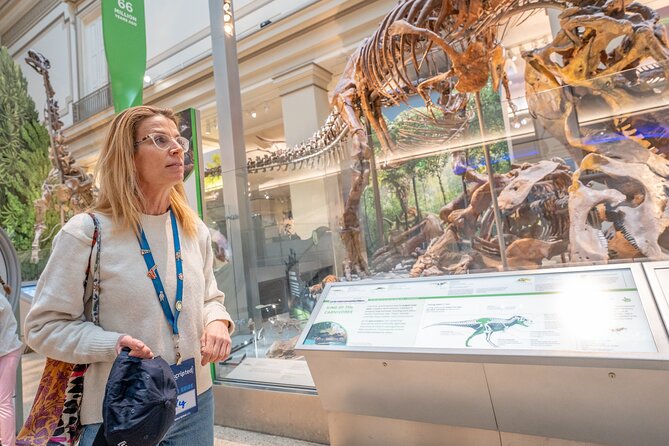
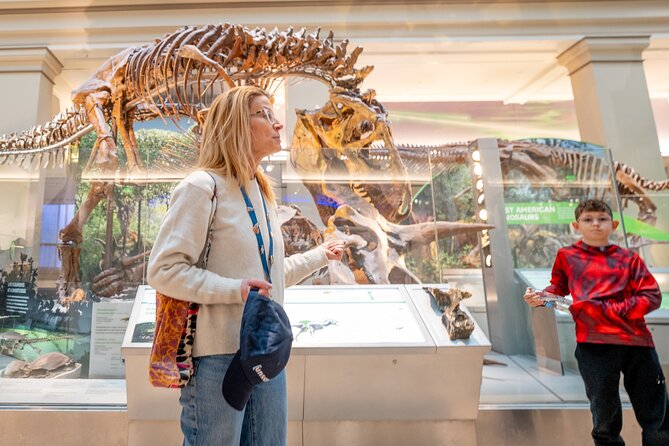
The tour includes The Last American Dinosaurs exhibit and the largest complete T-Rex fossil found in the United States. For many people, this will be the high point of the visit.
A complete or near-complete fossil has a different impact from a display made up of scattered bones. It helps you picture the animal as a whole and gives the guide a strong foundation for explaining size, movement, and evidence. The word complete matters here because it tells you why this specimen deserves special attention.
The Last American Dinosaurs exhibit also gives the dinosaur portion a defined theme. You are not simply passing a row of prehistoric bones. The exhibit offers a way to think about the final chapter of dinosaurs in North America, while your guide keeps the explanation at a level that fits the short tour.
You should not expect to explore every dinosaur display in detail. Two hours goes quickly, especially when the route includes minerals, Capitol stones, mammals, fossils, and human history. If dinosaurs are your only priority, tell your guide at the start so you can understand how much time the route allows for this section.
The oldest unsolved mystery adds a human question
The tour also addresses what is described as the oldest unsolved mystery in history. The supplied details do not identify the mystery by name, so you should ask your guide to explain exactly which question the route presents and how the museum approaches it.
That open question is a useful change from displays with simple labels. Museums are often strongest when they show what science knows and what remains uncertain. You may find this portion more thought-provoking than the famous objects because it asks you to consider the limits of current evidence.
This is another reason a guide can add value. A label may introduce a mystery in a few lines, while a guide can explain why it remains unresolved and connect it to the objects around you. The quality of that explanation depends on the guide, but Shane has been singled out for making the tour enjoyable and for handling the subject matter with care.
What the two-hour timing really means
The museum portion lasts about one hour and fifty minutes, following the ten-minute introduction at the welcome center. That is enough time for a purposeful route through major displays, but not enough for a slow visit to every room.
I would plan to arrive ready to keep moving. The tour is not a drop-in visit where you can wander off for half an hour and rejoin the group later. Its value comes from the sequence: the guide chooses the route, sets the pace, and makes sure you reach the major stops.
Two hours is a good fit if you have a full Washington schedule. You can see major Natural History Museum highlights without giving up an entire day. It also works well before or after other central Washington sights, since the museum ends near Constitution Avenue.
The pace may be less satisfying if you prefer to read every label. You can always return to the museum on your own if you want more time, but the tour itself is built around selected highlights rather than independent study.
The price: paying for direction, not admission
At $129 per person, this is a premium way to visit a free museum. The price needs to be judged against the guide service, small group size, and time saved, not against admission.
If you already know the museum well, enjoy planning your own route, or are comfortable using the floor plan, you may find the cost hard to justify. You can enter without paying for a tour and set your own pace.
I see stronger value for first-time visitors, families, and anyone with only a short window in Washington. The guide helps you avoid spending the first thirty minutes finding the right galleries. A small group also gives you a more personal experience than a large walking tour.
The possibility of a very small actual group improves the value, but it is not a guarantee that you will have a private guide. The official maximum is six people. If you want the most personal experience, ask about the group size when your booking is confirmed.
The strongest guide praise goes to Shane, who has been described as courteous, clear, and able to make the tour enjoyable. Since guides can affect the feel of any tour, that is an encouraging sign, but you should still book for the route and format rather than assuming a particular guide is guaranteed.
Who should book this Natural History Museum tour
I would recommend it if you fit one or more of these descriptions:
- You are visiting the museum for the first time.
- You want major highlights instead of a full-day museum visit.
- You prefer a small group over a large guided crowd.
- You want help connecting the Hope Diamond, fossils, dinosaurs, and human history.
- You are traveling with family members who benefit from a clear route and short explanations.
- You want to see the fossil lab and working science, not only finished exhibits.
I would be more cautious if you are a museum regular, a specialist in dinosaurs or minerals, or someone who prefers complete freedom to stop and read. You may get more from a self-guided visit, especially since admission is free.
The physical demand is moderate. You should be comfortable walking through a large museum for about two hours. Service animals are allowed. The tour is near public transportation, and the mobile ticket keeps the booking simple.
You can cancel for a full refund up to 24 hours before the start time. Cancellations or changes made within 24 hours are not refunded or accepted, and the cut-off uses local Washington time.
Should you book the Smithsonian Natural History Museum tour?
Book it if you want a focused introduction, a small group, and a guide who can bring order to a very large museum. The most useful parts are the mix of famous displays and active science: Henry the Elephant, the Hope Diamond, Capitol stones, the T-Rex, the fossil lab, and The Last American Dinosaurs exhibit.
Skip it if you are happy to explore independently or if $129 feels too high for a museum with free admission. For the right visitor, though, the cost buys more than a ticket. It buys a route, a human explanation, and a better chance of leaving with the museum’s key stories in your head instead of a blur of display cases.
FAQ
Where does the tour begin?
The tour begins at the Unscripted Welcome Center, 400 7th Street NW, Suite 102, Washington, DC 20004.
Where does the tour end?
The tour ends at the Smithsonian National Museum of Natural History at 10th Street and Constitution Avenue NW.
How long does the experience last?
The experience lasts about two hours. The welcome center introduction takes about ten minutes, followed by approximately one hour and fifty minutes at the museum.
How many people can join the tour?
The tour has a maximum of six travelers.
Is museum admission included?
The tour information lists admission tickets as free. The $129 price covers the guided experience rather than a paid museum admission ticket.
What famous objects will I see?
The route includes the Hope Diamond, Henry the Elephant, original stones from the United States Capitol, and the largest complete T-Rex fossil found in the United States.
Does the tour include dinosaur exhibits?
Yes. The route includes The Last American Dinosaurs exhibit and the large T-Rex fossil.
Can I see scientists working on fossils?
The experience includes a visit to the fossil lab, where you may see scientists working on real fossils.
Is the tour suitable for people with service animals?
Yes. Service animals are allowed.
Can I cancel for a refund?
Yes. You can cancel at least 24 hours before the experience start time for a full refund. Cancellations made less than 24 hours before the start time are not refunded.
More History Tours in Washington DC
- DC Monuments & History Guided E-Cart Tour-Blankets
★ 4.5 · 450 reviews - Historic Georgetown: History, Gossip, & Architecture Walking Tour
★ 5.0 · 321 reviews - DC’s Original Food and History Walking Tour
★ 5.0 · 255 reviews - Smithsonian Museum of American History Exclusive Guided Tour
★ 5.0 · 245 reviews
Just added in Washington DC
- Washington D.C.: Georgetown Guided Secret Food Tour★ 3.9 · 7 reviews
- Washington DC: Express Morning or Night-Time Monuments Tour★ 3.2 · 3 reviews
- Washington, DC: Georgetown Architecture Walking Tour★ 5.0 · 8 reviews
- Washington DC: E-Bike Rental★ 4.3 · 7 reviews
- Washington DC: Christmas Eve Gourmet Brunch or Dinner Cruise★ 4.2 · 6 reviews
- Washington DC Day Tour – Private Tour★ 4.1 · 3 reviews
- Washington DC: After Dark Night-Time Sightseeing Tour★ 3.8 · 6 reviews
- Washington DC: Best of Capitol Hill Guided Bike Tour★ 3.2 · 7 reviews
Smithsonian Museum Tours, compared.
Guided African American History Tour with Reserved Museum Entry
Read our review →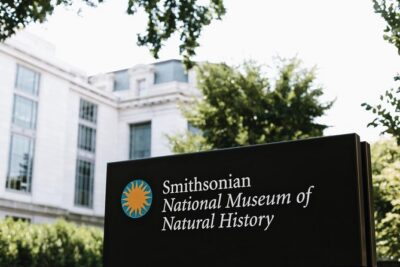
Smithsonian Museum of Natural History – Exclusive Guided Tour
Read our review →
African American History Tour with Museum of African American History Ticket
Read our review →

Smithsonian Museums Walking Tour with Reserved Air & Space Entry
Read our review →
Smithsonian Museum of American History Exclusive Guided Tour
Read our review →
The Smithsonian National Air & Space Museum Exclusive Guided Tour
Read our review →
Smithsonian Museum of Natural History Small Group Tour: 8ppl Max
Read our review →Browse the lists this tour appears in