
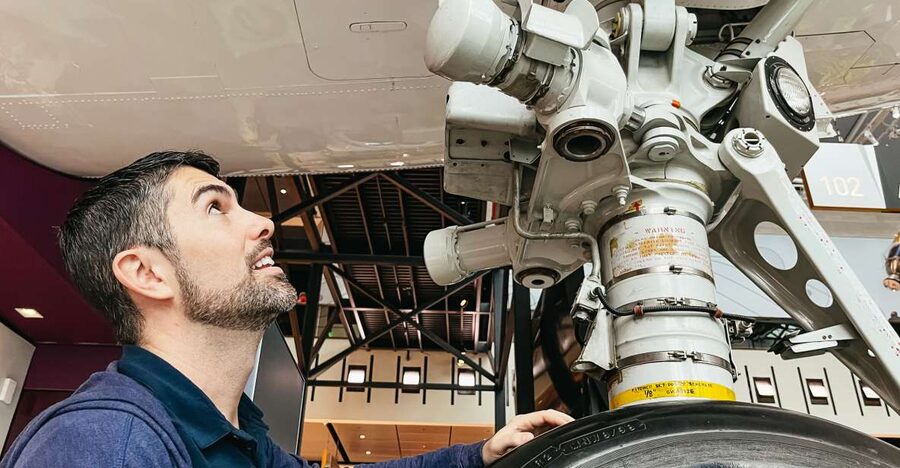
Reviewed · SMITHSONIAN MUSEUM TOURS
Smithsonian Air & Space Museum Guided Tour 8ppl Max
The Apollo 11 Command Module and a piece of real moon rock give this tour its biggest thrill, but the story begins much earlier, with the Wright Brothers and the first practical aircraft. A guide helps you connect those milestones instead of wandering among famous machines without knowing why they matter.
I like the small eight-person limit, which keeps questions and conversation possible. I also like the way guides such as Paul, Rebecca, Amanda, Leigh, and Christopher have brought personal enthusiasm, stories, and even Wright Brothers flight reenactment videos into the visit.
The main caution is the museum’s long renovation. Several exhibits described here may be closed or moved, and the route can change. At $95 per person, the tour makes the most sense if your time is short and you want expert direction, not if you plan to spend a full day inspecting every gallery at your own pace.
Key points to know before you book
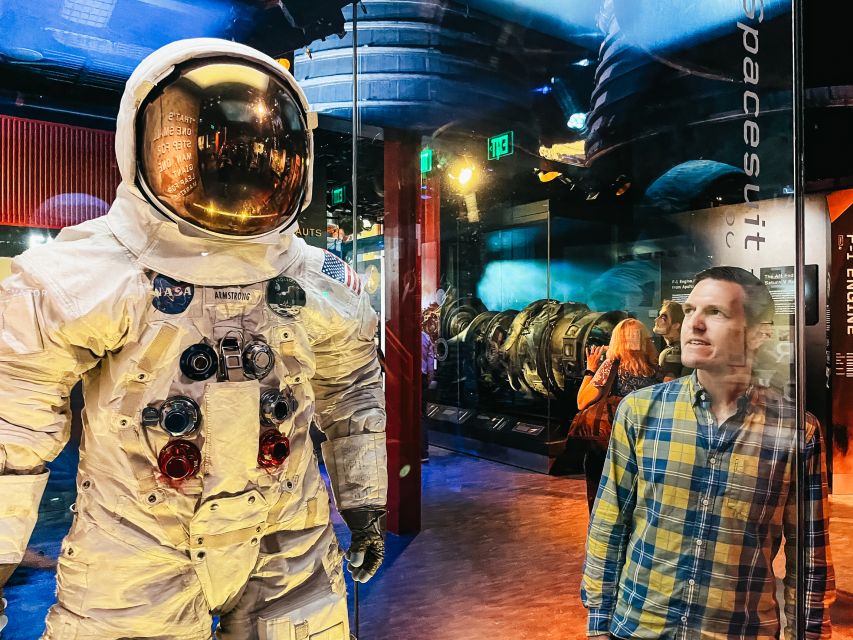
- Apollo 11 is the emotional centerpiece: See the Command Module, learn about Buzz Aldrin’s suit and moon boots, and touch real moon rock.
- The route connects flight and space: You move from the 1903 Wright Flyer and Spirit of St. Louis to the Space Race and life aboard the International Space Station.
- Groups stay small: A maximum of eight people gives the guide room to answer questions and adjust explanations for adults, teenagers, and children.
- Guides add the human story: Past tours have featured engaging guides including Rebecca, Paul, Amanda, Leigh, Tim, Maureen, and Christopher.
- Renovation affects the visit: The museum is under major construction, so the advertised exhibits are not guaranteed to be on display.
- Plan for security: Bring photo ID, arrive 10 minutes early, and carry only a handbag or small thin backpack.
Why a guided visit helps in this enormous museum
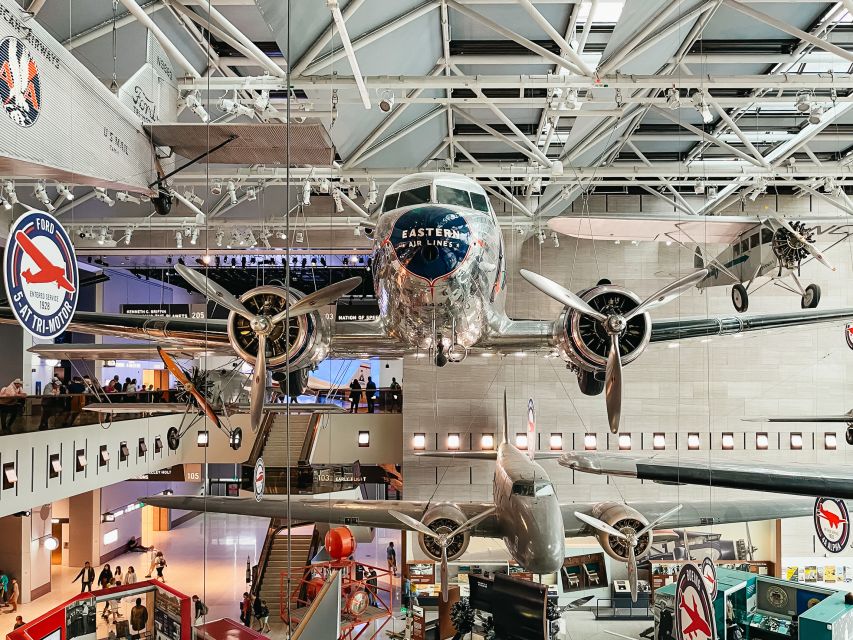
The National Air and Space Museum covers early flight, military and civilian aviation, rockets, astronautics, the Space Race, and modern space travel. With more than 760,000 square feet in the collection, you can easily spend your first hour simply trying to work out where to begin.
That is where the guide earns the fee. Instead of treating the museum as a warehouse of impressive objects, the tour builds a chain of ideas: people first learned controlled flight, engineers improved aircraft, nations turned aviation into a strategic tool, and the same push for speed and precision led to the Moon.
I especially like this approach for a first visit. Labels can tell you an aircraft’s name and date, but a good guide explains what problem it solved and why the machine changed what came next. The strongest guide experiences here have been described as fun, clear, and full of extra facts that go beyond the display panels.
The small group matters, too. Eight people is still enough for a lively outing, but not so many that the guide has to give a speech from ten feet away. You can ask about a particular aircraft, pause over a detail, or request more explanation about the science.
A private option is available if you want the route shaped around your own group. The small-group option should suit most people who want expert help without paying for a fully private experience.
More Smithsonian museum tours in Washington DC:
- Guided African American History Tour with Reserved Museum Entry
★ 4.5 · 1,180 reviews - Smithsonian Museum of Natural History – Exclusive Guided Tour
★ 5.0 · 446 reviews - African American History Tour with Museum of African American History Ticket
★ 4.5 · 390 reviews
Meeting your guide outside the National Air and Space Museum
Your guide meets you 10 minutes before the start time at the base of the sculpture in front of the building entrance facing the lawn of the National Mall. This is an important detail because the museum has a prominent location, but a large public building can still make a meeting point surprisingly easy to miss.
Look for the guide near the sculpture rather than simply waiting at the doors. The guide’s contact information is sent by email by the morning of the tour under Babylon Tours. Check your spam folder if you cannot find it, and save the number for urgent calls or texts.
Bring valid photo identification. Security rules allow only handbags or small thin backpacks, so leave luggage and large bags elsewhere. You should also dress appropriately for museum entry and expect security procedures before the tour gets moving.
The tour lasts 150 minutes. That is long enough for a focused route through major highlights, but not long enough to cover every collection in a museum this size. Think of it as a guided introduction with time afterward to return to the displays that catch your attention.
The Wright Brothers and the first leap into the air
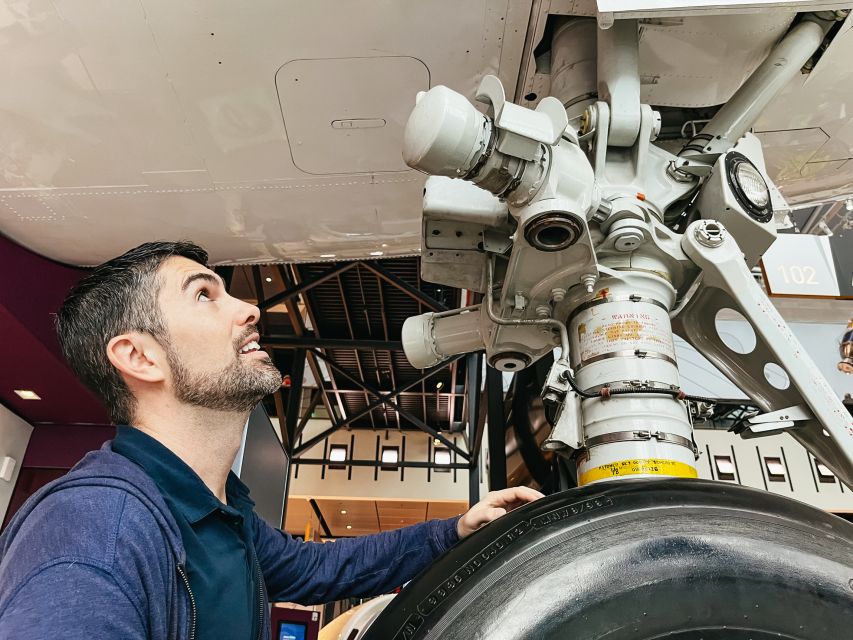
The tour’s early aviation section gives you a useful starting point. The 1903 Wright Brothers aircraft is not simply an old plane to admire. It represents the moment controlled, powered flight moved from experiment to reality.
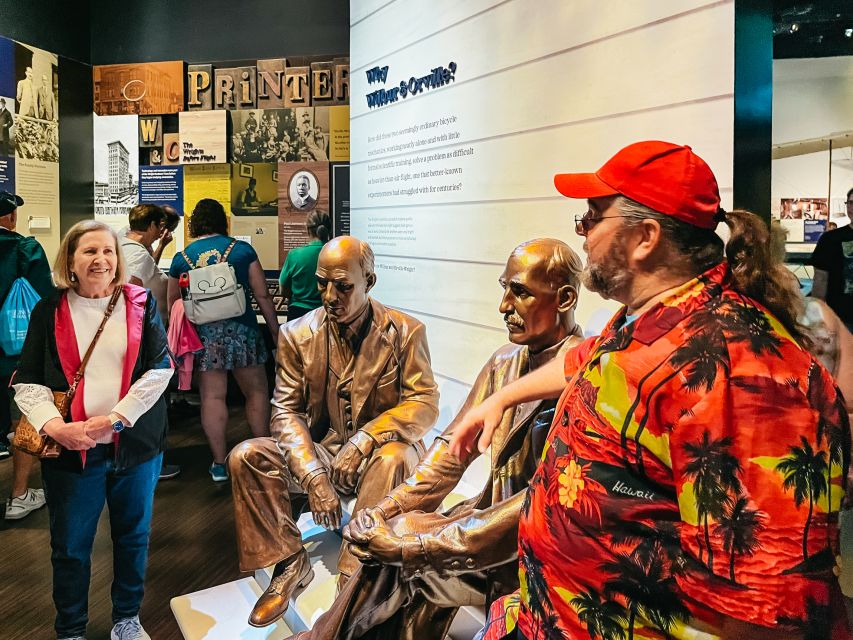
A guide can make this object easier to read. You learn about the problem the brothers were trying to solve and the practical decisions that helped them succeed. One guide, Paul, has even used personal videos showing reenactments of the Wright Brothers flight, adding movement and context to an object that might otherwise seem small and fragile.
This part should appeal to families because it gives younger visitors a clear question to follow: how did humans get a machine off the ground and keep it under control? It also gives adults a solid foundation for the rest of the visit.
The Wright Flyer is a highlight, but the renovation means you should not treat any individual display as guaranteed. The museum’s current exhibition information is the best place to check what is open before you arrive.
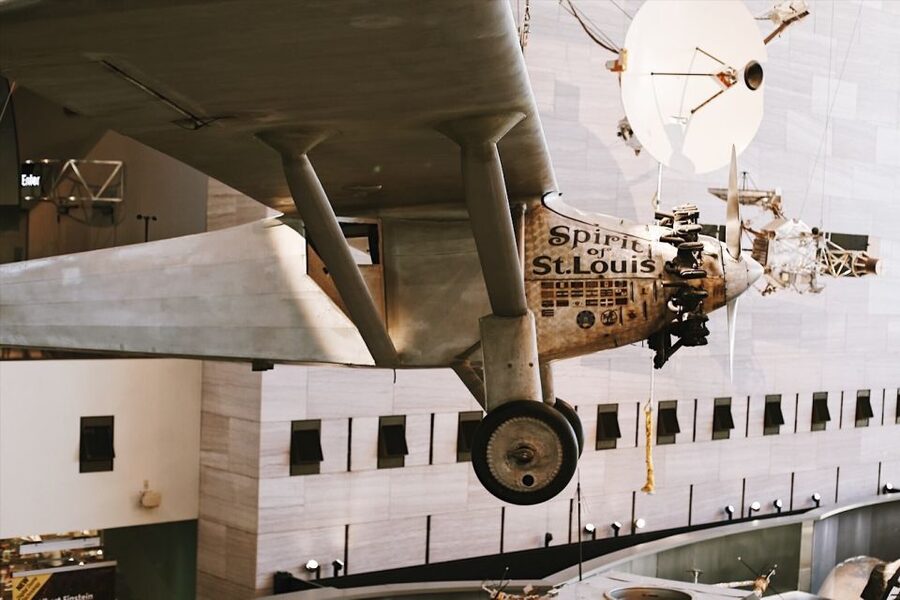
The Spirit of St. Louis and the age of long distance flight
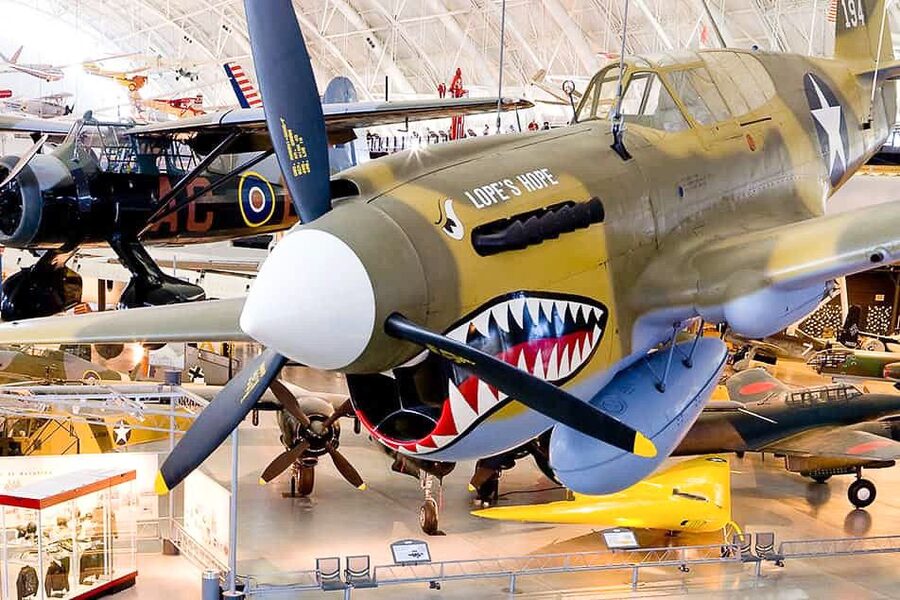
The Spirit of St. Louis shifts the story from proving that flight was possible to showing what aircraft could accomplish. Its place in the museum helps explain how aviation moved into an era of longer journeys, greater risk, and growing public attention.
This is the sort of exhibit where a guide’s storytelling makes a real difference. The aircraft’s shape and size are interesting on their own, but the human ambition behind it makes the object memorable. You are not just looking at a famous plane. You are considering what it meant to attempt a demanding flight with technology that was still developing.
The route does not focus only on one type of aircraft. It presents aviation as a series of advances, setbacks, and bold choices. That makes the visit more satisfying for people who are curious about engineering and for those who simply want to understand how flight changed modern life.
More museum tours in Washington DC:
- National Mall Tour with 10 Stops & U.S. Capitol or Museum Entry
★ 4.5 · 331 reviews - Washington, DC: African American History Tour & Museum Entry
★ 4.9 · 312 reviews - Smithsonian Museums Walking Tour with Reserved Air & Space Entry
★ 5.0 · 297 reviews - Capitol Combo: U.S. Capitol + Library Congress or Capitol Museum
★ 4.5 · 294 reviews
Apollo 11, moon rock, and the human side of the Space Race
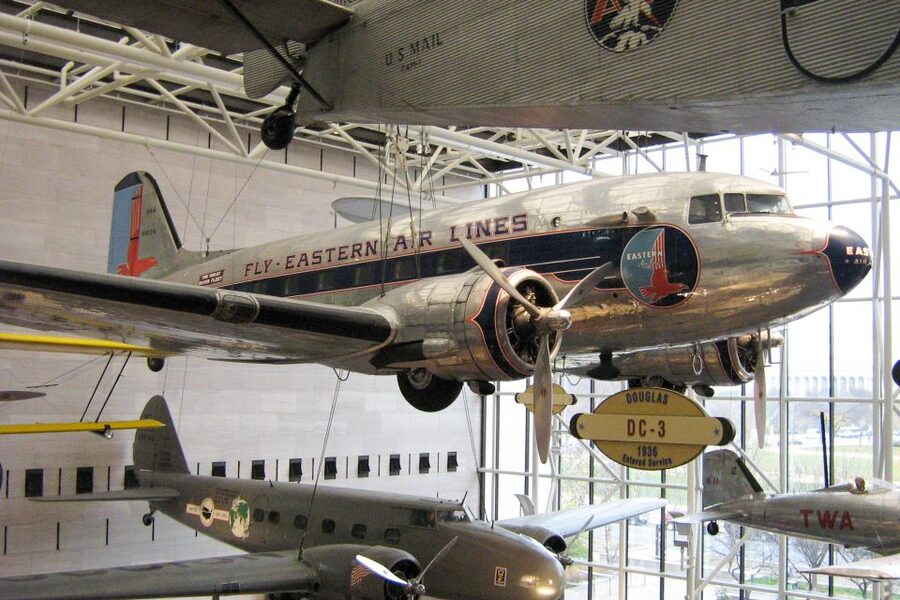
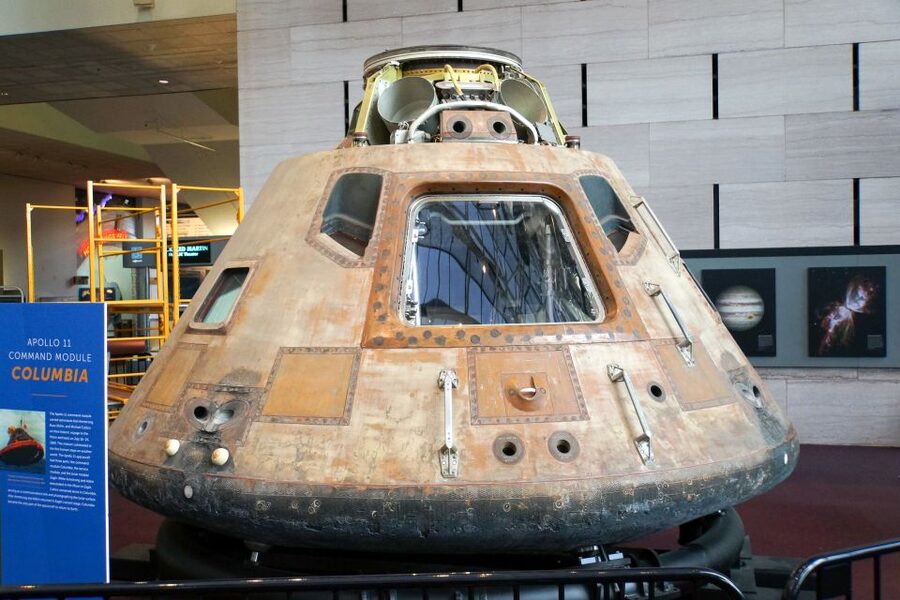
For many people, the Apollo 11 Command Module is the tour’s central stop. This is the spacecraft associated with the first successful human landing on the Moon, and seeing it in person gives scale to an achievement that can feel abstract in books or films.
The tour also includes real moon rock that you can touch. That small physical contact can be surprisingly powerful. A Moon landing may feel distant, but a touchable sample makes the event concrete: this material came from another world and was brought back by people.
You also learn about Buzz Aldrin’s spacesuit and moon boots. These objects bring the story down to a human level. The spacecraft shows the engineering challenge, while the suit and boots show the practical demands placed on the people inside it.
Your guide explains the technology that made the landing possible and the wider story of the world’s leading air and space program. The best guides have a gift for balancing facts with narrative. Leigh, for example, has been praised for tying the museum’s themes together, while Tim has been singled out for thoughtful explanations and discussion.
The Apollo section can be especially good for families. Children get the drama of a trip to the Moon, while adults can focus on engineering, politics, risk, and the decisions behind the mission. Since some museum rooms require quiet or limit speaking, your guide may explain the displays before you enter those spaces.
The International Space Station and life beyond Earth
The model of the International Space Station gives you a different view of space travel. Apollo was about reaching the Moon and returning. The station is about sustained human activity in orbit, with people working in a difficult environment over longer periods.
That contrast helps make the museum’s timeline feel complete. You see early flight, high speed and long-distance aviation, lunar exploration, and the continuing effort to understand what it means to live and work in space.
The guide also discusses what it is like to be an astronaut today. That can add useful balance to the famous historic moments. Space travel is not only about dramatic launches and moonwalks. It also involves training, routine, equipment, teamwork, and the challenge of staying safe far from Earth.
Again, the station model may or may not be accessible during your visit because of the renovation. The tour provider adjusts the route to match the exhibits available that day.
A guide-led pace, with room for questions
The tour’s strongest feature is not simply the list of objects. It is the way a good guide sets a pace through a very large museum.
Several guides have received strong praise for being both informative and personable. Rebecca has been described as warm and clear, Amanda as especially good at leading groups through the vast collection, and Christopher as a lively communicator with a clear passion for aviation. Maureen and Leigh have also been praised for making the subject approachable for both adults and children.
That range matters because no two groups arrive with the same interests. A child may want to know how astronauts eat or sleep. An aviation enthusiast may want technical detail about an aircraft. A parent may want a route that stays focused. The eight-person limit gives the guide a better chance of responding to those differences.
You should still expect a museum tour, not a private seminar. The guide controls the route and timing, and 150 minutes requires choices. If one aircraft fascinates you, you may not have time to study every nearby object in detail.
The smart plan is to treat the tour as your orientation. Afterward, you can revisit the sections that interest you most, if the museum’s opening hours and available exhibits allow.
Is $95 per person a fair price?
At $95 per person, this is not the cheapest way to enter a free public museum. You are paying for the guide’s time, a planned route, small-group access, and help making sense of a huge collection.
The value depends mainly on your schedule. If you have only a few hours in Washington DC, the tour can save you from wandering through galleries without reaching the Apollo objects, Wright Flyer, or Spirit of St. Louis. It also gives you a human explanation of displays that may otherwise feel disconnected.
The price is harder to justify if you are a serious museum reader with a full day available. You may prefer to explore at your own speed, read every panel, and return to favorite objects. Renovation adds another consideration because some advertised highlights may be unavailable.
The tour includes a guide and walking tour, with a private format if you choose that option. Food, drinks, hotel pickup, hotel drop-off, and temporary exhibits are not included. Freeze-dried ice cream may be available for purchase, which is a fun extra but not part of the tour price.
Free cancellation is available up to 24 hours before the start, and you can reserve now and pay later. Small-group tours need at least two participants. If that minimum is not reached, an alternative date or refund is offered.
Who will get the most from this experience?
I would choose this tour if you are visiting the museum for the first time, have limited time, or want the major aviation and space stories arranged in a clear order.
It is a strong fit for families with older children and teenagers because the objects are memorable and the guide can turn technical subjects into stories. It also suits adults who enjoy aviation, engineering, space exploration, or the practical details behind famous missions.
The private option may work well for a group with specific interests or a mixed-age family that needs a flexible pace. The small-group format is better value for most people who want conversation and direction without paying for exclusivity.
This is not a good choice if you want a guaranteed list of every advertised exhibit. Construction is ongoing for years, and the museum can change what is open. It is also not suitable for wheelchair users according to the activity information, despite wheelchair tours being available only by request in some circumstances. Confirm your needs before booking.
Final verdict: book it if you want context, not just aircraft
I would book this tour for a short Washington DC visit or a first trip to the museum. The combination of Apollo 11, moon rock, Buzz Aldrin’s gear, the Wright Flyer, the Spirit of St. Louis, and the International Space Station gives you a strong sweep through aviation and space exploration.
The best reason to pay $95 is the guide. People such as Rebecca, Paul, Amanda, Leigh, Tim, Maureen, and Christopher have brought humor, clear explanations, personal stories, and enthusiasm to the route. That human layer can turn a crowded collection into a coherent story.
Just book with realistic expectations. Renovation may remove favorite exhibits, the 150-minute route cannot cover everything, and the price reflects guidance rather than a full-day museum experience. If those limits suit your plans, this is a practical way to get your bearings fast and leave with a better understanding of why these machines matter.
FAQ
How long does the Smithsonian Air and Space Museum guided tour last?
The tour lasts 150 minutes.
How many people can join each tour?
A maximum of eight people is permitted on each tour.
Is a private tour available?
Yes. You can choose a private tour or a small-group tour.
What language is the tour conducted in?
The live tour guide speaks English.
What are the main exhibits included in the route?
The advertised highlights include the 1903 Wright Brothers aircraft, the Spirit of St. Louis, a model of the International Space Station, the Apollo 11 Command Module, Buzz Aldrin’s spacesuit and moon boots, and real moon rock.
Can I touch moon rock during the tour?
Yes. Touching real moon rock is listed as one of the tour highlights.
Will every advertised exhibit be available?
No. The museum is under major construction, and some collections may vary. The route will be adjusted according to the exhibits available during your visit.
Where do I meet the guide?
Meet the guide 10 minutes before the tour at the base of the sculpture in front of the Air and Space building entrance facing the lawn of the National Mall.
What should I bring?
Bring a valid passport or photo ID. Only handbags or small thin backpacks are allowed through security, so do not bring luggage or large bags.
Can I cancel the booking?
Yes. You can cancel up to 24 hours before the tour for a full refund. You can also reserve now and pay later.
Just added in Washington DC
- Washington DC: Express Morning or Night-Time Monuments Tour★ 3.2 · 3 reviews
- Washington, DC: Georgetown Architecture Walking Tour★ 5.0 · 8 reviews
- Washington D.C.: Georgetown Guided Secret Food Tour★ 3.9 · 7 reviews
- Washington DC: E-Bike Rental★ 4.3 · 7 reviews
- Washington DC: Christmas Eve Gourmet Brunch or Dinner Cruise★ 4.2 · 6 reviews
- Washington DC Day Tour – Private Tour★ 4.1 · 3 reviews
- Washington DC: After Dark Night-Time Sightseeing Tour★ 3.8 · 6 reviews
- Washington DC: Best of Capitol Hill Guided Bike Tour★ 3.2 · 7 reviews
Smithsonian Museum Tours, compared.

Guided African American History Tour with Reserved Museum Entry
Read our review →
Smithsonian Museum of Natural History – Exclusive Guided Tour
Read our review →
African American History Tour with Museum of African American History Ticket
Read our review →

Smithsonian Museums Walking Tour with Reserved Air & Space Entry
Read our review →
Smithsonian Museum of American History Exclusive Guided Tour
Read our review →
The Smithsonian National Air & Space Museum Exclusive Guided Tour
Read our review →
Smithsonian Museum of Natural History Small Group Tour: 8ppl Max
Read our review →Browse the lists this tour appears in