
Reviewed · SMITHSONIAN MUSEUM TOURS
National Portrait Gallery and American Art Museum Tour: 8ppl Max
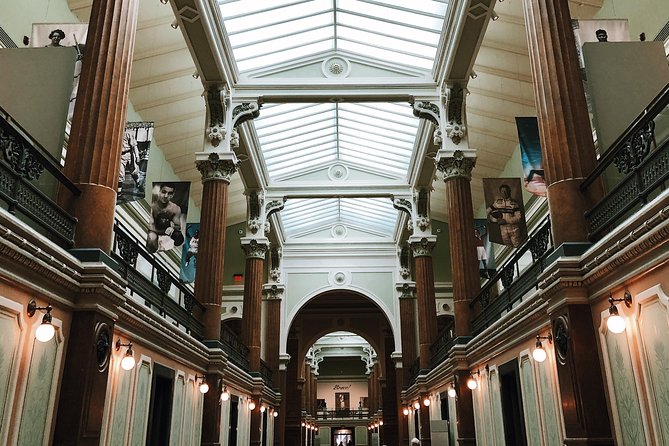
The most unusual part of this Washington tour comes before you even study the art: the National Portrait Gallery occupies a former Civil War hospital, where Walt Whitman cared for wounded soldiers. That past gives the first galleries a human edge, especially when you see Whitman’s portrait and then move into portraits of presidents, first ladies, soldiers, reformers, and artists.
I like the small eight-person limit, which gives your guide room to explain an artwork instead of racing through a crowded room. I also like the clear range of American art, from 19th-century daguerreotypes to Georgia O’Keeffe, Edward Hopper, David Hockney, and a portrait of Barack Obama. The main consideration is the fixed 2.5-hour schedule: you will see highlights, not every room.
Key points to know before booking
- A former Civil War hospital begins the story: Learn how the building connects to Walt Whitman and wounded soldiers.
- Eight people maximum: The small group makes it easier to ask questions and keep the visit focused.
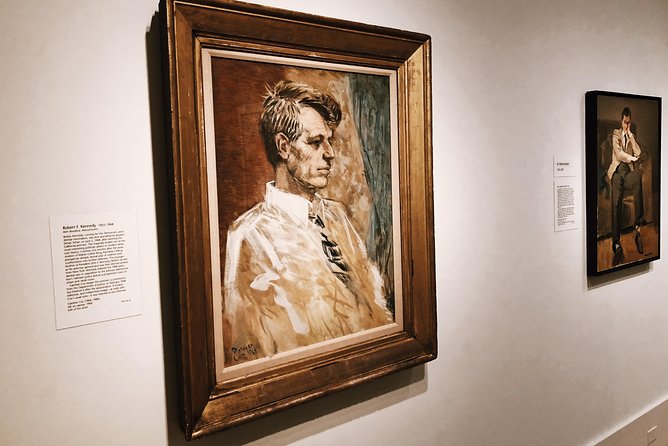
- Presidents meet suffragettes and industrialists: The portrait collection follows many of the people who shaped the United States.
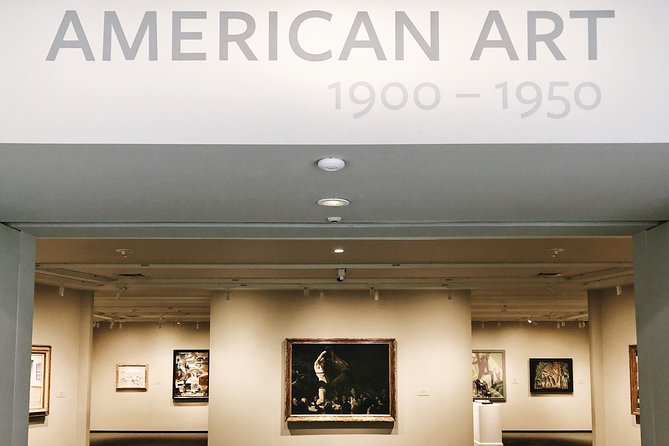
- American art covers several centuries: Expect Mary Cassatt, O’Keeffe, Hopper, Hockney, photography, and contemporary work.
- The tour costs $89.67 per person: The admission ticket is free, so you are paying mainly for the guide and the structured visit.
- Plan for a 1:30 pm start: Meet at 8th Street NW and G Street NW, and bring only a small bag.
Why the old hospital changes the National Portrait Gallery
Many art tours begin with a list of famous names. This one has a stronger opening: a building tied to the human cost of the Civil War.
The National Portrait Gallery was once a Civil War era hospital. Walt Whitman tended to wounded soldiers there, and a portrait of Whitman now helps connect the poet to the place. That link is more useful than a quick architectural fact because it gives you a way to read the museum. Portraits are not just pictures of important people. They are records of pain, ambition, public service, conflict, and memory.
Your guide can use that setting to explain why portraits matter in American life. The collection includes presidents and first ladies, but it does not stop at official leaders. You will also encounter Civil War figures such as Ulysses S. Grant and William T. Sherman, along with people connected to business, reform, women’s rights, and social change.
I like this approach because it keeps the museum from feeling like a parade of stern faces. A portrait of a president can tell you how a nation wanted to see its leader. A portrait of a suffragette can raise questions about who was allowed political power. A photograph or daguerreotype can show how image-making changed as the country changed.
The 19th-century daguerreotypes are especially worth slowing down for. They belong to an early phase of photography, when making a portrait was a more deliberate act than taking a quick phone picture. You may find yourself looking not only at the sitter, but also at posture, clothing, expression, and the sense of occasion.
More Smithsonian museum tours in Washington DC:
- Guided African American History Tour with Reserved Museum Entry
★ 4.5 · 1,180 reviews - Smithsonian Museum of Natural History – Exclusive Guided Tour
★ 5.0 · 446 reviews - African American History Tour with Museum of African American History Ticket
★ 4.5 · 390 reviews
Presidents, first ladies, and the people behind public power
The presidential portraits provide an easy thread through the first museum. You can follow a long line of American leadership, then see how the image of the presidency changed over time.
That does not mean every portrait will appeal to you. Some are formal and predictable. Others reveal more personality, political messaging, or artistic invention. A good guide helps you notice the choices that a wall label may not explain: how a subject is posed, what appears in the background, and how the artist presents authority.
The first ladies’ portraits add another useful layer. They help you consider public life beyond the president’s office, including changing expectations for women, political visibility, and national symbolism. The tour’s attention to women artists also makes this part of the visit more balanced.
The collection’s range reaches beyond the White House. Robber Barons, Civil War leaders, suffragettes, and other figures from American public life appear alongside more familiar names. This keeps the visit from becoming a simple greatest-hits list. You get a picture of the forces that shaped the country, not only the people who held office.
If American history is new to you, the guide’s context will matter. If you already know the broad story, the value is in the connections between an individual, the era, and the way that person was represented.
From Mary Cassatt to Georgia O’Keeffe
The tour then brings you into the American Art Museum, where the mood changes. Instead of focusing mainly on who a person was, you begin looking at how American artists saw people, places, objects, and ideas.
Mary Cassatt provides a link to the Impressionist movement. Her work can help you recognize how artists used light, color, brushwork, and everyday subjects in ways that challenged older academic rules. The guide can also place Cassatt’s career in the context of women artists, a subject that receives particular attention on this tour.
That focus is one of its strongest features. A large museum can easily give women artists a quick mention while spending most of its time on familiar male names. Here, you should expect discussion of the women artists and the different barriers and choices that shaped their careers. The available review specifically praised Meghan for bringing unusual insight to this subject and for explaining details that were not obvious from the labels.
Georgia O’Keeffe offers a sharp contrast. Her flowers are famous, but they are not simply pretty decorative pictures. Their scale, close cropping, and provocative forms invite several readings. A guide can help you see why O’Keeffe became such an important figure in American modernism without reducing the work to one fixed meaning.
I appreciate this kind of explanation because it gives you a starting point while leaving room for your own response. You do not need to arrive with a degree in art history. You do need to be willing to look for a little longer than you might on your own.
The Great Depression through government photography
One of the most useful sections of the visit covers photography commissioned by the government during the Great Depression. These images show how art and public policy can overlap.
Government photography during a national crisis was not neutral in a simple sense. Pictures could document hardship, shape public understanding, and help build support for government action. They also made ordinary Americans visible in a national story.
This is an important stop for anyone who thinks art museums are separate from history museums. The photographs give you another way to think about evidence, record-keeping, and the power of an image. A painting may interpret a person through style and symbolism. A government photograph may appear more direct, yet it still reflects choices about where to stand, whom to show, and what moment to capture.
The guide’s role is valuable here because a short label may identify the photographer and date but not explain the larger purpose of the commission. With a small group, you can ask how these images differ from private family photographs or portraits made for wealthy patrons.
More museum tours in Washington DC:
- National Mall Tour with 10 Stops & U.S. Capitol or Museum Entry
★ 4.5 · 331 reviews - Washington, DC: African American History Tour & Museum Entry
★ 4.9 · 312 reviews - Smithsonian Museums Walking Tour with Reserved Air & Space Entry
★ 5.0 · 297 reviews - Capitol Combo: U.S. Capitol + Library Congress or Capitol Museum
★ 4.5 · 294 reviews
Hopper, Hockney, and the changing American mood
Edward Hopper is one of the artists you can expect to encounter on the American art portion of the tour. His scenes often reward patience. They may appear simple at first, but light, space, silence, and the distance between people can create a more complicated mood.
Hopper also gives your guide a way to discuss modern American life without relying only on political history. His work can make an ordinary street, room, or building feel psychologically charged. You may come away noticing how much a painting can suggest without showing an obvious event.
David Hockney adds another shift in time and style. His work helps the tour move beyond the idea that American art follows a single path from realism to modernism. The route includes different ways of treating color, space, portraiture, and visual experience.
This portion may be especially useful if you sometimes feel lost in modern or contemporary galleries. Your guide can explain what you are looking at, why the artist made certain choices, and how a work fits into the larger American story. That does not guarantee that every experimental piece will become a favorite. It does make the unfamiliar less frustrating.
The tour also includes a curious portrait of former president Barack Obama. It offers a chance to consider how a contemporary presidential image differs from older official portraits. You can look at the choice of pose, style, symbolism, and the expectations placed on a modern leader.
Contemporary art needs time and explanation
The final stretch moves toward more experimental and contemporary work. This is where the guide can make the biggest practical difference.
Contemporary art often asks you to think about materials, identity, politics, media, or ideas rather than simply recognize a subject. Some works may be immediately appealing. Others may seem puzzling, especially if you are used to paintings that clearly show a person or place.
A guide cannot tell you what to feel, but can give you the background needed to make your own judgment. That is the right reason to book this tour. You are not paying for someone to tell you which pieces are good. You are paying for a clear path through unfamiliar work and a chance to ask why it belongs in an American art museum.
Quiet or restricted-speaking areas may exist inside the museums. Your guide will explain those rules before you enter. That matters because a lively discussion may need to pause in certain rooms, and you should not mistake quiet museum etiquette for a lack of information.
Collections can change during the year, so the exact works on view may vary. The artists named here provide a useful sense of the tour’s range, but you should not treat the list as a promise that every specific piece will be displayed on your date.
What $89.67 buys you
The price is $89.67 per person. Admission to the museums is listed as free, so the fee mainly covers the professional guide, planning, and the small-group format.
That is a substantial price for 2.5 hours, particularly if you are comfortable reading labels and choosing your own route. On the other hand, eight people maximum is a meaningful difference from a large group. Your guide has a better chance to hear your questions, adjust the pace, and spend time on works that interest the group.
I would see this as a guided interpretation fee, not an admission ticket. It makes the most sense if you want context and structure, have limited time in Washington, or find art museums easier to enjoy with an expert beside you.
The strongest praise available for this experience focuses on Meghan’s art history knowledge and her attention to women artists. She reportedly moved through the highlights while leaving enough time for discussion and offered information beyond the labels. That is exactly the kind of value you want from a paid museum guide.
Group discounts are listed as a feature, though the supplied details do not state the discount amount or the number of people needed. If you are booking for a larger party, check the final price before paying.
Timing, meeting point, and what to bring
The tour starts at 1:30 pm and lasts about two hours and thirty minutes. Meet at 8th Street NW and G Street NW in Washington, DC. The activity ends back at the meeting point, so plan your next stop from there rather than expecting a hotel transfer.
The location is near public transportation. Hotel pickup and drop-off are not included, and food and drinks are also not included. This is a museum visit, not a food tour, so eat beforehand if you know you prefer not to go several hours without a meal.
Security rules make packing light a smart move. Large bags and suitcases are not allowed inside. Handbags and small, thin backpacks are permitted through security, subject to museum procedures.
Wear appropriate clothing for entry into some sites on the tour. A moderate level of physical fitness is recommended. The supplied information does not give a detailed accessibility plan, so contact the provider if you have specific mobility needs.
The provider requires a mobile phone number, including country code. Keep your phone available on the day of the tour in case the guide or operator needs to contact you.
Occasional museum closures can occur without warning. If opening is delayed by more than an hour, an appropriate alternative may be provided, but the stated terms do not promise a refund or discount in that situation.
Who will get the most from this museum tour
I would recommend this experience to you if you want American art connected to American history. The Civil War hospital, Whitman, presidents, suffragettes, government photography, and contemporary portraiture give the visit a clear human thread.
It also suits you if you are curious about women artists. The attention to Cassatt, O’Keeffe, and other women artists is not a token side note. It is one of the tour’s better features, especially if you want more than the usual list of famous male painters.
First-time museum visitors may appreciate the route and explanations. Art students and experienced museumgoers may still find value in the discussion, particularly when the tour reaches photography, modern art, and contemporary pieces.
You may prefer to visit independently if you want several hours for one museum, dislike a fixed pace, or already have a detailed list of works to see. At 2.5 hours, this tour gives you a strong introduction but cannot cover every gallery.
Should you book the National Portrait Gallery and American Art Museum Tour?
Book it if you want a focused, small-group introduction rather than an unstructured museum visit. The former hospital setting and Walt Whitman connection give the tour a memorable start, while the combination of presidential portraits, women artists, photography, Hopper, Hockney, and contemporary work gives you plenty of variety.
The main question is value. At $89.67, this is not the cheapest way to enter a free museum. It becomes more worthwhile if you value expert explanation, want to ask questions, or have only one afternoon in Washington.
I would especially consider it for visitors who enjoy history but feel less confident with modern art. A guide such as Meghan, with time to discuss context and women artists, can turn a long museum corridor into a readable story. Cancel at least 24 hours before the 1:30 pm start for a full refund. After that point, the stated terms do not provide a refund.
FAQ
How long does the tour last?
The tour lasts approximately 2 hours and 30 minutes.
What time and where does the tour begin?
It begins at 1:30 pm at 8th Street NW and G Street NW in Washington, DC.
How many people can join the tour?
The tour allows a maximum of eight people.
Is museum admission included?
The museum admission ticket is listed as free. The tour price covers the professional guide and small-group experience.
Are hotel pickup, food, or drinks included?
No. Hotel pickup and drop-off, food, and drinks are not included.
Can I cancel for a full refund?
Yes. You can cancel at least 24 hours before the experience start time for a full refund. Cancellations or changes made less than 24 hours before the start time are not accepted for a refund.
Just added in Washington DC
- Washington DC: Express Morning or Night-Time Monuments Tour★ 3.2 · 3 reviews
- Washington, DC: Georgetown Architecture Walking Tour★ 5.0 · 8 reviews
- Washington D.C.: Georgetown Guided Secret Food Tour★ 3.9 · 7 reviews
- Washington DC: E-Bike Rental★ 4.3 · 7 reviews
- Washington DC: Christmas Eve Gourmet Brunch or Dinner Cruise★ 4.2 · 6 reviews
- Washington DC Day Tour – Private Tour★ 4.1 · 3 reviews
- Washington DC: After Dark Night-Time Sightseeing Tour★ 3.8 · 6 reviews
- Washington DC: Best of Capitol Hill Guided Bike Tour★ 3.2 · 7 reviews
Smithsonian Museum Tours, compared.
Guided African American History Tour with Reserved Museum Entry
Read our review →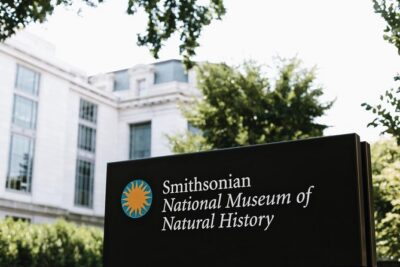
Smithsonian Museum of Natural History – Exclusive Guided Tour
Read our review →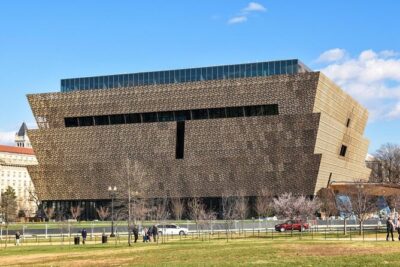
African American History Tour with Museum of African American History Ticket
Read our review →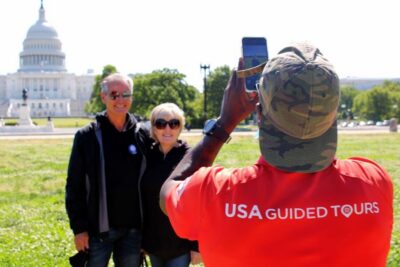

Smithsonian Museums Walking Tour with Reserved Air & Space Entry
Read our review →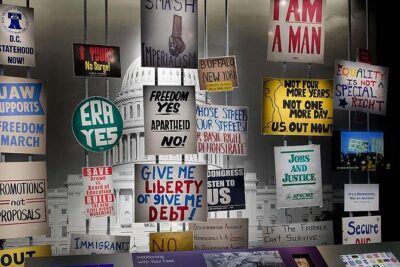
Smithsonian Museum of American History Exclusive Guided Tour
Read our review →
The Smithsonian National Air & Space Museum Exclusive Guided Tour
Read our review →
Smithsonian Museum of Natural History Small Group Tour: 8ppl Max
Read our review →Browse the lists this tour appears in