
Reviewed · NATIONAL ARCHIVES TOURS
National Archives Skip the Line Tour Semi-Private 6ppl Max
The National Archives holds the original paperwork behind some of America’s biggest promises and failures. In two hours, you’ll see the Declaration of Independence, Constitution, Bill of Rights, Emancipation Proclamation, and Magna Carta, with a guide explaining why each document matters. The Rotunda is the main event, but the stories around Rosa Parks and the presidential letters add welcome human detail.
I like the small-group format, which gives you room to ask questions instead of simply following a flag through a crowded museum. I also like the guides’ story-based approach. Donna, Meghan, Maribeth, Bess, Brenda, Ryan, and others have been praised for making difficult subjects clear and connecting them to the present. The main drawback is that the tour moves at a set pace, and temporary exhibits are not included.
Key points
- Original founding documents: See the Declaration of Independence, Constitution, and Bill of Rights in the National Archives Rotunda.
- Small groups of up to eight: Choose a private tour or a semi-private group for more personal guidance.
- More than the famous parchment: The route includes presidential letters, the Emancipation Proclamation, Rosa Parks’ citation, and the Magna Carta of 1297.
- Strong guide-led storytelling: Guides such as Donna, Meghan, Maribeth, and Bess are praised for clear explanations and lively historical context.
- A focused two-hour visit: The tour helps you cover key displays without trying to tackle every object in the Archives.
- Plan for security: Bring photo ID, leave large luggage behind, and expect quiet rules in some rooms.
Why the National Archives works best with a guide
You can enter the National Archives and look at the documents on your own. The harder part is knowing what you are seeing, why it survived, and how the pieces connect.
The famous documents are displayed behind protective glass, and the writing is not always easy to read. A good guide helps you notice the signatures, wording, revisions, and political arguments that a quick walk through might miss. You are not just looking at old paper. You are considering the promises made by a new country, the limits built into those promises, and the long struggle to make them apply more widely.
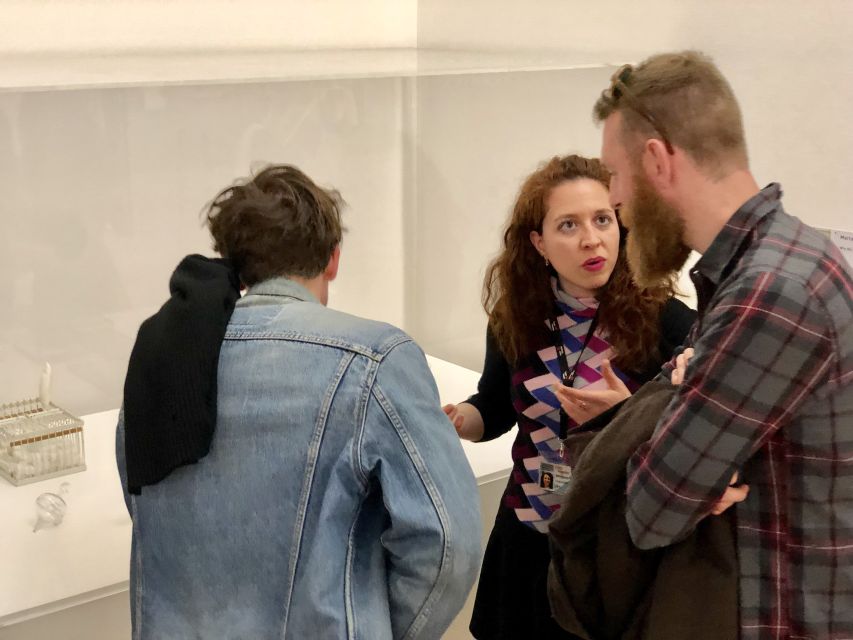
This is where the small group matters. With no more than eight people on the semi-private option, you can usually hear the guide without fighting for space. You can also ask about a name or phrase that catches your attention. The private option gives your party even more control over the conversation, though the supplied information does not specify how the itinerary or meeting point differs between booking choices.
The guides bring different personalities to the visit. Donna has been praised for telling the story in a way that works even for people without a strong interest in American history, while Maribeth is especially good at putting each document into context. Bess has been noted for getting a group into the Rotunda early, allowing a quieter look at the founding documents. Meghan, Ryan, Brenda, and other guides have also been praised for clear explanations, friendly delivery, and inviting questions.
More National Archives tours in Washington DC:
- VIP Best of DC with US Capitol + National Archives Reserved Entry
★ 4.5 · 2,491 reviews - Skip-the-line National Archives Building Exclusive Guided Tour
★ 5.0 · 381 reviews - National Archives Skip the Line Guided Tour Semi-Private 6ppl Max
★ 5.0 · 196 reviews
The Rotunda and America’s founding promises
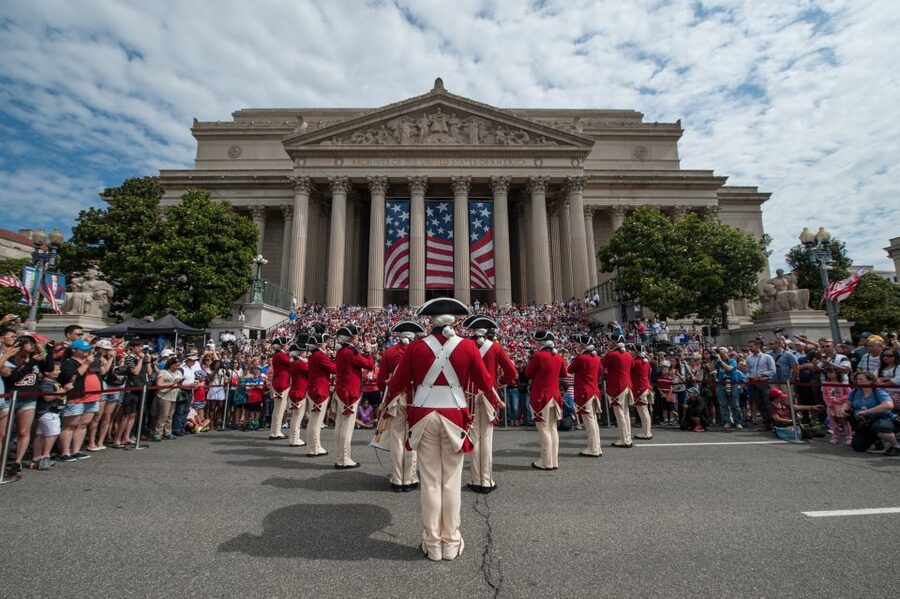
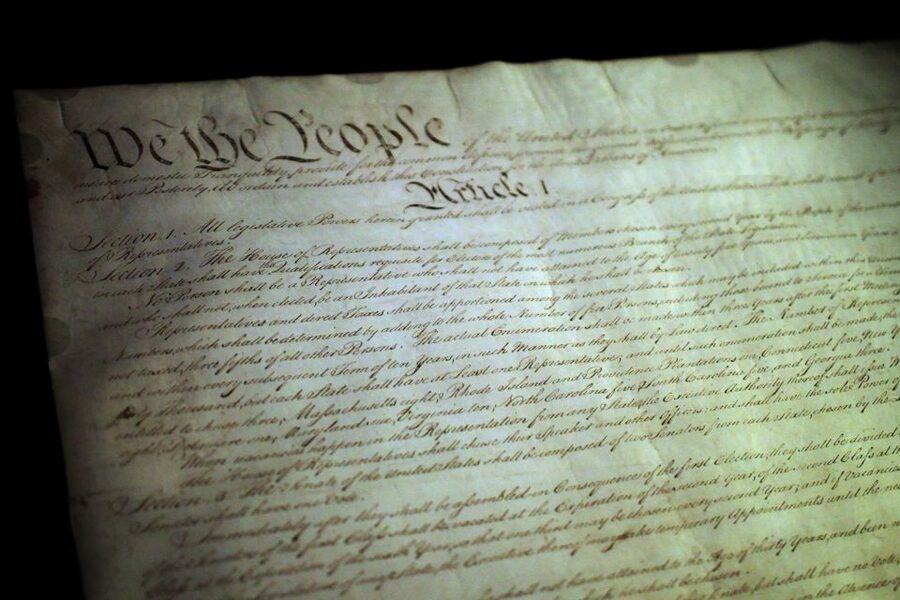
The tour begins with the National Archives Rotunda, where the Declaration of Independence, Constitution, and Bill of Rights are displayed. These are the documents most people come to see, and rightly so.
The Declaration is familiar from schoolbooks, but seeing the original changes the experience. The text is a physical object, with faded ink and carefully spaced lines. Your guide can explain the document’s political purpose and the setting in which it was written, rather than treating it as a sacred object detached from events.
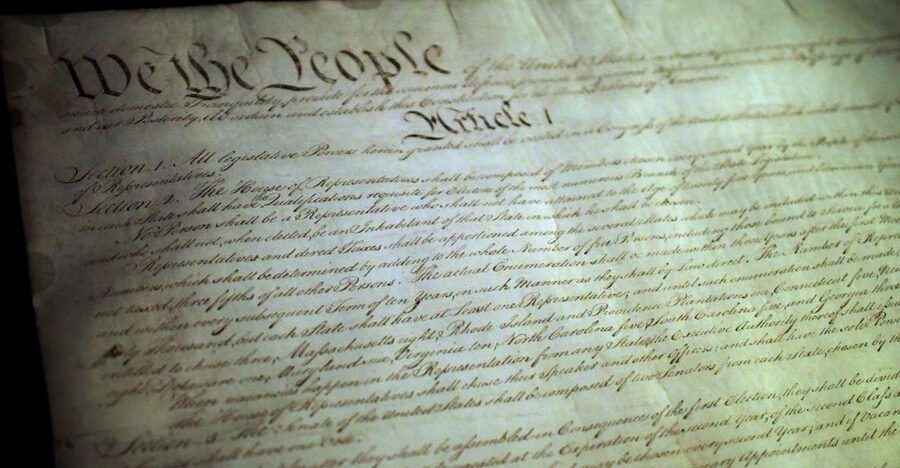
The Constitution requires a different kind of attention. It created the framework for the federal government, but it also left major questions unresolved. A guide can help you think about both sides at once: the bold creation of a new system and the compromises that shaped it.
The Bill of Rights brings the discussion closer to daily life. Its amendments cover speech, religion, criminal procedure, and other limits on government power. I find this section especially useful for families and visitors from outside the United States because the guide can explain terms that may seem familiar but carry specific legal meaning.
The documents are old, fragile, and carefully protected. You are viewing them through glass, not handling them, and the display area may have restrictions on speaking. Your guide will explain the rules before entering rooms where quiet is required or conversation is limited.
Signatures, Federalist Papers, and the people behind the text
The tour also brings attention to the Federalist Papers and the signatures connected with America’s early political leaders. Alexander Hamilton’s name is a particular draw, especially for anyone familiar with his public career or the modern musical based on his life.
The value here is not simply spotting a famous signature. The guide can connect the names to the arguments and political disputes surrounding the new government. That gives the documents a human scale. These were not anonymous legal pages. They were written, debated, signed, and defended by people with strong disagreements about how the country should work.
This part of the visit suits curious teenagers and adults who already know the broad story but want more detail. It also works for first-time visitors because the guide can explain who the signers were without assuming that you remember every figure from school.
You should expect the tour to focus on selected highlights rather than every page or display. The National Archives holds more than half a million artifacts, so no two-hour visit can cover the whole collection. That limit is useful if you have a busy Washington schedule, but it means you may want extra time afterward to explore on your own.
Presidential letters in the Public Vaults
The Public Vaults Exhibits add a different mood to the tour. Instead of only reading formal declarations and laws, you see letters written by presidents such as George Washington and John F. Kennedy.
Letters show public figures in a more personal setting. They reveal handwriting, tone, and the practical business of governing. They also help balance the grand language of the Rotunda with the day-to-day work behind it.
Your guide may point out details that are easy to miss in a self-guided visit, including who wrote a letter, who received it, and what problem it addressed. The supplied information does not give a fixed list of every letter on display, so the exact selection may change. The key point is that this section gives you a broader look at presidential records beyond the best-known founding documents.
If your main goal is only to see the Declaration and Constitution, this section may feel like a side trip. I think it earns its place because it shows how the government’s ideals were handled in real life, through correspondence and decisions rather than only famous speeches.
More skip-the-line tickets in Washington DC:
- VIP National Archives Skip-The-Line Guided Tour 6 ppl Max
★ 5.0 · 126 reviews - National Archives Skip-the-Line Guided Tour
★ 5.0 · 85 reviews - Skip the Line National Archives and US Capitol Tour
★ 4.5 · 51 reviews
The Emancipation Proclamation and Rosa Parks’ citation
The Emancipation Proclamation changes the focus from the creation of the United States to the country’s long struggle over slavery and civil rights. It is a necessary part of the visit because it shows that the story did not end with the founding documents.
The document is often discussed as a turning point in the Civil War, but the guide can also explain its limits and its place in the broader effort to end slavery. That added context keeps the display from becoming a simple story of one paper solving an enormous problem.
The citation issued to Rosa Parks is one of the most striking objects on the route. It shows how an ordinary piece of official paperwork can carry the weight of a national conflict. Seeing a citation connected with a civil rights activist brings the subject out of the distant past and shows how racial discrimination was enforced in everyday life.
This stop is particularly useful for families with older children and for visitors who want the Archives to address more than political theory. The guide can connect the document to the larger civil rights struggle and help you understand how long these issues continued after the country’s founding ideals had been written down.
Some parts of the tour may feel sobering. That is appropriate. The visit is not designed as a parade of victories. It asks you to look at the gap between American principles and American practice.
The Magna Carta of 1297 in the Rubenstein Gallery
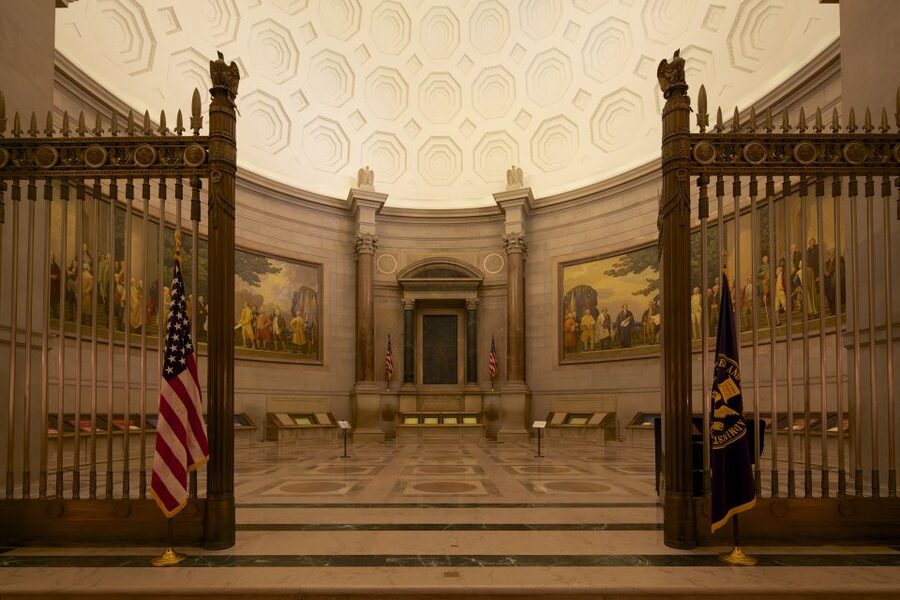
The Rubenstein Gallery takes you farther back, to the Magna Carta of 1297. This document predates the United States by centuries and helps explain the older legal ideas that influenced later constitutional thinking.
You do not need a law degree to appreciate it. The guide’s job is to show why a medieval document matters in a museum devoted to American records. The connection lies in the continuing argument over power, rights, and the authority of government.
For many visitors, this is an unexpected highlight. The National Archives is usually associated with the Declaration and Constitution, so the Magna Carta broadens the visit beyond American independence. It also gives you a chance to see how political ideas develop over time rather than appearing fully formed in one era.
The gallery may include documents and displays that are separate from the main Rotunda presentation. The tour description specifically notes that temporary exhibits are not included, so do not assume your ticket covers every special exhibition in the building.
What the two-hour pace feels like
Two hours is long enough to give the main displays proper attention without turning the visit into an all-day museum session. The guide keeps the group moving from one area to the next, adding stories and explanations along the way.
That pace is a strength if you have other plans on the National Mall or in downtown Washington. It is also helpful for families. One parent described the guide as especially good with a 10-year-old, which suggests that the experience can work for children when the guide adjusts the explanation and invites questions.
Still, you should not expect unlimited time at every case. The tour is built around highlights, and some rooms have quiet or restricted speaking rules. If you enjoy reading every label slowly, you may prefer to return after the guided portion and continue at your own speed.
The walking is indoors, but you should still wear comfortable clothes and suitable footwear. Appropriate dress is required for entry into some sites on the tour. The meeting point can vary depending on the option you book, so check your confirmation carefully rather than assuming every group meets in the same place.
Price, group size, and what you receive
The price is $111 per person for two hours. That is not the cheapest way to enter a museum, but the value depends on what you want from the visit.
If you only want to stand in front of the Declaration of Independence and Constitution, you may find the price hard to justify. If you want the documents explained by a guide who can answer questions, connect them to later events, and keep the visit moving, the cost makes more sense.
The tour includes a professional English-speaking guide and a two-hour walking visit. It does not include food, drinks, hotel pickup, hotel drop-off, or temporary exhibits. You are paying mainly for the guide’s time, the small group setting, and the separate entrance arrangement that helps you skip the regular line.
The group limit is no more than eight people for the semi-private tour. The title of the experience refers to a six-person maximum, but the stated operating information gives a maximum of eight, so confirm the exact group size for your chosen option before booking. Private tours are also available if you want the discussion limited to your own party.
A minimum of two people is required for the tour to operate. If that minimum is not met, you will be offered another date or a full refund.
Practical advice before you go
Bring a valid photo ID or passport. Security staff require identification, and large bags or luggage are not permitted through security.
A handbag or small, thin backpack is allowed, but avoid arriving with a suitcase or bulky daypack. There is no hotel transfer, so plan your own route to the meeting point and leave enough time for security.
Ask about wheelchair access before booking. The information supplied for this experience lists it as not suitable for wheelchair users, while also asking visitors to advise the operator if an accessible tour is required. That is a point worth clarifying directly before you pay.
Museum closures can happen without warning. If a closure delays the tour by more than an hour, an alternative will be provided, but the local partner does not offer a refund or discount in that situation. A flexible schedule is wise if you are visiting Washington for only one day.
Cancellation is free up to 24 hours before the start time, and you can reserve now and pay later. Those terms help if your plans are still shifting, though they do not remove the need to check the meeting point and entry requirements.
Who should book this National Archives tour?
I would choose this tour if you want the main documents explained rather than simply photographed. It is a good fit for first-time visitors, families with school-age children, international visitors, and anyone who wants a clear two-hour introduction to American political history.
The small group is also a good choice for people who dislike large museum tours. Guides such as Donna, Maribeth, Meghan, and Bess have been praised for speaking clearly, answering questions, and making the material understandable for different ages and backgrounds.
You may want to skip it if you prefer complete freedom to wander, read every label, or spend most of your visit with temporary exhibitions. The price is also easier to defend if you value interpretation and conversation. For a quick look at the main cases, a self-guided visit may be enough.
Book it if you want the Rotunda documents placed in context, plus a useful look at Rosa Parks’ citation, presidential letters, the Emancipation Proclamation, and the Magna Carta. Just leave your large bags behind, bring photo ID, verify the meeting point, and confirm the group size and accessibility arrangements before committing.
Just added in Washington DC
- Washington DC: Express Morning or Night-Time Monuments Tour★ 3.2 · 3 reviews
- Washington, DC: Georgetown Architecture Walking Tour★ 5.0 · 8 reviews
- Washington D.C.: Georgetown Guided Secret Food Tour★ 3.9 · 7 reviews
- Washington DC: Christmas Eve Gourmet Brunch or Dinner Cruise★ 4.2 · 6 reviews
- Washington DC Day Tour – Private Tour★ 4.1 · 3 reviews
- Washington DC: E-Bike Rental★ 4.3 · 7 reviews
- Washington DC: After Dark Night-Time Sightseeing Tour★ 3.8 · 6 reviews
- Washington DC: Best of Capitol Hill Guided Bike Tour★ 3.2 · 7 reviews
National Archives Tours, compared.

VIP Best of DC with US Capitol + National Archives Reserved Entry
Read our review →
Skip-the-line National Archives Building Exclusive Guided Tour
Read our review →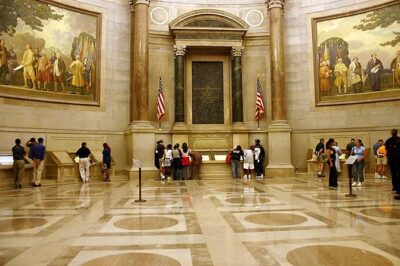
National Archives Skip the Line Guided Tour Semi-Private 6ppl Max
Read our review →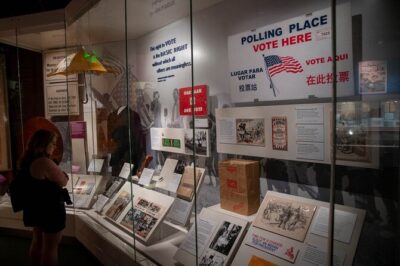
VIP National Archives Skip-The-Line Guided Tour 6 ppl Max
Read our review →
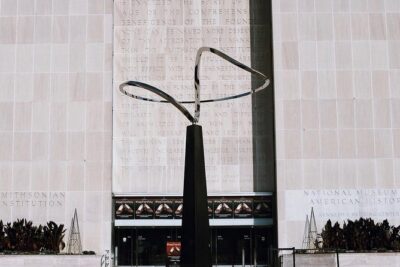
National Archives + American History Museum Tour 8ppl Max
Read our review →
Skip the Line National Archives and US Capitol Tour
Read our review →Browse the lists this tour appears in