
Reviewed · NATIONAL ARCHIVES TOURS
National Archives Skip the Line Guided Tour Semi-Private 6ppl Max
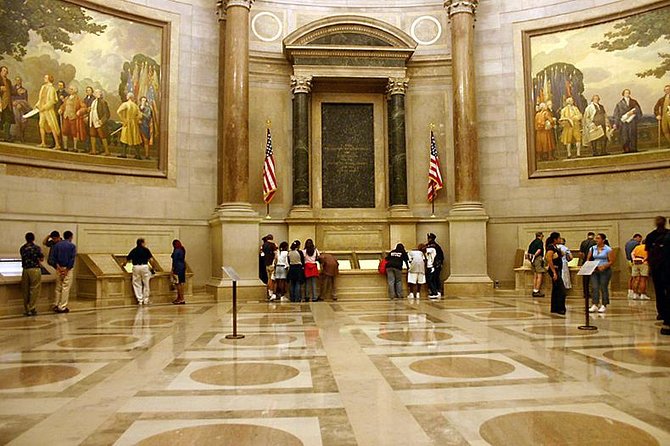
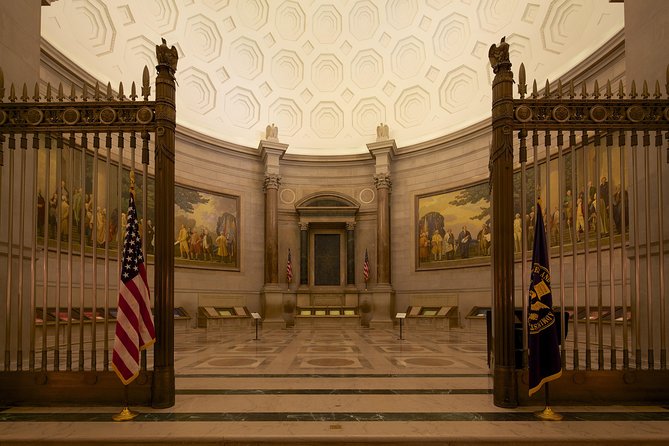
The most powerful part of this tour is standing a few feet from the Declaration of Independence, Constitution, and Bill of Rights in the National Archives Rotunda. These are not reproductions behind a screen. They are the fragile originals that shaped the United States, displayed in a grand neoclassical hall built to feel like a temple to American government.
I like the small group, capped at eight people, because you can hear the guide and ask questions without shouting across a crowd. I also like the range of material: presidential letters, the Emancipation Proclamation, Rosa Parks’ citation, and the Magna Carta give you far more than a quick look at the founding documents.
The main consideration is guide quality. Guides such as Brenda, Donna, Richard, Bess, Maribeth, Meghan, Jennifer, Rebecca, and Annette have been praised for clear, lively storytelling, but one poor experience involved rushed security and too much off-topic political commentary. Your guide shapes the visit.
Key points to know before booking
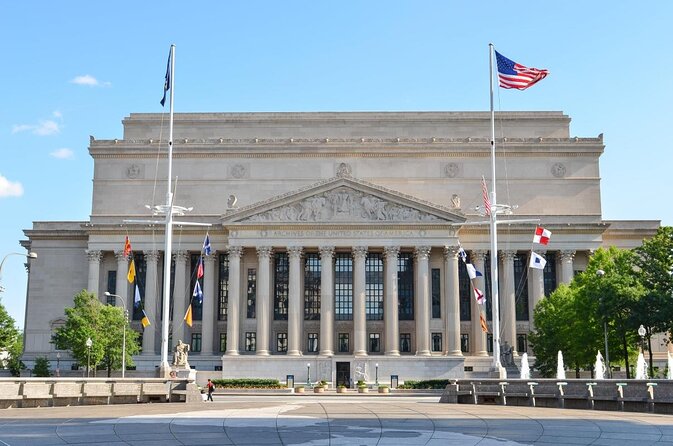
- Original documents in the Rotunda: See the Declaration of Independence, Constitution, and Bill of Rights in person.
- A compact group of no more than eight: The format makes questions and conversation much easier than on a large museum tour.
- More than founding-era papers: The route includes presidential correspondence, civil rights records, the Emancipation Proclamation, and Rosa Parks material.
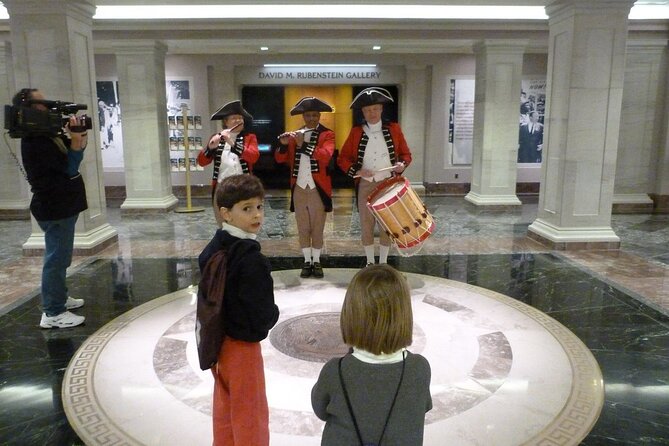
- The 1297 Magna Carta: The Rubenstein Gallery adds an older layer of political history and shows where some later ideas came from.
- About 90 minutes to two hours: The tour gives you useful context without taking the whole day.
- Skip-the-line value depends on timing: Security lines can still form, and cameras and large bags are not allowed inside.
Why the National Archives deserves a guided visit
The National Archives can look manageable on a map. It is not a huge building, and many people assume they can simply walk in, find the Rotunda, and read the labels. You can do that, but the labels cannot fully explain why each document matters or how the pieces connect.
A guide gives you a clear path through material that can otherwise feel scattered. The Declaration is not only a statement of separation from Britain. The Constitution is not merely an old legal document. The Bill of Rights is not just a list of freedoms. A good guide connects those papers to the arguments, conflicts, and compromises behind them.
That context matters because the documents are visually restrained. The parchment is old, the handwriting is formal, and the cases are carefully lit. The power comes from knowing what you are looking at. Guides such as Donna, Richard, Brenda, Bess, and Jennifer have been singled out for making the material understandable and keeping both adults and children engaged.
This is also a useful tour for families. Maribeth reportedly used questions and invitations to participate to keep nine and twelve-year-old children involved. Bess also earned praise for making the experience appealing to children. That does not guarantee the same style on every departure, but the small group gives a guide more room to adjust the pace.
More National Archives tours in Washington DC:
- VIP Best of DC with US Capitol + National Archives Reserved Entry
★ 4.5 · 2,491 reviews - Skip-the-line National Archives Building Exclusive Guided Tour
★ 5.0 · 381 reviews - VIP National Archives Skip-The-Line Guided Tour 6 ppl Max
★ 5.0 · 126 reviews
Entering the Rotunda and meeting the founding documents
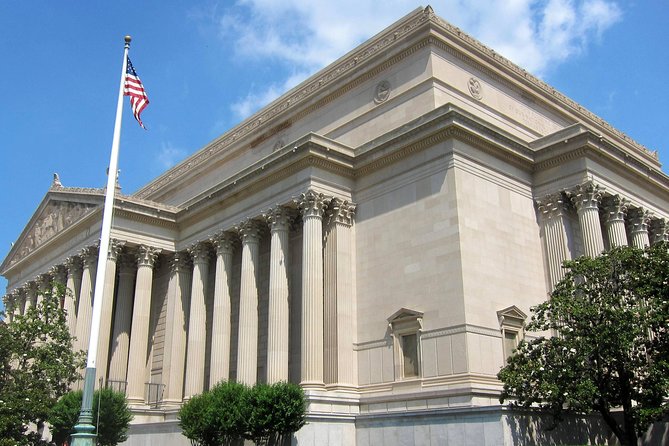
The tour begins at the National Archives Museum, at 701 Constitution Avenue NW. After meeting your guide and passing through security, you head to the Rotunda, the grand central gallery where the country’s most important founding papers are displayed.
This is the emotional center of the visit. You see the Declaration of Independence, the Constitution, and the Bill of Rights together. The setting encourages you to slow down, even if the museum is busy. Your guide should help you notice details in the documents and explain the role of figures such as Alexander Hamilton, whose signature appears among those of other major statesmen.
The Federalist Papers are also part of the story. Their presence helps explain that the Constitution did not simply appear as a finished plan. It was debated, defended, and interpreted through arguments that still shape American political life.
A major advantage of arriving with a timed guided group is getting to these documents early in the visit. Several people have valued seeing the Rotunda displays before the crowds became heavy. The early part of the day may offer a calmer look, though the tour does not promise an empty gallery.
Your time in front of the cases may be limited by museum traffic and quiet rules. Some rooms have strict limits on speaking, and the guide may give you the explanation before you enter. That is sensible, since a lecture beside a priceless document would spoil the atmosphere for everyone else.
Reading the Public Vaults through American lives
After the Rotunda, the route moves into the Public Vaults Exhibits. This section is useful because it shifts from famous national documents to personal papers, official records, and pieces of everyday government life.
You may see letters written by presidents including George Washington and John F. Kennedy. Presidential correspondence can make public figures feel less like marble statues and more like people dealing with decisions, pressure, and ordinary communication. The display also helps show how the federal government records the country’s story beyond its best-known speeches.
This part can reward questions. Ask your guide about the people who wrote the letters, why the papers were preserved, and how they connect to the larger events being discussed. The guide’s role is especially helpful here because a case of documents can contain more material than you can absorb on your own.
The Public Vaults are also a good reminder that the Archives is not only about the eighteenth century. The collection reaches into modern American life, and the shift from founding documents to presidential papers gives the tour a broader range than a simple Constitution visit.
The drawback is that your exact view can depend on crowd levels and temporary displays. The museum notes that collections may change during the year, so no tour can promise that every item will appear on every date.
Emancipation, Rosa Parks, and the country’s unfinished work
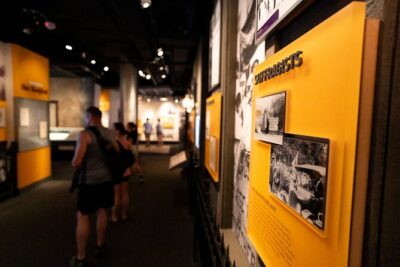
The section on slavery, emancipation, and civil rights gives the visit needed balance. The founding documents present ideals of liberty and government. The later records show how unevenly those ideals were applied.
The Emancipation Proclamation is one of the key documents on this part of the route. A guide can explain its historical role and place it within the larger effort to end slavery. The document is more meaningful when you understand both what it changed and what it did not change on its own.
The Rosa Parks material brings the story forward into the twentieth century. A citation issued to Parks shows that racial conflict and unequal treatment were not confined to the Civil War era. It gives you a direct link between federal records and the civil rights struggle.
Special displays can sometimes include additional civil rights documents. One visit during Juneteenth weekend included the original Emancipation Proclamation and Order No. 3. That kind of material can vary, so treat it as a possible bonus rather than a guaranteed part of your date.
I value this section because it keeps the tour from turning into a polished parade of national victories. The Archives preserves arguments, injustice, resistance, and change. That makes the visit more honest and more useful.
More skip-the-line tickets in Washington DC:
- National Archives Skip-the-Line Guided Tour
★ 5.0 · 85 reviews - National Archives Skip the Line Tour Semi-Private 6ppl Max
★ 4.9 · 76 reviews - Skip the Line National Archives and US Capitol Tour
★ 4.5 · 51 reviews
The 1297 Magna Carta in the Rubenstein Gallery
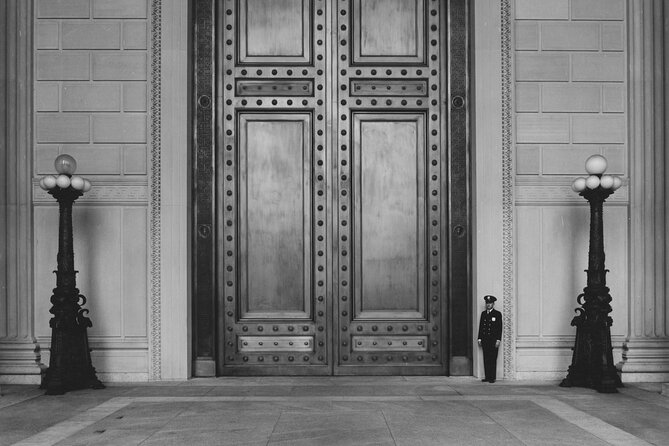
The final major stop is the Rubenstein Gallery, where you can see a Magna Carta dating from 1297. The document predates European exploration of the Americas by centuries, yet it influenced later ideas about law, authority, and the rights of subjects.
The Magna Carta is an important piece of context for the American founding documents. It did not create the United States, and it should not be treated as a direct blueprint for the Constitution. But it belongs in the same conversation about limits on government power and the idea that rulers are subject to law.
This is also a good place to pause and consider the age of the material. The American documents already feel old and precious. The Magna Carta pushes that sense much further back. It gives the tour a wider view of how political ideas travel across time.
For many visitors, this is the most unexpected object in the museum. If you are interested in medieval history, it may be the highlight. If your main goal is the Constitution, the guide’s explanation helps connect the older document to the later American story without letting it overshadow the Rotunda.
How the small group changes the experience
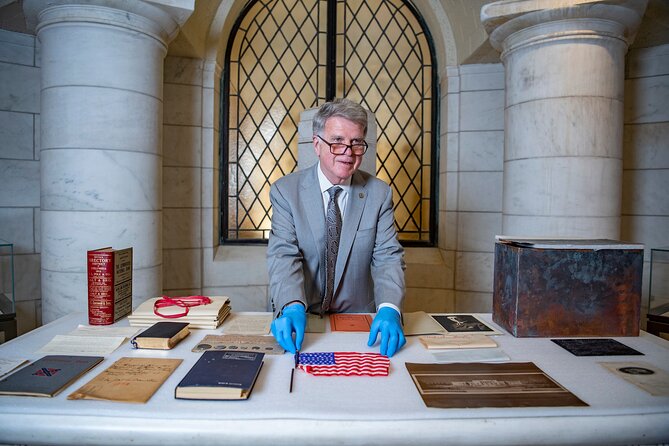
The group limit is no more than eight people. The tour title refers to six people, but the detailed operating information specifies a maximum of eight, so contact the provider before booking if a six-person limit matters to you.
Either way, this is much smaller than a standard museum group. You can stay close to the guide, hear the explanation, and ask a follow-up question. The guide can also notice when a child is losing interest or when someone wants more detail about a particular document.
That personal scale is one reason the tour costs more than simply entering a free museum. You are paying for interpretation, route planning, and the chance to get useful answers. You are not paying an admission charge to the National Archives itself, since admission to the museum is listed as free.
The experience works best when you take part. Ask about a signature, a date, or the link between two displays. A small group gives you an opening to do that. It is less useful if you want to wander silently at your own pace and spend a long time at every case.
Is $105.73 a fair price?
The price is $105.73 per person. That is a serious charge for a museum whose admission is free, so the value depends on how much you want guidance.
I think the price is reasonable for a first visit if you have limited time in Washington and want the major documents explained clearly. The tour lasts about 1.5 to two hours, and it covers the Rotunda, Public Vaults, civil rights material, and the Magna Carta. You also avoid having to plan your own route through the museum.
The cost is harder to justify if you are a confident history reader, have plenty of time, or prefer to study displays at your own speed. You can enter the museum without buying this tour, although the guided experience may help you understand more in less time.
For families, the value can be stronger. Children may not read every label on their own, but a guide who asks questions and tells stories can give them a reason to look closely. The feedback about Maribeth, Bess, and Richard points to the benefit of an engaging guide for mixed-age groups.
Group discounts may be available, but the supplied details do not state the discount amount. Check the final booking price before paying.
Practical details that affect your visit
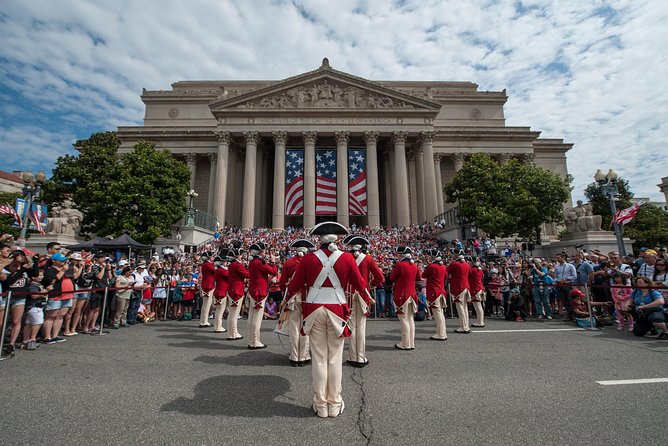
The museum is near public transportation, and you should make your own way to the meeting point. Hotel pickup and drop-off are not included, so plan on public transit, a taxi, or a rideshare such as Uber.
Bring the mobile phone number requested at booking, including the country code. Confirmation is provided at booking, and the minimum group size is two people. If that minimum is not met, the operator says you will be offered an alternative or a full refund.
Security is part of the experience. Large bags and suitcases are not allowed. Only handbags or small, thin backpacks can pass through, and increased security can create a line even with skip-the-line access.
Cameras are not allowed, according to one visitor’s account of the security process. It is wise to arrive ready to remove items from your pockets and to ask your guide or security staff about current rules. The museum may also require appropriate dress.
The tour is not suitable for someone with a walking disability or someone using a wheelchair. You should expect a moderate level of physical fitness and time on your feet.
Museum closures or delayed openings can occur without warning. If opening is delayed by more than an hour, an alternative may be offered, but the stated policy does not promise a refund or discount in those circumstances.
Which guide style should you expect?
The named guides associated with this experience include Brenda, Donna, Richard, Bess, Maribeth, Meghan, Jennifer, Rebecca, and Annette. The strongest guide style described by the available feedback is clear, warm, and story-led, with room for questions.
Donna is noted for answering many questions, while Richard is praised for humor and for making history accessible to a family group. Brenda is associated with insider details and strong subject knowledge. Meghan is described as enthusiastic, and Jennifer as both fun and well informed.
Still, the experience is not perfectly uniform. One account describes a guide who rushed security, failed to explain the camera rule, spent too much time on modern movies and politics, and did not always make clear which display the talk referred to. That is a useful warning: a small group does not automatically mean a perfect tour.
If your guide’s pace or subject matter is not working for you, ask a direct question about the document in front of you. A focused question may help bring the conversation back to the museum.
Who should book this National Archives tour?
I would choose this tour for a first-time Washington visit, a family with older children, or anyone who wants the big documents placed in context. It is also a good fit if you have only one morning or afternoon and do not want to spend time working out the museum’s best route.
History enthusiasts may appreciate the Federalist Papers, Magna Carta, presidential letters, and civil rights records. The tour is not limited to patriotic highlights, and the Emancipation Proclamation and Rosa Parks material add necessary depth.
I would skip it if you want complete independence, dislike guided commentary, or need wheelchair access. I would also compare the price carefully if your budget is tight, since museum admission itself is free.
Should you book it?
Book this tour if the original documents and clear explanation matter more to you than saving money. The small group, short duration, and wide selection of material make it an efficient way to understand the National Archives, especially with a strong guide such as Donna, Richard, Brenda, Bess, or Maribeth.
Before booking, confirm the current group limit, check the meeting instructions, and plan for security restrictions. If you can cancel at least 24 hours ahead, you receive a full refund under the stated policy. For a focused introduction to the documents that shaped the United States, this is a worthwhile use of part of your Washington day.
FAQ
Where does the tour begin?
It begins at the National Archives Museum, 701 Constitution Ave. NW, Washington, DC 20408.
Where does the tour end?
The activity ends back at the meeting point.
How long does the tour last?
The tour lasts approximately 1.5 to two hours.
What documents can I see?
The route includes the Declaration of Independence, Constitution, Bill of Rights, Federalist Papers, Emancipation Proclamation, Rosa Parks material, presidential letters, and a 1297 Magna Carta.
How large is the group?
The detailed tour information states that the group will have no more than eight people. The tour title refers to six people, so confirm the exact limit if that distinction matters to you.
Is museum admission included?
Admission to the National Archives Museum is free. The price covers the semi-private guided tour and professional guide.
Is transportation included?
No. Hotel pickup and drop-off are not included. You must reach the National Archives on your own by public transportation, taxi, or rideshare.
Can I bring a large bag or suitcase?
No. Large bags and suitcases are not allowed inside. Only handbags or small, thin backpacks can pass through security.
Can I cancel for a refund?
Yes. You can cancel at least 24 hours before the local start time for a full refund. Cancellations or changes made less than 24 hours before the start time are not refunded.
Just added in Washington DC
- Washington DC: Express Morning or Night-Time Monuments Tour★ 3.2 · 3 reviews
- Washington, DC: Georgetown Architecture Walking Tour★ 5.0 · 8 reviews
- Washington D.C.: Georgetown Guided Secret Food Tour★ 3.9 · 7 reviews
- Washington DC: E-Bike Rental★ 4.3 · 7 reviews
- Washington DC: Christmas Eve Gourmet Brunch or Dinner Cruise★ 4.2 · 6 reviews
- Washington DC Day Tour – Private Tour★ 4.1 · 3 reviews
- Washington DC: After Dark Night-Time Sightseeing Tour★ 3.8 · 6 reviews
- Washington DC: Best of Capitol Hill Guided Bike Tour★ 3.2 · 7 reviews
National Archives Tours, compared.

VIP Best of DC with US Capitol + National Archives Reserved Entry
Read our review →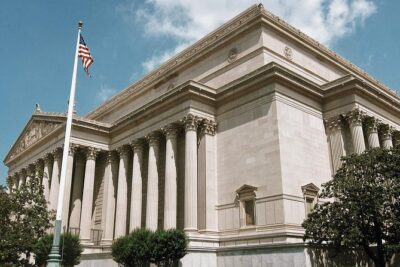
Skip-the-line National Archives Building Exclusive Guided Tour
Read our review →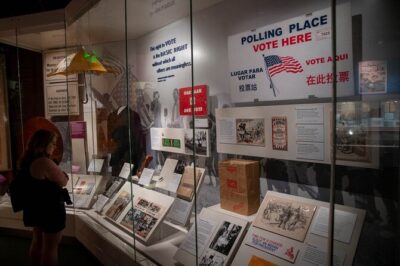
VIP National Archives Skip-The-Line Guided Tour 6 ppl Max
Read our review →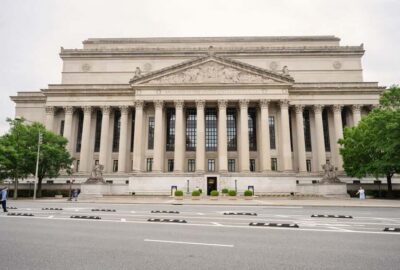
National Archives + American History Museum Tour 8ppl Max
Read our review →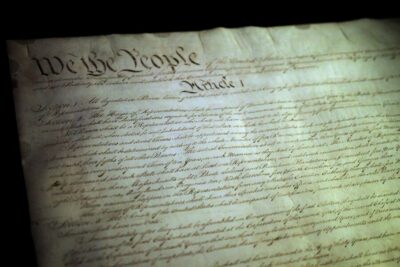
National Archives Skip the Line Tour Semi-Private 6ppl Max
Read our review →
Skip the Line National Archives and US Capitol Tour
Read our review →Browse the lists this tour appears in