
Reviewed · EMBASSY ROW TOURS
Embassy Row: Architecture, Mansions & International Intrigue
The grand surprise here is that Embassy Row is not just a line of official government buildings. It is a parade of Gilded Age mansions, many built for wealthy Americans and later taken over by foreign governments. Along the way, you get diplomacy, architecture, scandal, statues, and a few odd links to Mount Rushmore.
I like the small group size, capped at 15, and the way the walk connects famous embassies with the history of Dupont Circle. I also like the guides’ range. Becca, Mark, Tyler, Dan, John, and Eli have each been praised for clear storytelling and useful local advice. The main drawback is that two hours can only skim a neighborhood this full of stories, and the route may finish near, rather than precisely at, the starting fountain.
Key points to know before you book
- Gilded Age mansions now house embassies: You see grand private homes repurposed for international diplomacy.
- A compact two-hour walk: The route covers Dupont Circle, Embassy Row, Sheridan Circle, Woodrow Wilson House, and the Spanish Steps.
- Small groups make questions easy: The maximum group size is 15 people.
- Outdoor sightseeing only: The listed stops are viewed from the street, with no interior admissions included.
- Strong guide track record: Becca, Mark, Tyler, Dan, John, Eli, and others are praised for storytelling, clarity, and local help.
- Useful for first-time Washington visitors: You get neighborhood orientation, restaurant and shopping suggestions, and a Metro connection near the route.
Why Embassy Row makes a good Washington walk
Washington is famous for monuments and museums, but Embassy Row gives you a different city. Here, diplomacy sits inside handsome residential streets lined with old stone homes, ornate facades, iron fences, and mature trees. The appeal is not simply spotting a foreign flag. It is learning why these buildings were built, who lived in them, and how Washington’s social elite gave way to international power.
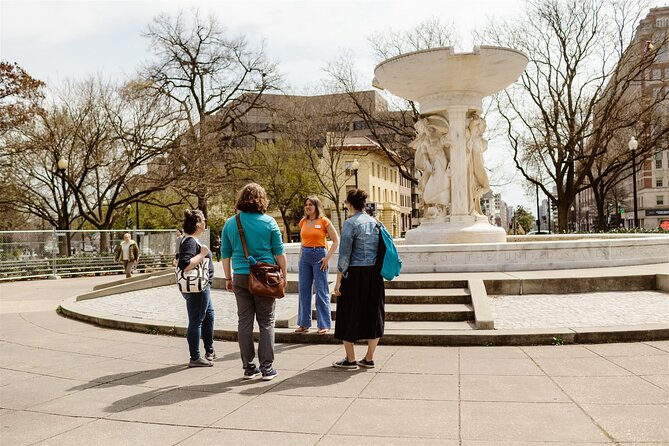
The walk begins at the Dupont Circle fountain at 10 a.m. That is a sensible meeting point because Dupont Circle is easy to reach by public transportation and gives your guide a natural place to explain the neighborhood before the mansions begin. You also get restaurant and shopping suggestions for after the tour, which makes the opening talk useful beyond the two-hour walk.
The experience is priced at $49 per person. You are paying for a licensed guide and a focused small-group history walk, not for entry into an attraction. That is fair value if you enjoy architecture and stories that do not usually make the front page of a Washington sightseeing map. It is less appealing if you want grand interiors, museum tickets, or a fast checklist of major monuments.
More Embassy Row tours in Washington DC:
- Dupont Circle and Embassy Row Architectural Walking Tour
★ 5.0 · 117 reviews - Embassy Row Spy History Tour with a Former CIA Officer
★ 5.0 · 8 reviews - DC: Historic Embassy Row & Dupont Circle (2 Hr Walking Tour)
★ 5.0 · 5 reviews
Dupont Circle sets the social scene
Your first 10 minutes are devoted to Dupont Circle. The guide explains how this neighborhood developed and helps you get your bearings before the route turns toward Embassy Row.
This introduction matters because the mansions make more sense when you understand the district around them. Dupont Circle is not merely a traffic circle with a fountain. It is the front door to a neighborhood shaped by wealth, politics, culture, and international life.
The opening is also a practical bonus. Guides have offered suggestions about where to eat and shop after the walk, and some have helped with transportation directions. If this is your first morning in Washington, you can use the tour to plan the rest of your day.
Embassy Row reveals a second life for old mansions
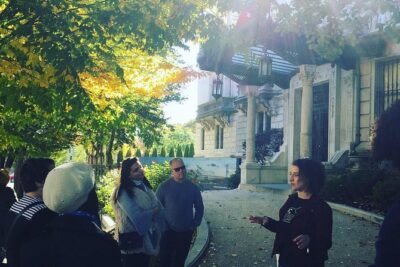
The main 30-minute section takes you along Embassy Row. This is the heart of the experience, and it is where the tour earns its title.
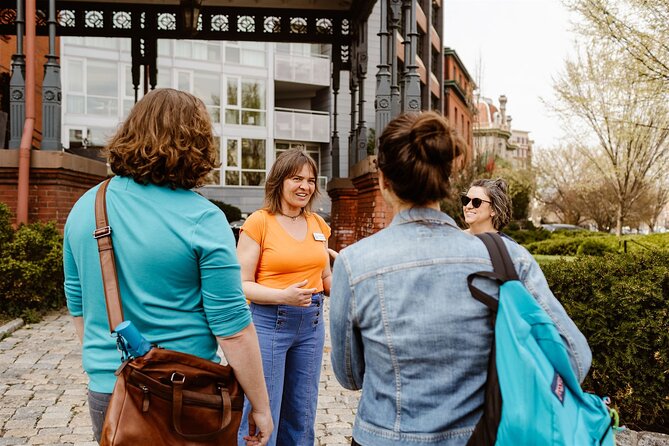
You see mansions that were once private homes for millionaires. Many now serve as offices and residences connected with ambassadors and diplomatic missions. That change gives the buildings a second layer of meaning. A facade built to announce American wealth now represents another country in Washington.
Expect your guide to focus on architectural details, former owners, diplomatic use, and the social stories tied to the houses. The most enjoyable part is the contrast between formal international business and the personal dramas of the people who built these places. The route includes scandalous stories, according to the tour description, so this is not a dry march through official addresses.
The walk is also easy to appreciate without entering anything. You can study the exteriors at street level while the guide provides the context that a self-guided stroll often lacks. If you use Google as you go, you may identify buildings, but you will miss the connections between the houses and the people who shaped the neighborhood.
That said, the street-based format has limits. The tour does not list interior visits or admission tickets. You are looking from public areas, so anyone hoping to tour embassy rooms should choose a different activity.
The Saraswati statue adds a cultural pause
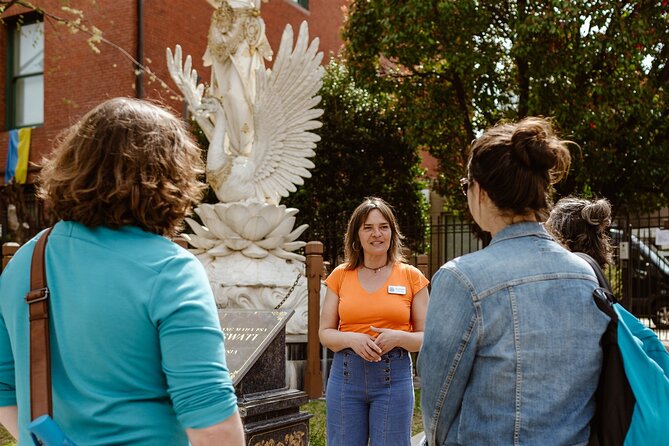
A five-minute stop at the Statue of Goddess Dewi Saraswati breaks up the mansion sequence. The statue honors the Hindu goddess associated with knowledge, music, and the arts. It is near the Indian Embassy and surrounded by flowers.
This is a small stop, but it gives the walk a wider frame. Embassy Row is not only about old American fortunes. It is also a place where countries express cultural identity in Washington. A public statue can say something about diplomacy without using a government seal or a formal speech.
Your guide explains the symbol and its connection to cultural exchange. Because the stop is brief, expect a quick interpretation rather than a long art lecture.
A completely different kind of day in Washington DC:
- DC Memorials Night Tour: Glass-Roof Convertible Upgrade Option
★ 4.5 · 6,933 reviews - National Mall Monuments Night Tour with 10+ Stops, Entry Tickets
★ 4.5 · 4,863 reviews - Washington DC Monuments by Moonlight Tour by Trolley
★ 4.5 · 3,956 reviews - Hop-on Hop-off Sightseeing Tour by Open-top Bus with 18 Stops
★ 3.5 · 3,848 reviews
The Society of the Cincinnati connects wealth and inheritance
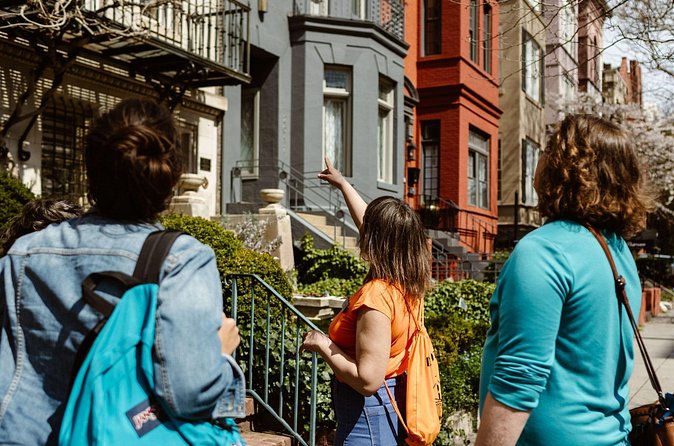
The 10-minute stop at the Society of the Cincinnati shifts the story back to the people behind the buildings. You learn about the millionaires who built the home and the society that inherited it.
This is one of the more useful stops for understanding how Washington’s grand residences survived. A house can outlast its original owner, change hands, and take on a new public role. The society’s connection to the property helps show that these homes were never just pretty backdrops. They carried money, family ambition, and institutional memory.
The stop also gives your guide room to explain how private wealth shaped the neighborhood. If you enjoy social history more than military or presidential history, this may be one of the strongest parts of the route.
India and Ireland bring diplomacy into view
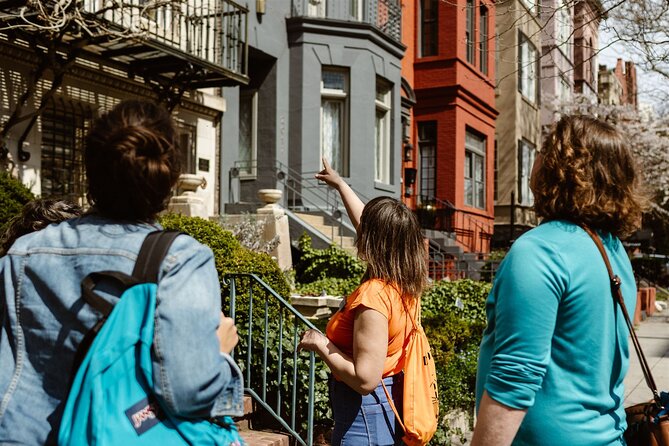
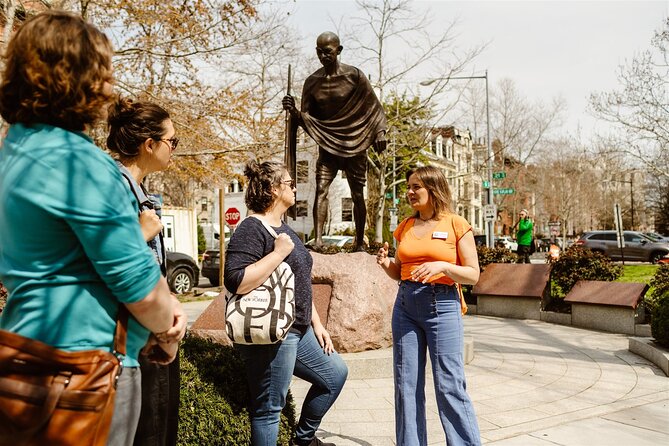
The five-minute stop at the Embassy of India includes the building and the nearby Gandhi statue on Massachusetts Avenue NW. The embassy reflects Indian heritage and cultural diplomacy, while the statue honors Mahatma Gandhi’s association with peace and nonviolence.
This is a good place to see how Embassy Row works as both a diplomatic address and a public cultural corridor. You are not simply looking at a secured building. You are seeing architecture, symbolism, and a country’s public presence presented together.
The next five-minute stop is the Embassy of Ireland. Its building represents Irish history and culture and supports diplomatic ties between Ireland and the United States. The short visit works best as part of the larger sequence. One embassy alone may not occupy much time, but several together let you compare how different nations use prominent Washington properties.
Do not expect a long stop at each address. The route has many points of interest, so the guide has to keep moving. That pace is part of the value, but it also means you should ask questions when something catches your attention.
Sheridan Circle carries a Mount Rushmore connection
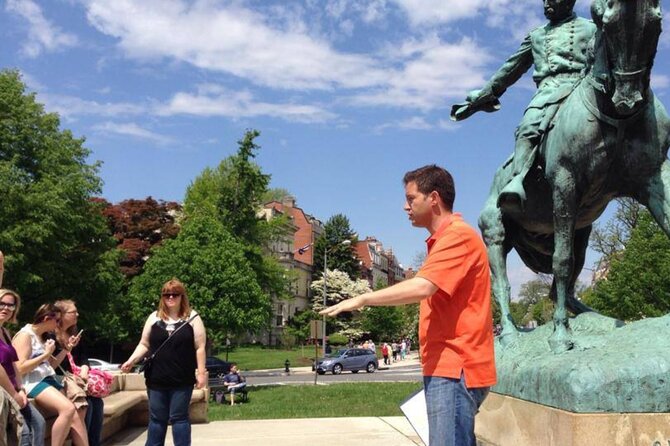
At Sheridan Circle, you examine the equestrian statue of Philip Sheridan and learn how it connects to Mount Rushmore. This is the kind of link that makes a walking tour worthwhile. You may recognize the statue or its setting, but the connection to a much more famous American landmark gives the stop a fresh angle.
The visit lasts about five minutes. It is short, visual, and easy to remember. This is also a good moment to notice how the route uses public art to connect Washington’s neighborhood streets with larger national stories.
Woodrow Wilson House gives the route a presidential turn
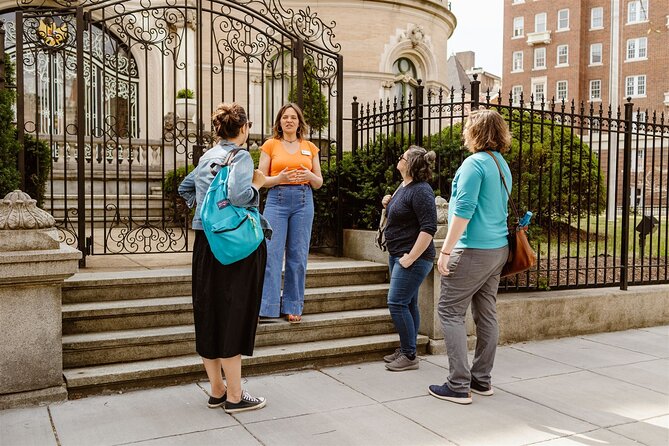
The 10-minute stop at the President Woodrow Wilson House is viewed from outside. The guide discusses the home and Wilson’s place as the only president to live in Washington after leaving office, apart from Barack Obama in the present era described by the tour.
This stop adds a presidential thread without turning the walk into a standard White House tour. You see how a former president remained connected to Washington after his term, and how a private residence can become part of the city’s political story.
Because the discussion is exterior-only, you should not book this expecting access to the house. Its value comes from the explanation, the building’s setting, and the way it fits into the larger neighborhood.
The Spanish Steps finish with a quieter view
The final listed stop is the Spanish Steps, a small urban landmark near Dupont Circle inspired by the famous steps in Rome. Greenery and historic buildings give this corner a calmer feel than the formal embassy addresses.
It is a pleasant way to finish because the route moves from grand diplomatic properties to a more intimate neighborhood scene. The five-minute stop is not a major monument, but it gives you a sense of the local streets beyond the embassies.
There is one point to clarify. The experience information says the activity ends back at the meeting point, but practical feedback indicates that the walk may finish nearby, within sight of the starting area and a Metro station, rather than at the exact fountain. Ask your guide at the beginning if you need a precise ending point. The nearby finish can also be useful if you plan to continue to museums, restaurants, or other parts of Washington.
The guides are a major part of the value
The tour’s strongest feature is the person holding the conversation together. Becca has been praised for energy, clear speech, preparation, and stories about mansion owners and scandals. Her clear delivery was especially useful for someone hard of hearing.
Mark has been praised for a friendly style, historical insight, and a clear passion for the subject. Tyler has been noted for setting a comfortable pace, answering questions easily, and adding background beyond the obvious facts. Dan is described as a strong storyteller who keeps the group engaged and gives more information than expected.
John and Eli have also led well-received walks, with praise for clear explanations and a strong grasp of local history. The guide you receive depends on the date, but the range of names and positive comments suggests that the human element is central to the experience.
A small group helps here. With no more than 15 people, you can ask questions without shouting across a crowd. It also makes it easier to hear the guide on a city street and to pause briefly at a detail that interests you.
Timing, walking pace, and practical comfort
The activity lasts about two hours. One description calls it a long but easy walk, and the route includes plenty of shade. You should still wear comfortable shoes and plan for outdoor conditions, since every listed stop is along the streets of the neighborhood.
The meeting point is the Dupont Circle fountain at 10 a.m. The area is near public transportation, and the route finishes close to both the starting area and a Metro station according to the practical guidance provided. Service animals are allowed, and most people can take part.
The mobile ticket is convenient, and confirmation is provided when you book. Cancellation is allowed up to 24 hours before the experience for a full refund.
Who should book this walk?
I would choose this tour if you like architecture, local history, political stories, or the way cities reuse old buildings. It is especially useful early in a Washington visit, since the opening orientation and local food suggestions can help shape the rest of your stay.
It also suits anyone who has already seen the National Mall and wants a quieter neighborhood with a different kind of history. Families, couples, and solo visitors can all fit the format, and the small group makes it easy to stay involved.
I would think twice if you need indoor access, a fully accessible route description, or a tour built around major landmarks such as the Capitol or Lincoln Memorial. I would also avoid expecting every embassy to receive a long explanation. Two hours gives you a well-shaped introduction, not an exhaustive study of every building on Massachusetts Avenue.
Should you book Embassy Row?
Book it if you want Washington beyond the usual monuments. For $49, you get a focused two-hour walk, a licensed guide, a group capped at 15, and a useful mix of mansions, embassies, statues, presidential history, and local neighborhood advice.
The best reason to go is the connection between private wealth and public diplomacy. The best practical tip is to confirm where the walk will finish and wear shoes suited to a steady outdoor stroll. If those points fit your plans, Embassy Row is a smart way to spend a Washington morning.
FAQ
Where does the tour begin?
The tour begins at the Dupont Circle fountain in Washington, DC 20036.
What time does the tour start?
The scheduled start time is 10:00 a.m.
How long does the tour last?
The guided walk lasts approximately two hours.
What is the price?
The price is $49 per person.
Is the tour offered in English?
Yes. The tour is offered in English.
How large is the group?
The maximum group size is 15 people.
Does the tour include entry into the embassies or houses?
No interior admission is listed. The experience is a guided outdoor walk along Embassy Row and nearby streets.
Is public transportation available near the tour?
Yes. The meeting area is near public transportation, and the route finishes near a Metro station according to the practical information provided.
Are service animals allowed?
Yes. Service animals are allowed.
Can I cancel for a refund?
You can cancel up to 24 hours before the experience for a full refund.
Just added in Washington DC
- Washington DC: Express Morning or Night-Time Monuments Tour★ 3.2 · 3 reviews
- Washington, DC: Georgetown Architecture Walking Tour★ 5.0 · 8 reviews
- Washington D.C.: Georgetown Guided Secret Food Tour★ 3.9 · 7 reviews
- Washington DC: E-Bike Rental★ 4.3 · 7 reviews
- Washington DC: Christmas Eve Gourmet Brunch or Dinner Cruise★ 4.2 · 6 reviews
- Washington DC Day Tour – Private Tour★ 4.1 · 3 reviews
- Washington DC: After Dark Night-Time Sightseeing Tour★ 3.8 · 6 reviews
- Washington DC: Best of Capitol Hill Guided Bike Tour★ 3.2 · 7 reviews
Embassy Row Tours, compared.
Dupont Circle and Embassy Row Architectural Walking Tour
Read our review →
Embassy Row Spy History Tour with a Former CIA Officer
Read our review →
Historic Embassy Row & Dupont Circle (2 Hr Walking Tour)
Read our review →
Embassy Row & Dupont Circle: Gilded Age History Small-Group Tour
Read our review →Browse the lists this tour appears in