
Reviewed · EMBASSY ROW TOURS
Dupont Circle and Embassy Row Architectural Walking Tour
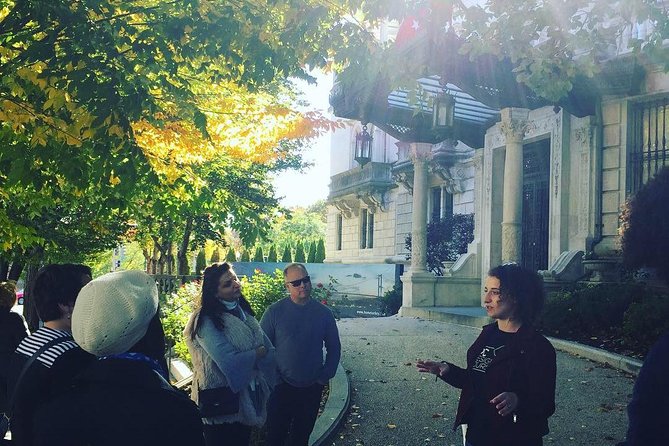
Washington’s grandest residential street is not only about embassies. Along Massachusetts Avenue, former homes of heiresses, presidents, newspaper owners, and social power brokers now house diplomatic missions, clubs, and museums. This two-hour walk links those buildings with the people who shaped them.
I like the way the tour joins architecture with personal stories, from the Hope Diamond to Alice Roosevelt Longworth. I also like the small-group format, capped at 20 people, which makes it easier to hear guides such as Sam, Natalie, Mark, or Christine. The main drawback is simple: you walk outdoors for about two hours, and the end may run closer to two hours and 20 minutes.
Key points at a glance
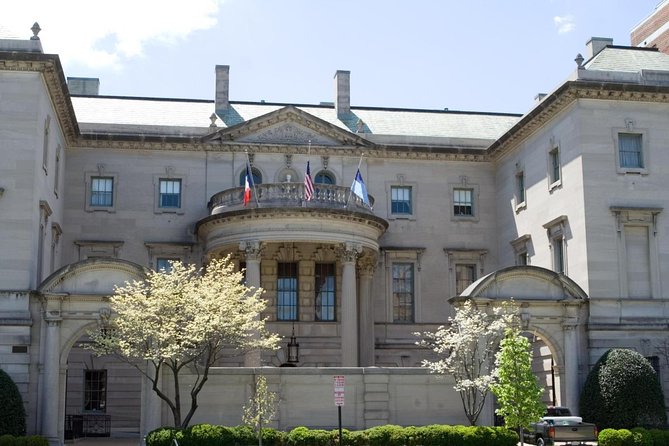
- See grand homes from the Gilded Age: Massachusetts Avenue once ranked as Washington’s most fashionable residential address.
- Hear the stories behind the facades: The tour connects buildings to figures such as Alice Roosevelt Longworth, Evalyn Walsh McLean, and Woodrow Wilson.
- Cover more than Embassy Row: The route includes Dupont Circle, Sheridan Circle, Kalorama, the Spanish Steps, and the Phillips Collection.
- Expect a strong history focus: Architecture matters, but the people who lived in these houses often provide the best stories.
- Plan for a full outdoor walk: Wear comfortable shoes and allow extra time at the end, especially if the guide keeps the conversation going.
- Pay $48 for a guided neighborhood walk: The value rests in the guide’s storytelling and context, since the sights are viewed from public streets.
Why Dupont Circle makes a smart starting point
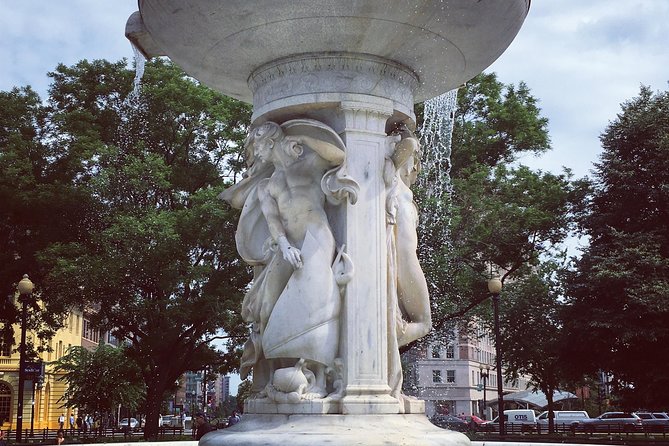
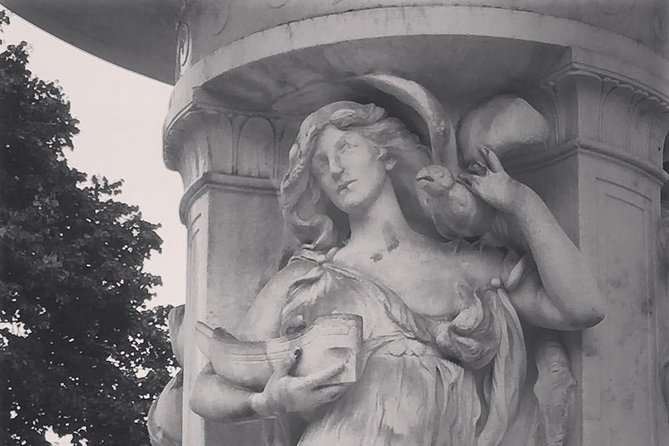
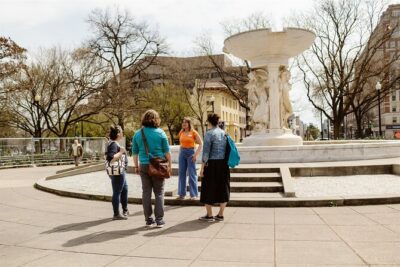
The tour begins at Dupont Circle, one of Washington’s most recognizable neighborhood crossroads. At its center is a photogenic fountain designed by the same firm associated with the Lincoln Memorial, giving the opening stop a useful link to the city’s better-known monuments.
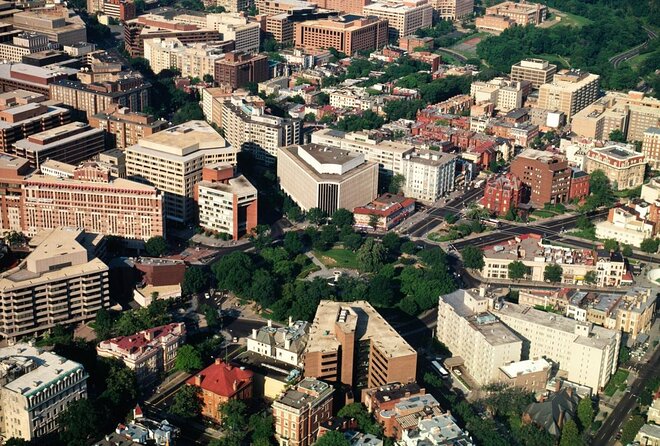
You spend about 10 minutes here before moving toward Embassy Row. That short introduction matters. Dupont Circle was not simply placed on the map as a pretty park. Its creation and name help explain how the neighborhood grew into a favored address for Washington’s wealthy and politically connected residents.
From the first stop, the tour sets up the larger theme: Washington’s social power was often expressed through houses. A grand facade could signal money, political reach, old family ties, or a desire to be noticed. The best part of this walk is learning to read those buildings as more than attractive backdrops.
More Embassy Row tours in Washington DC:
- Embassy Row: Architecture, Mansions & International Intrigue
★ 4.5 · 27 reviews - Embassy Row Spy History Tour with a Former CIA Officer
★ 5.0 · 8 reviews - DC: Historic Embassy Row & Dupont Circle (2 Hr Walking Tour)
★ 5.0 · 5 reviews
Massachusetts Avenue and the homes behind the embassies
Embassy Row is the heart of the tour. You walk past properties that cover several architectural styles, including Neoclassical, Beaux-Arts, and Queen Anne. The buildings can look formal and distant at first, but the stories give them life.
Before many of these properties became embassies, clubs, or offices, they were private homes. The people who commissioned them wanted to impress Washington society. Industrial magnates, heiresses, newspaper owners, and political figures competed for attention along Massachusetts Avenue, especially during the Gilded Age.
That change in use is one of the tour’s most useful lessons. A diplomatic building may have a flag and a guarded entrance today, but its original purpose was often much more personal. It was built as a home for a family trying to establish status in the capital.
Your guide also introduces some of the people connected with the area. Alice Roosevelt Longworth brings a sharp political and social edge to the story. Evalyn Walsh McLean adds wealth, glamour, and the famous Hope Diamond. These names help you see the neighborhood as a stage for Washington’s elite, not just a line of official buildings.
The route takes about an hour through Embassy Row, making this the longest part of the experience. That gives the guide time to compare styles and explain how houses changed hands. Still, the tour is mainly viewed from the sidewalk. You should not expect a general interior tour of the embassies.
The Indonesian Embassy and the Hope Diamond connection
One of the short stops is the Embassy of Indonesia, where you hear about the building’s earlier connection to the Hope Diamond. The story adds a surprising link between international diplomacy and Washington’s social world.
This is a five-minute stop, so the emphasis is on the story and exterior rather than a long visit inside. That pattern continues throughout the walk. You move at a steady pace, pause for a focused explanation, then continue to the next house or neighborhood detail.
For you, that means the tour works best if you enjoy context more than formal access. You see a great deal from the street, but the guide supplies the background that you would likely miss while walking alone.
Anderson House and Washington’s social elite
Anderson House, also known as the former home of one of Washington’s wealthiest couples, gives the tour another chance to examine private power. The mansion is now linked to the Society of Cincinnati, described as America’s oldest patriotic organization.
The stop lasts about five minutes. That is enough to discuss the building and its occupants, but not enough for a full museum visit. If you want to explore the interior, you would need to treat that as a separate plan rather than part of this walking tour.
I like this stop because it shows how the neighborhood’s old social world survives in new forms. A private mansion can become the headquarters of an organization, while nearby properties become embassies. The street keeps its grand appearance, but its role changes over time.
More neighborhood walking tours in Washington DC:
- Delicious Donuts of Downtown DC: A Sweet City Experience
★ 5.0 · 512 reviews - Georgetown Foodie Culinary Tour & Neighborhood Walk
★ 5.0 · 437 reviews - Local Neighborhood Washington DC Food Tour by DrinkEatWalk Tours
★ 5.0 · 51 reviews - Residences of the Presidents Walking Tour: Dupont and Kalorama
★ 5.0 · 31 reviews
The Indonesian and Turkish buildings, plus a music connection
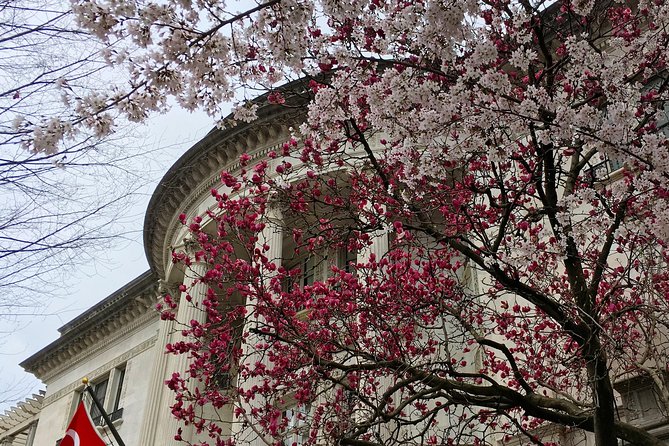
The route continues toward the Turkish ambassador’s residence, a Beaux-Arts mansion near Sheridan Circle. Here the guide connects the building with Ahmet Ertegun, the music executive who got his start there.
That kind of detail keeps the tour from becoming a parade of dates and architectural labels. You may not remember every term, but you are more likely to remember that a diplomatic residence had a connection to a major figure in music.
The tour’s architectural side is still useful. Guides explain the visual differences between styles and point out details you might otherwise pass without noticing. Several people who took the walk with family or friends found the balance between design and personal history especially effective.
If you are not comfortable with architecture, do not worry. The tour is not presented as a test. It uses the buildings as a way into stories about ambition, wealth, family, and public life.
Sheridan Circle and its unusual Civil War monument
Sheridan Circle brings a different kind of history. The circle contains a Civil War monument with an unusual backstory, designed by the sculptor associated with Mount Rushmore.
This five-minute stop gives the tour a break from mansions and embassies. Monuments in Washington often look solemn and familiar, but their origins can be stranger than their official appearance suggests. A good guide can make you look twice at a statue you might otherwise treat as street furniture.
The circle also helps break up the walking route. Instead of moving in one straight line along Massachusetts Avenue, you get a wider sense of how the surrounding streets, circles, and residential pockets fit together.
Kalorama, a quieter side of the route
From Embassy Row, the walk reaches Kalorama, a quieter residential area whose name means beautiful view in Greek. The neighborhood is now associated with influential Washington figures, though its tone feels more residential than the grand avenue you have just followed.
This section lasts about 15 minutes. It is a good change of pace after the dense sequence of diplomatic properties. You get a better sense of how the city’s influential residents have spread beyond the most formal addresses.
Kalorama also gives the guide room to connect past and present. Washington’s power is not confined to government buildings or the National Mall. It appears in residential streets, private homes, social clubs, and diplomatic compounds.
For me, this is where the tour feels most like a neighborhood walk rather than a formal architecture lesson. You are still learning about buildings, but the focus shifts toward how people live and move through the city.
Woodrow Wilson’s former home
The President Woodrow Wilson House is another brief stop. It was the former post-presidency home of Wilson, adding a direct presidential connection to the route.
The property requires a separate admission if you want to go inside. The walking tour itself does not include that ticket, so keep your expectations clear: you will learn about the house from the route, but an interior visit is not part of the $48 price.
This distinction is important when comparing the tour with museum visits. The walk gives you breadth, connecting many buildings across several neighborhoods. A house museum gives you more interior detail about one place. If you want both, plan the Wilson House separately and allow more time.
The Spanish Steps, a small urban pause
Washington’s Spanish Steps provide one of the route’s more unexpected stops. They are a modest local version of the famous steps in Rome, tucked into a residential setting and described as a quiet oasis in the middle of the city.
You spend about five minutes here. It is not a grand monument on the scale of Washington’s major memorials, and that is precisely why it works. The steps show how the city contains small pieces of character between its larger attractions.
This is also a useful photo stop and a chance to catch your breath. The tour remains active, but the route is not rushed from one major landmark to another. It gives you time to notice details that can be easy to miss when you focus only on the National Mall.
Ending at the Phillips Collection
The tour concludes outside the Phillips Collection, the first modern art museum in the United States. The building’s red brick exterior provides a fitting final look at how the neighborhood combines historic homes with cultural institutions.
The tour does not include admission to the museum. Still, ending here gives you a practical option for continuing your afternoon. You can visit the collection separately or use the nearby area for a meal or another neighborhood walk.
The end point also makes the tour easy to combine with other plans. You finish away from Dupont Circle, near the museum and the streets of Dupont and Kalorama. Check the exact walking time for your next stop, but the route itself creates a useful half-day plan when paired with lunch or a museum visit.
What the guide adds to the $48 price
At $48 per person, this is not a bargain if you only want to look at buildings from the sidewalk. You can walk through Dupont Circle and along Embassy Row without paying an admission fee.
The value comes from the guide. A strong guide gives you the reason behind the building, the name behind the facade, and the odd detail that makes the place stick in your mind. Sam has been praised for clear storytelling, humor, and keeping the pace moving, including on a very cold day. Natalie has been noted for using extra pictures to help explain the people connected with the houses. Mark, Christine, Ellery, and Carolyn have also led tours with a mix of history, architecture, and personal stories.
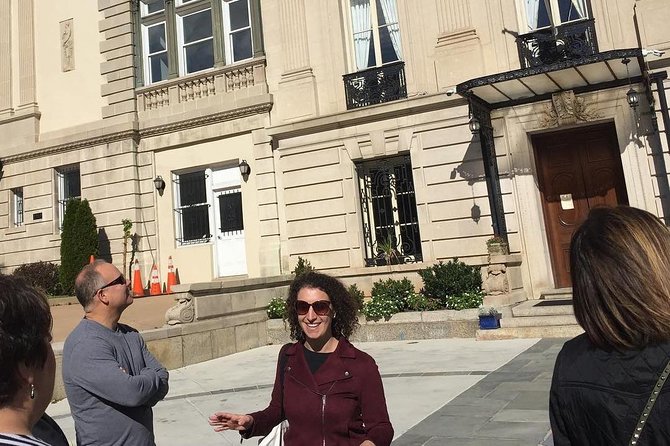
The small group size helps. With a maximum of 20 people, you are less likely to be stranded at the back of a large crowd. You can ask questions, and the guide can respond to the group rather than delivering a distant lecture.
The tour has earned a 98 percent recommendation rate and a five-star rating from 117 reviews. Those figures point to a consistent strength: the guides make the material engaging even for people who do not think of themselves as architecture fans.
Timing, weather, and walking comfort
The listed duration is about two hours, but you should allow extra time. One walk lasted roughly two hours and 20 minutes, and a guide may continue a discussion or answer questions before ending at the Phillips Collection.
This is a full outdoor activity. Summer heat and humidity can make the walk harder, while winter wind and cold can be uncomfortable along the broad avenues. The route has also been completed in rain and cold, but the weather will affect your enjoyment.
Wear shoes you can walk in comfortably and check the forecast before you go. The tour is near public transportation, and most people can take part. Service animals are allowed. Since the route is on city streets and includes stairs at the Spanish Steps, you should consider your own walking needs before booking.
Who should book this walk
I would choose this tour if you have already seen the major monuments and want a closer look at Washington’s residential side. It also suits first-time visitors who want an introduction to Dupont Circle and Embassy Row without committing to a long bus tour.
Families can use it well, especially if children or teenagers enjoy stories about unusual people and famous houses. The mix of architecture, politics, wealth, and entertainment gives the guide several ways to hold attention.
It is also a good choice for people who live in the DC area. The route can reveal details you have passed for years, including the Spanish Steps and the stories attached to familiar mansions.
I would skip it if you dislike walking, want to enter several embassies, or expect a formal tour of every interior. Most stops are short exterior visits, and the main experience is the guide’s narration as you move through the neighborhood.
Should you book the Dupont Circle and Embassy Row tour?
Book it if you want stories attached to buildings, not just a list of architectural styles. The route covers a lot in two hours: Dupont Circle, Embassy Row, Sheridan Circle, Kalorama, Wilson’s former home, the Spanish Steps, and the Phillips Collection.
The $48 price makes the most sense when you value a good local guide. Look for a comfortable weather window, allow up to two hours and 20 minutes, and keep the rest of your schedule flexible. If that suits you, this is a smart way to see a polished but less obvious side of Washington.
FAQ
How long does the tour last?
The advertised duration is approximately two hours. You should allow extra time, since the walk may last about two hours and 20 minutes.
Where does the tour begin?
The tour begins at Dupont Circle in Washington, DC 20036.
Where does the tour end?
The tour ends at the Phillips Collection, 1600 21st Street NW, Washington, DC 20009.
What is included in the price?
A local guide is included. Admission to the Woodrow Wilson House is not included, and the walk does not include admission to the Phillips Collection.
How much does the tour cost?
The listed price is $48 per person.
How many people can join the tour?
The tour has a maximum group size of 20 people.
Is the tour offered in English?
Yes. The experience is offered in English and includes a mobile ticket.
Can I cancel for a full refund?
Yes, if you cancel at least 24 hours before the experience start time. Cancellations or changes made less than 24 hours in advance are not accepted for a refund.
More Walking Tours in Washington DC
- Arlington National Cemetery Walking Tour & Changing of the Guards
★ 5.0 · 2,566 reviews - Ghosts of Georgetown & The Exorcist Steps Walking Tour
★ 5.0 · 610 reviews - Gastronomic Georgetown Walking Food Tour
★ 4.5 · 373 reviews - Ghosts of D.C. – Walking Tour
★ 4.5 · 344 reviews
Just added in Washington DC
- Washington DC: Express Morning or Night-Time Monuments Tour★ 3.2 · 3 reviews
- Washington, DC: Georgetown Architecture Walking Tour★ 5.0 · 8 reviews
- Washington D.C.: Georgetown Guided Secret Food Tour★ 3.9 · 7 reviews
- Washington DC: E-Bike Rental★ 4.3 · 7 reviews
- Washington DC: Christmas Eve Gourmet Brunch or Dinner Cruise★ 4.2 · 6 reviews
- Washington DC Day Tour – Private Tour★ 4.1 · 3 reviews
- Washington DC: Best of Capitol Hill Guided Bike Tour★ 3.2 · 7 reviews
- Washington DC: After Dark Night-Time Sightseeing Tour★ 3.8 · 6 reviews
Embassy Row Tours, compared.
Embassy Row: Architecture, Mansions & International Intrigue
Read our review →
Embassy Row Spy History Tour with a Former CIA Officer
Read our review →
Historic Embassy Row & Dupont Circle (2 Hr Walking Tour)
Read our review →
Embassy Row & Dupont Circle: Gilded Age History Small-Group Tour
Read our review →Browse the lists this tour appears in