
Reviewed · SMITHSONIAN MUSEUM TOURS
DC Portrait Gallery & American Art Museum – Exclusive Guided Tour
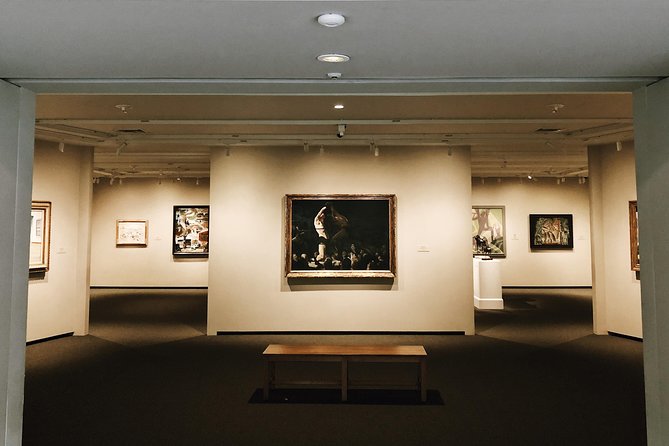
The most appealing part of this tour is the way it links American people to American art. You move from presidential portraits and Civil War figures at the National Portrait Gallery to Cassatt, O’Keeffe, Hopper, and contemporary work at the American Art Museum. It gives you a clear story of the country through faces, photographs, and paintings.
I like the efficient two-museum plan, especially if your time in Washington is short. I also like the chance to book a private guide, since past visitors singled out Annemarie, Stephen, and Tony for thoughtful stories and strong historical insight. The main drawback is pace: two museums in two and a half hours means you will see selected works, not every room.
Key points at a glance
- Two museums in 2.5 hours: See the National Portrait Gallery and American Art Museum in one focused visit.
- A former Civil War hospital: The Portrait Gallery building adds a powerful historical layer before you even study the art.
- Presidents, suffragettes, and artists: The route connects national leaders, reformers, photographers, and painters.
- Private or semi-private choices: Pick personal attention or the lower-priced group option, depending on your budget.
- Free museum admission: Your $89.67 price mainly pays for the guide’s time, structure, and interpretation.
- A practical downtown meeting point: Meet at 8th Street NW and G Street NW at 1:30 pm, near public transportation.
Two museums, one American story
This is a useful tour for seeing how portraiture and American art answer different questions. The National Portrait Gallery asks who shaped the country and how those people wanted to be remembered. The American Art Museum asks how artists saw the country, from daily life and public hardship to modern experiments.
You do not need to prepare a long list of artists before arriving. The guide’s job is to choose important works and explain why they matter. That saves you from wandering through large galleries and wondering which painting deserves your attention.
The two museums are especially well matched because they occupy the same building complex. You are not spending half the afternoon on buses or crossing town between appointments. Still, the galleries cover a lot of ground, so expect a selective route rather than an exhaustive museum visit.
The tour begins at 1:30 pm and lasts about two hours and thirty minutes. It ends back at the meeting point, which makes it easy to plan a later meal or another downtown stop, though the exact finish time can vary slightly with the guide and museum conditions.
More Smithsonian museum tours in Washington DC:
- Guided African American History Tour with Reserved Museum Entry
★ 4.5 · 1,180 reviews - Smithsonian Museum of Natural History – Exclusive Guided Tour
★ 5.0 · 446 reviews - African American History Tour with Museum of African American History Ticket
★ 4.5 · 390 reviews
The National Portrait Gallery in a former hospital
The first museum gives you an unusual setting. The building once served as a Civil War era hospital, and Walt Whitman cared for wounded soldiers here. His connection is remembered by a portrait in the collection, tying the building itself to the nation’s wartime past.
That detail matters because it changes how you enter the museum. You are not simply walking into a neutral gallery. The walls have a connection to the people, pain, and political upheaval represented in the artwork.
The building also had art exhibits as early as 1829. That long use helps explain why the museum can move from early American history to modern portrait photography without feeling limited to one period.
Your guide can help you read the collection as a sequence of American lives. Presidential portraits provide the most obvious thread, but the appeal goes beyond official leaders. First ladies, Civil War commanders, business figures, activists, writers, and other public personalities fill out the country’s story.
Presidential portraits beyond the official pose
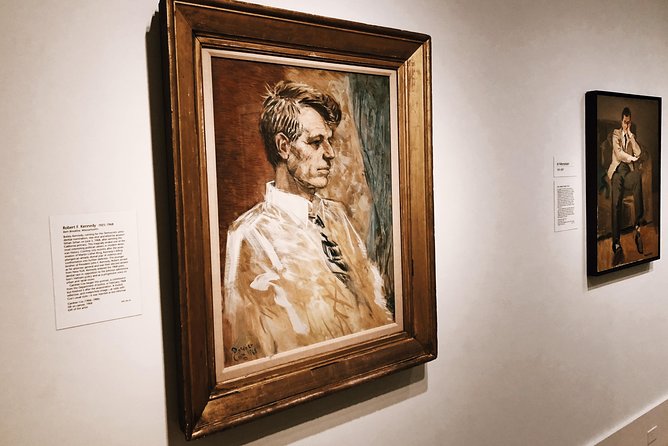
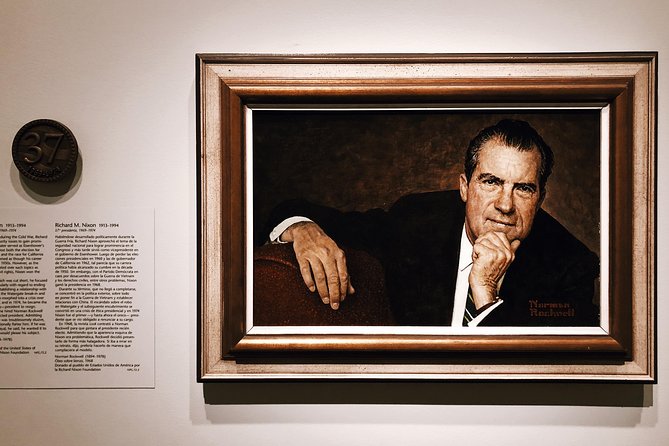
Presidential portraits often look formal at first glance, but they can reveal how each leader wanted to be seen. A guide can point out differences in posture, clothing, setting, expression, and artistic style. Those details help you compare public image with the era surrounding each presidency.
The collection includes portraits of presidents and first ladies, along with Civil War figures such as Grant and Sherman. That combination lets you connect political power with military conflict, reconstruction, and the changing shape of the United States.
You may find that the best moments are not always the largest or most famous paintings. A smaller portrait or photograph can raise a sharper question about status, memory, or public reputation. This is where a guide adds real value, since you get a reason to pause instead of moving past a work after a few seconds.
One past guide, Annemarie, was praised for explaining both the art and the building, including details about a Lincoln inaugural ball held there. That kind of architectural and social detail is useful because it gives a room a human setting instead of treating each picture as an isolated object.
From daguerreotypes to suffragettes
The Portrait Gallery is not only a parade of oil paintings. You can also encounter photographs and 19th-century daguerreotypes, whose small scale and early technique offer a different sense of American identity.
These images can feel more direct than formal painted portraits. They preserve faces from a period when photography was still a new and carefully considered process. Your guide’s commentary helps explain why these objects matter, particularly when the person pictured is less familiar to you.
The collection also touches on the Robber Barons and the Suffragettes. That mix broadens the story beyond presidents and generals. Wealth, industrial change, women’s rights, and public influence all become part of the same national portrait.
I would pay attention to how the museum places famous figures beside people who represent larger social movements. It is a useful reminder that American history is not only made in the White House or on battlefields. Reformers, business leaders, artists, and campaigners also changed the country’s direction.
More museum tours in Washington DC:
- National Mall Tour with 10 Stops & U.S. Capitol or Museum Entry
★ 4.5 · 331 reviews - Washington, DC: African American History Tour & Museum Entry
★ 4.9 · 312 reviews - Smithsonian Museums Walking Tour with Reserved Air & Space Entry
★ 5.0 · 297 reviews - Capitol Combo: U.S. Capitol + Library Congress or Capitol Museum
★ 4.5 · 294 reviews
American art from Cassatt to O’Keeffe
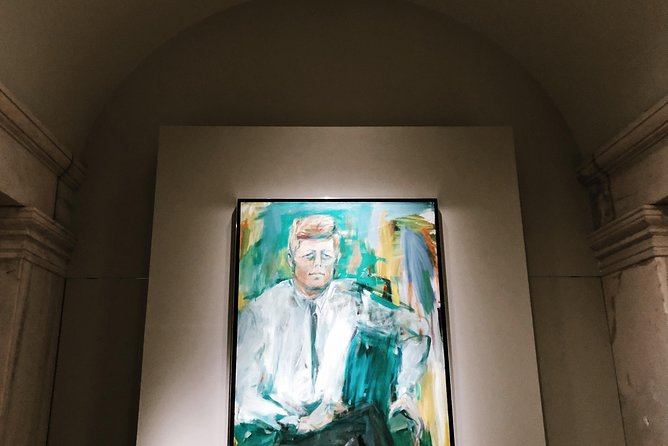
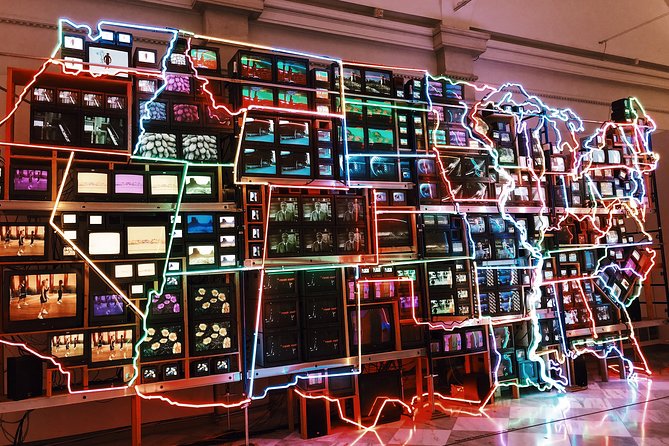
The American Art Museum shifts the focus from the person represented to the artist’s view of American life. Mary Cassatt brings the influence of Impressionism, while Georgia O’Keeffe offers the bold, enlarged flowers for which she is known.
These artists give you very different ways to think about color, shape, and subject. Cassatt’s work can lead to a discussion of modern painting and domestic scenes, while O’Keeffe’s flowers ask you to look closely at scale and abstraction.
The museum also includes photographs commissioned by the government during the Great Depression. Those pictures are important because they show art and public policy working together. Photography was used to record hardship and document American life during a severe economic crisis.
That section can be particularly helpful if you want more than a list of famous names. You begin to see how art may serve as personal expression, historical record, or government-funded documentation. The guide’s role is to connect those purposes without turning the visit into a lecture.
Hopper, Hockney, Obama, and newer work
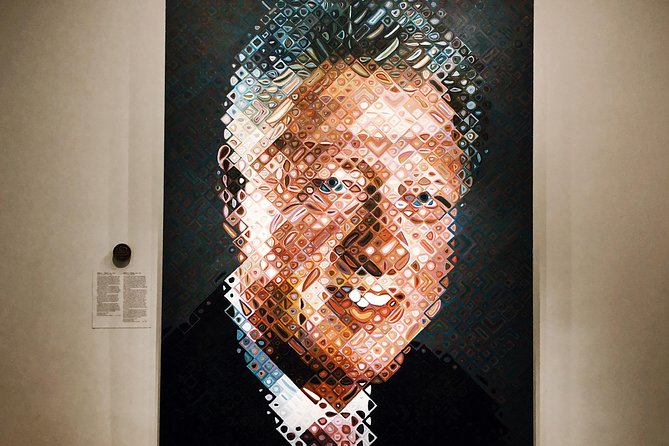
Edward Hopper adds another strong change of mood. His work is often associated with quiet scenes and a sense of separation, and a guide can help you consider how composition and setting create that feeling.
David Hockney brings a later and more experimental approach. His work helps show how the definition of American art can stretch across styles, media, and influences. The route then moves toward contemporary pieces that may need more explanation before they make sense.
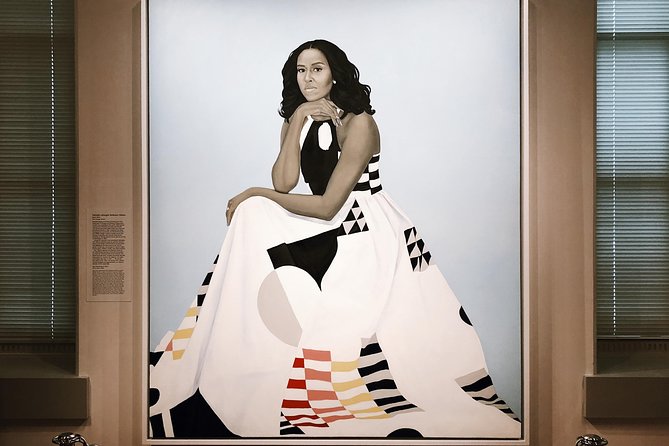
You will also encounter the well-known portrait of former President Barack Obama. Its inclusion gives the museum a direct link to recent public life, while also showing how portraiture continues to change in the present day.
Contemporary art can be the most divisive part of a museum visit. If a work seems puzzling, the guide can explain the ideas, choices, and place it holds in the wider story. That is one reason this tour may be more satisfying than simply using a map and walking alone.
What the guide adds to the experience
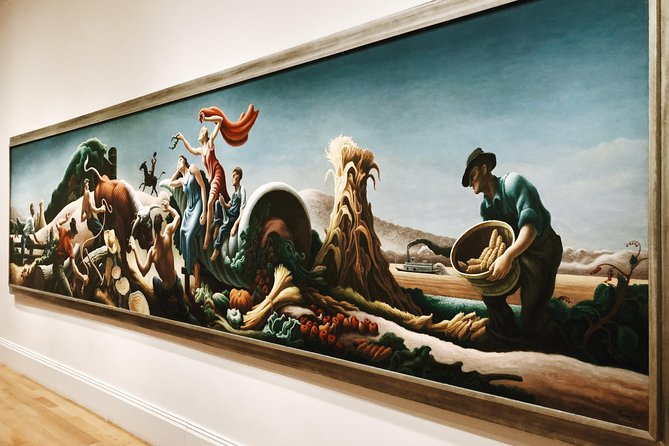
A museum guide should not only identify a painting. The useful guide gives you a way to look, a reason to remember, and enough context to connect one gallery to the next.
The strongest comments about this experience centered on personality, storytelling, and historical insight. Annemarie was praised for bringing together architecture, art, and events such as the Lincoln inaugural ball. Tony was described as personable and especially strong at making the Portrait Gallery a highlight of a Washington visit. Stephen was also praised for being interesting and well informed.
Those names come from individual tour experiences, so you should not assume a particular guide will be assigned to you. Still, they show the kind of service this tour aims to provide: an active conversation rather than a silent walk from one label to another.
A private booking gives your own group the guide’s attention. That can help if you want to ask questions, spend more time on portraits, or move more quickly through sections that interest you less. The semi-private SAVE option costs less, but the provided details note that an exclusive guide and wheelchair-friendly arrangement do not apply to that option.
Is $89.67 a fair price?
The museums themselves have free admission. That is an important point when judging the $89.67 per-person cost. You are paying for planning, interpretation, and a guide who selects a manageable path through two substantial collections.
If you would happily spend two hours reading labels and choosing your own route, the price may feel high. You can enter the museums without buying this experience, so the tour is not the budget choice for independent museum regulars.
I see better value here for a first visit, a short Washington stay, or anyone who finds large art museums tiring without a plan. A good guide can prevent you from spending half your time on works that do not interest you and can provide context that individual labels cannot.
Private and small-group formats also affect the value. A private tour costs more than a shared experience, but it can be worthwhile for families or friends who want to ask questions freely. Group discounts may help reduce the cost for larger parties, though the final amount depends on the selected option and booking details.
Timing, bags, and practical limits
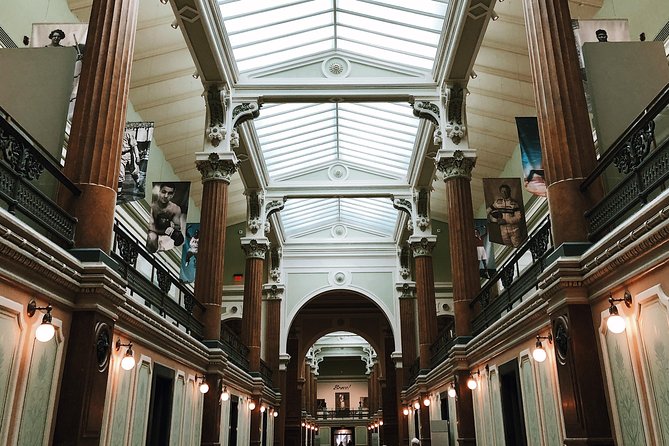
Meet at 8th Street NW and G Street NW at 1:30 pm. The location is near public transportation, so you can reach it without arranging hotel pickup. Hotel pickup and drop-off are not included.
Plan to carry only a handbag or small, thin backpack. Large bags and suitcases are not allowed inside the museums, and security checks may create lines even when a tour is advertised with quick access.
Wear suitable clothing for museum entry. Some areas require quiet or restrict speaking, so your guide may explain the rules before you enter. That is a small but important courtesy, especially in rooms where other people are studying the art.
The tour requires a moderate level of physical fitness. It is listed as wheelchair friendly for the private format, but that does not apply to the SAVE semi-private option. If accessibility is essential, confirm the format carefully before booking.
Museum rooms and collections can change during the year. The buildings may also close without advance warning. If opening is delayed by more than one hour, an appropriate alternative is provided, but the stated conditions do not promise a refund or discount in those cases.
Who should book this museum tour?
I would recommend it to you if you want a guided introduction rather than a free-form museum afternoon. It is particularly suited to first-time Washington visitors, couples, families with limited time, and anyone interested in presidents, political history, photography, or American painting.
It also suits people who want a clear comparison between portraiture and broader American art. The route moves from historical figures and public identity to artistic movements, government photography, and modern experimentation.
You may want to skip it if you already know both museums well or prefer spending twenty minutes with one painting. The two-and-a-half-hour schedule is efficient, but it cannot offer a slow study of every collection.
For the best experience, arrive ready to focus on a selected group of works. Ask your guide to spend extra time on the subjects you care about, since one past experience noted that a little more room for areas of personal interest would have improved the visit.
Should you book the National Portrait Gallery and American Art Museum tour?
Book this tour if you value explanation, historical connections, and a carefully chosen route through two free museums. The strongest reason to pay is not admission. It is the chance to understand why the portraits, photographs, and paintings belong together in an American story.
The private option offers the clearest value when your group wants personal attention. The semi-private choice may make more sense if price matters most and you do not need the same level of flexibility.
My practical verdict: this is a good buy for a short Washington visit, but not a required purchase for confident museum explorers. Choose it for the guide’s stories, especially the links between the former hospital, Walt Whitman, presidential imagery, Civil War figures, and American art from Cassatt through contemporary work.
FAQ
How long does the tour last?
The tour lasts approximately two hours and thirty minutes.
What time does the tour begin?
It begins at 1:30 pm.
Where does the tour start?
The meeting point is at 8th Street NW and G Street NW, Washington, DC 20001, outside the National Portrait Gallery area.
Does the tour visit both museums?
Yes. It covers the National Portrait Gallery and the American Art Museum.
Is museum admission included?
The experience includes the guided museum tour, and the stated admission ticket is free. Food, drinks, hotel pickup, and hotel drop-off are not included.
Can I cancel for a full refund?
Yes. You can cancel at least 24 hours before the local start time for a full refund. Cancellations or changes made less than 24 hours before the start time are not accepted for a refund.
Just added in Washington DC
- Washington DC: Private Custom Tour with a Local Guide★ 4.9 · 4 reviews
- Washington, DC: Thanksgiving Day Lunch Cruise★ 4.7 · 3 reviews
- Washington DC: Highlights Guided Walking Tour★ 4.6 · 6 reviews
- Washington D.C.: The Ghosts of Washington D.C. Walking Tour★ 4.6 · 14 reviews
- Thomas Jefferson Monticello Small Group Day Tour from DC★ 4.8 · 16 reviews
- Washington: Mt. Vernon, Alexandria & Arlington Cemetery Tour★ 3.4 · 8 reviews
- Washington, DC: The Good Liar: Brian Curry★ 5.0 · 3 reviews
- From NYC: Washington DC 1 Day Tour and Free Time for Museums★ 4.4 · 5 reviews
Smithsonian Museum Tours, compared.
Guided African American History Tour with Reserved Museum Entry
Read our review →
Smithsonian Museum of Natural History – Exclusive Guided Tour
Read our review →
African American History Tour with Museum of African American History Ticket
Read our review →

Smithsonian Museums Walking Tour with Reserved Air & Space Entry
Read our review →
Smithsonian Museum of American History Exclusive Guided Tour
Read our review →
The Smithsonian National Air & Space Museum Exclusive Guided Tour
Read our review →
Smithsonian Museum of Natural History Small Group Tour: 8ppl Max
Read our review →Browse the lists this tour appears in