
Reviewed · HISTORICAL TOURS
Washington DC History of Slavery Walking Tour
Washington DC’s grand avenues and monuments often tell a polished national story. This private walk asks you to look again, focusing on the enslaved people, African Americans, and lesser-known figures who helped shape the Federal City. With an academic guide such as Dr. Koura or Dr. Gibson, you move from Lafayette Square to the National Museum of African American History and Culture, connecting familiar places to stories that school lessons often skip.
I like two things right away: the private format, which gives your group room for questions, and the guide’s use of historic photographs and other images sent to your phone during the walk. The main caution is that one hour is tight. You visit five locations, and the tour can involve a fair amount of walking, so this is a brisk introduction rather than a full study of Washington’s past.
Key points to know before booking
- Five meaningful stops in about one hour: The route links Lafayette Square, Decatur House, the Washington Monument area, the C&O Canal lockhouse, and the outside of the African American History and Culture Museum.
- Private and personal: Only your group participates, making it easier to ask questions and adjust the conversation to your interests.
- Academic-led storytelling: Dr. Koura and Dr. Gibson are named as guides, both praised for clear teaching, strong subject knowledge, and an engaging manner.
- Historic images arrive on your phone: These visuals add faces and personal stories to places that can otherwise feel abstract.
- A $40 introduction to a difficult subject: The price is reasonable for a private tour, though the short duration limits how much ground the guide can cover.
- Comfortable shoes matter: The route is outdoors, weather-sensitive, and may involve more walking than the one-hour length first suggests.
Why this short walk changes how you see Washington
The tour begins with a useful challenge: slavery was not a distant problem located only in the plantation South. Washington DC was the national capital, yet slavery was part of its civic, commercial, and political life. The sites on this route help place that fact directly in front of you.
That matters because the city’s monuments can make American history feel tidy. A walk through Lafayette Square and the National Mall adds human stories and uncomfortable questions to those familiar views. You are not simply looking at statues or government buildings. You are considering who lived, worked, suffered, resisted, and contributed around them.
The subject is serious, but the format is active. You stop, listen, look at images, ask questions, and then move on. The guide’s role is central. Dr. Koura and Dr. Gibson are described as teachers as much as tour leaders, using questions, short quizzes, and storytelling to keep families and younger visitors involved.
The 4.7 rating from 34 ratings and 91 percent recommendation figure suggest a strong overall reception, but the useful detail is what those numbers do not show. The tour depends heavily on the guide’s presentation. Several participants praised the warmth, energy, and teaching style of Dr. Koura or Dr. Gibson. One person wanted more time, which is a fair criticism for a subject this broad.
More history tours in Washington DC:
- Guided African American History Tour with Reserved Museum Entry
★ 4.5 · 1,180 reviews - DC Monuments & History Guided E-Cart Tour-Blankets
★ 4.5 · 450 reviews - Smithsonian Museum of Natural History – Exclusive Guided Tour
★ 5.0 · 446 reviews
Lafayette Square: slavery beside the White House
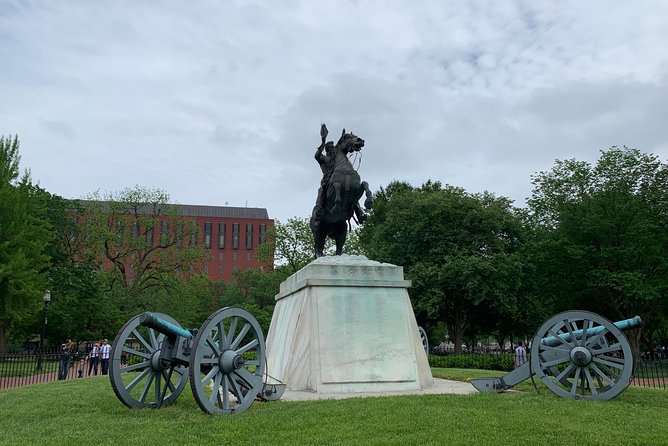
Your starting point is Lafayette Square, at Pennsylvania Avenue and 16th Street Northwest. It is a practical meeting place near major sights, but the tour immediately asks you to see this formal public space in a different way.
The stop lasts about ten minutes. That may sound brief, but the aim is to establish the wider setting rather than cover every detail. Your guide examines the presence and role of slavery in the capital, then connects that past to the square and nearby political power.
This is a good first stop because it shifts your attention before the walk reaches the better-known monuments. You are already in the center of Washington, surrounded by symbols of government. The discussion asks what freedom and democracy meant in a city where enslaved people were present and essential to its growth.
Because Lafayette Square is an open public place, admission is free. You should expect outdoor interpretation rather than access to a special interior room. Bring patience for pauses near public activity and be ready to focus on the guide’s story.
Decatur House and the former slave pen
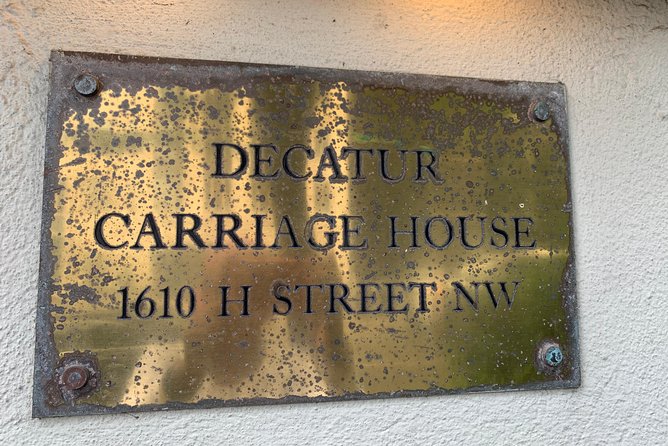
The next stop is Decatur House, also listed as a slave pen. This is one of the route’s most direct encounters with the city’s slave trade and domestic history.
Again, the planned visit lasts around ten minutes. The stop is not presented as a long building tour, so you should not book this expecting an extended interior visit. Instead, the guide uses the location to explain how enslaved people were held, sold, or connected to households and institutions in the capital.
This stop gives the subject a physical address. Slavery can feel like a large national issue in textbooks, but Decatur House places it in an ordinary urban setting near the center of political Washington. That change in scale is one of the walk’s strongest features.
The guide may also spend time on particular people, including figures whose names are less familiar. That focus is important. If you want only the best-known names and headline events, this may feel slower than a conventional monument tour. If you want the lives behind the policy, buildings, and institutions, Decatur House is likely to be one of the most useful stops.
The Washington Monument area and the National Mall
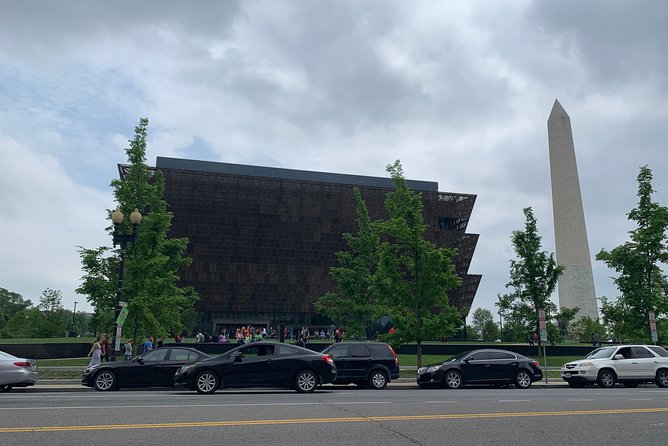
The route then reaches the National Mall for a brief stop near the Washington Monument. The monument itself is not the main attraction here. Its value is as a landmark around which the guide can connect national memory, public space, and African American history.
You may find this portion especially helpful if you already plan to visit the Mall. The guide gives you another way to read the monuments and open spaces, linking them to people and events that are not always explained on standard sightseeing routes.
The Mall also illustrates the tour’s main limitation. There is plenty to see, but the stop is short, listed at about ten minutes. You cannot expect a full treatment of every African American connection to the capital, the monument, or the surrounding institutions. Think of it as a focused introduction that may give you reasons to return and explore further.
One participant felt the tour offered little to see, while the guide’s response emphasized the historical connections visible across the National Mall. Both points help set expectations. This is not a museum-style presentation with objects behind glass at every stop. Much of the value comes from interpretation, discussion, and the way the guide connects the surroundings to the past.
More walking tours in Washington DC:
- Arlington National Cemetery Walking Tour & Changing of the Guards
★ 5.0 · 2,566 reviews - Ghosts of Georgetown & The Exorcist Steps Walking Tour
★ 5.0 · 610 reviews - Georgetown Foodie Culinary Tour & Neighborhood Walk
★ 5.0 · 437 reviews - Gastronomic Georgetown Walking Food Tour
★ 4.5 · 373 reviews
The C&O Canal lockhouse at Constitution and 17th
The fourth stop is the C&O Canal lockhouse at Constitution Avenue and 17th Street. This location adds another layer to the walk by moving away from the best-known ceremonial spaces and toward infrastructure.
Canals, roads, and transport routes were part of the capital’s working life. A lockhouse may not have the visual impact of the Washington Monument, but it can help explain how labor and movement supported the city. The guide uses this stop to keep attention on the people who made Washington function, not only those whose names appear on monuments.
The stop is planned for roughly ten minutes. You will again be outside, and you should expect the story to carry more weight than the physical attraction. If your ideal tour requires a long list of preserved interiors, this route may feel light on traditional sightseeing.
I see that as a tradeoff rather than a flaw. The walk is built around overlooked connections. It does not pretend that every location will offer a dramatic structure or an extensive exhibit. Its job is to give context to places you might otherwise pass without thinking.
The African American History and Culture Museum
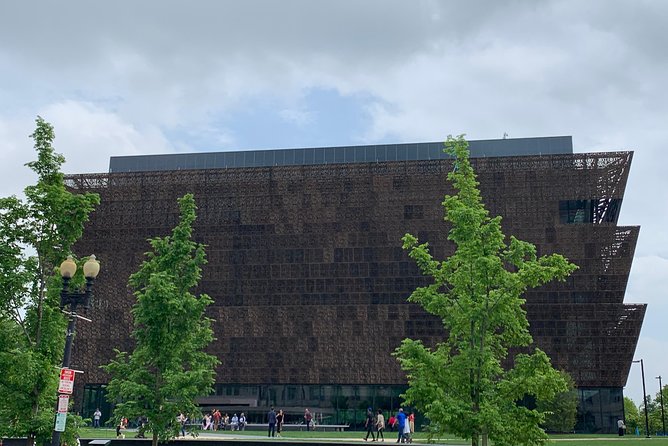
The walk ends at the National Museum of African American History and Culture, at 1400 Constitution Avenue Northwest. The tour stops outside the building, near the southeast corner by 15th Street, rather than including museum admission.
That distinction is important. You are not buying a museum ticket, and the tour does not replace a museum visit. Instead, the guide ends at one of Washington’s most important places for continuing the subject. The building’s exterior provides a clear closing point and a natural next step if you have time to visit the museum separately.
The outside stop is listed at about ten minutes. The guide may use the architecture and location to bring together the themes raised earlier: enslavement, African American achievement, national memory, and the question of which stories receive public attention.
If you plan to visit the museum afterward, check its separate admission and operating arrangements yourself. They are not included in the $40 tour price. Even without going inside, ending here gives the walk a clear sense of direction rather than simply finishing on an unrelated street corner.
What the private format adds
This is a private activity, so only your group participates. That is a major reason the $40 price can make sense, especially for a family or small group that wants to discuss the topic rather than stand quietly in a large crowd.
A private tour also lets you ask for clarification without worrying about holding up dozens of people. Families with teenagers may appreciate the more conversational style. One family described the guide using questions and small quizzes to keep two teens involved, while another family of seven attended with an infant.
The guide’s personality matters here. Dr. Koura is repeatedly described as personable, energetic, and passionate about teaching. Dr. Gibson is also praised for her enthusiasm and command of the subject. The names appear interchangeably in the available information, so check the assigned guide when booking if that matters to you.
You may receive images by text message during the walk. This is a useful feature because it gives you faces and visual references while the guide speaks. It also means you should have a charged phone and be comfortable receiving material during the tour.
Is $40 good value for one hour?
At $40 per person, this is not the cheapest way to spend an hour in Washington. You can walk around Lafayette Square, the Mall, and the museum exterior without paying an admission fee.
The comparison changes when you consider the private guide. You are paying for interpretation, a prepared route, focused storytelling, and the chance to ask questions. If your group has a serious interest in African American history, the price is fair, particularly when divided among a family or small party.
The limitation is time. Five stops in one hour leaves little room for lingering, extended questions, or long explanations. One participant wished the tour lasted two more hours, and that reaction makes sense. You should view this as a concentrated orientation, not a complete account of slavery in Washington.
For a first visit, the tour can help you understand what to look for during the rest of your time in the city. For a return visit, it may fill gaps left by standard monument sightseeing. The value is strongest if you plan to continue learning afterward.
Walking, weather, and practical planning
The meeting point is Lafayette Square at Pennsylvania Avenue and 16th Street Northwest. The walk ends at the southeast corner of the African American History and Culture Museum near 15th Street. Private transportation is not included, so plan your own way to the start and from the end.
The exact distance is not supplied, but the itinerary moves across several central locations. Some participants described it as a lot of walking, while another found the pace light and pleasant. Your experience may depend on the guide, the group, and how long each discussion lasts. Wear comfortable shoes and expect to be on your feet.
The tour is conducted in English and uses a mobile ticket. Confirmation arrives when you book. Service animals are allowed, and the starting and ending areas are near public transportation.
Weather matters because this is an outdoor walking activity. Poor weather can lead to a different date or a full refund. You can cancel for a full refund up to 24 hours before the start time. Changes or cancellations inside that window are not accepted, so keep an eye on the forecast.
Who will get the most from this tour?
I would choose this for anyone who wants more than the standard Washington checklist. It suits adults, families with older children, couples, and small groups who want a serious subject explained in a personal setting.
It is especially useful for:
- Families hoping to discuss slavery and African American contributions in a guided way
- First-time visitors who want context for the National Mall
- Returning visitors who have already seen the main monuments
- People interested in overlooked individuals and local stories
- Small groups that value questions and conversation
I would be cautious about booking it if you want extensive access to buildings, museum galleries, or physical displays. You should also allow more time if your group tends to ask many questions. The tour has enough material to fill far more than one hour, but the scheduled format remains compact.
Should you book the Washington DC History of Slavery Walking Tour?
Book it if you want a focused, private introduction to slavery and African American history in the heart of Washington. The strongest reasons are the academic guide, the five carefully chosen locations, the personal format, and the connection between familiar monuments and stories that often receive less attention.
Go in knowing what you are buying: one hour outdoors, several short stops, historic images on your phone, and a great deal of information delivered at a brisk pace. You will not get museum admission or a long interior tour.
For $40, I think it is a worthwhile choice for a small group that wants thoughtful guidance rather than another pass by the monuments. Wear good shoes, arrive ready to listen, and reserve extra time afterward for the National Museum of African American History and Culture if you want to continue the subject.
FAQ
How long does the Washington DC History of Slavery Walking Tour last?
The tour lasts approximately one hour.
Where does the tour begin?
It begins at Lafayette Square, at Pennsylvania Avenue Northwest and 16th Street Northwest in Washington, DC.
Where does the tour end?
It ends at the National Museum of African American History and Culture, on the southeast corner near 15th Street.
Is the tour private?
Yes. Only your group participates in the activity.
Is admission to the stops included?
All fees and taxes for the tour are included, but the listed stops are outdoor locations and the museum stop is outside the building. Private transportation is not included.
What language is the tour offered in?
The tour is offered in English.
Can I cancel for a full refund?
Yes. You can cancel at least 24 hours before the local start time for a full refund. If poor weather causes the tour to be canceled, you will be offered another date or a full refund.
Just added in Washington DC
- Washington DC: Highlights Guided Walking Tour★ 4.6 · 6 reviews
- Washington DC: Private Custom Tour with a Local Guide★ 4.9 · 4 reviews
- Washington, DC: Thanksgiving Day Lunch Cruise★ 4.7 · 3 reviews
- Washington D.C.: The Ghosts of Washington D.C. Walking Tour★ 4.6 · 14 reviews
- Thomas Jefferson Monticello Small Group Day Tour from DC★ 4.8 · 16 reviews
- Washington: Mt. Vernon, Alexandria & Arlington Cemetery Tour★ 3.4 · 8 reviews
- Washington, DC: The Good Liar: Brian Curry★ 5.0 · 3 reviews
- From NYC: Washington DC 1 Day Tour and Free Time for Museums★ 4.4 · 5 reviews
Historical Tours, compared.
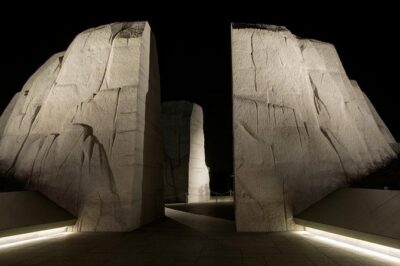
Guided African American History Tour with Reserved Museum Entry
Read our review →
DC Monuments & History Guided E-Cart Tour-Blankets
Read our review →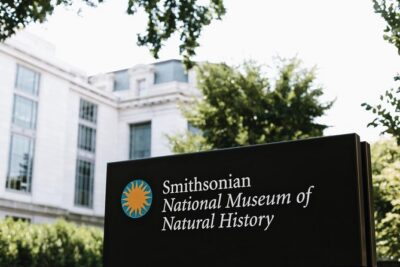
Smithsonian Museum of Natural History – Exclusive Guided Tour
Read our review →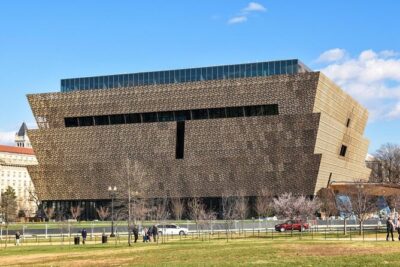
African American History Tour with Museum of African American History Ticket
Read our review →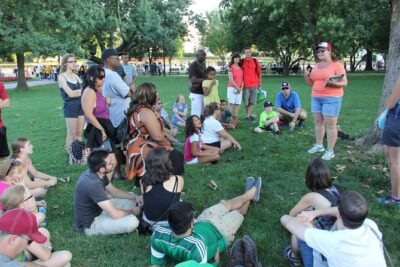
Historic Georgetown: History, Gossip, & Architecture Walking Tour
Read our review →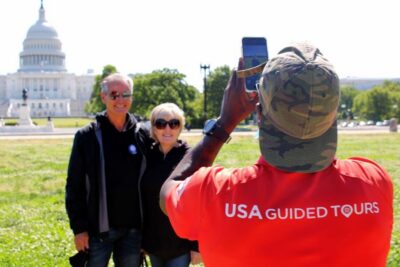

Smithsonian Museum of American History Exclusive Guided Tour
Read our review →Browse the lists this tour appears in