
Reviewed · GEORGETOWN WALKING TOURS
Washington, DC: Georgetown Architecture Walking Tour
Georgetown’s best stories are written into its buildings. On this 2.5-hour walk, you’ll move from the old Chesapeake and Ohio Canal to pastel row houses, grand academic buildings, a former streetcar depot, and the Potomac waterfront. The route shows how a working port town became one of Washington’s most polished neighborhoods.
I like the wide mix of architecture, from the Laird-Dunlop House and Grafton Tyler Double House to Pomander Walk’s tiny homes. I also like the way the tour joins buildings to people and events, including Alexander Graham Bell’s Volta Laboratory and Georgetown’s old tavern culture. Guides Sam and Ellyn have been especially praised for clear, lively storytelling and useful fun facts.
The main consideration is simple: this is a walking tour, not a series of interior visits. You’ll see many landmarks from the street, walk about 2 miles, and keep moving at a leisurely pace. Bring good shoes, water, and clothing suited to the weather.
Key points to know before you book
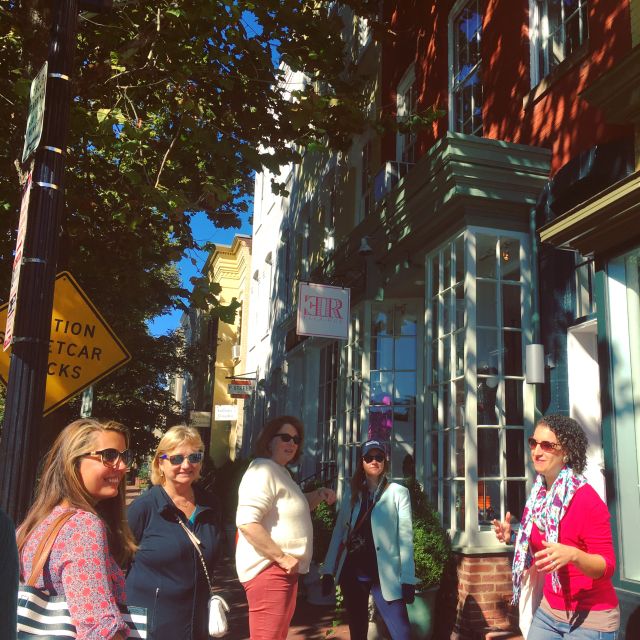
- The route covers about 2 miles in 150 minutes, with a relaxed pace through Georgetown’s oldest and most recognizable areas.
- The architecture keeps changing, from canal infrastructure and historic homes to schools, churches, row houses, and the Georgetown Waterfront.
- Guides Sam and Ellyn are praised for lively explanations, with history, architectural details, and memorable side facts.
- You see Georgetown’s past as a port, school town, industrial center, and university district, not just its handsome streets.
- The tour runs rain or shine unless conditions are dangerous, so check the forecast and dress for the day.
- The $43 price buys local interpretation, which is most useful if you want context that a self-guided walk may miss.
Why Georgetown’s architecture works best on foot
Georgetown rewards slow looking. Its streets hold small details that are easy to miss from a car or bus: changing brick patterns, narrow lots, old doorways, compact row houses, and buildings that have shifted use over time.
This tour gives those details a frame. Instead of seeing Georgetown as a collection of attractive facades, you follow a story about trade, social class, education, invention, transportation, and redevelopment.
The pace matters. At 150 minutes, the walk is long enough to cover a substantial part of the neighborhood but not so packed that every stop becomes a rushed photo break. You’ll need to stay with the group, though. One useful tip from an earlier tour experience is to allow a few extra seconds for photographs, since the group may continue while you are still composing a shot.
The meeting point is outside Baked & Wired. Look for a guide wearing a DC Design Tour T-shirt, and arrive five minutes early. The walk departs on time, which is worth taking seriously in a neighborhood where a short delay can mean missing the group.
More Walking Tours in Georgetown
- Ghosts of Georgetown & The Exorcist Steps Walking Tour
★ 5.0 · 610 reviews - Georgetown Foodie Culinary Tour & Neighborhood Walk
★ 5.0 · 437 reviews - Gastronomic Georgetown Walking Food Tour
★ 4.5 · 373 reviews
Following the Chesapeake and Ohio Canal
The tour begins with the Chesapeake and Ohio Canal, a key to understanding why Georgetown developed where it did. The canal connected communities along the Potomac River with markets and goods, giving the area a working purpose long before it became known for expensive homes and university life.
This is an important opening because it shifts your view of Georgetown. The neighborhood was not created as a purely residential quarter. Its story begins with movement, trade, and practical connections to the river.
As you walk along this part of the route, listen for the link between infrastructure and architecture. The canal is not simply a pleasant old feature. It helps explain why commercial activity took hold here and why Georgetown became useful to the wider region.
You will not spend the whole tour beside the canal. Instead, it provides the first chapter before the route turns toward houses, schools, churches, and other landmarks.
Historic houses and Georgetown’s social story
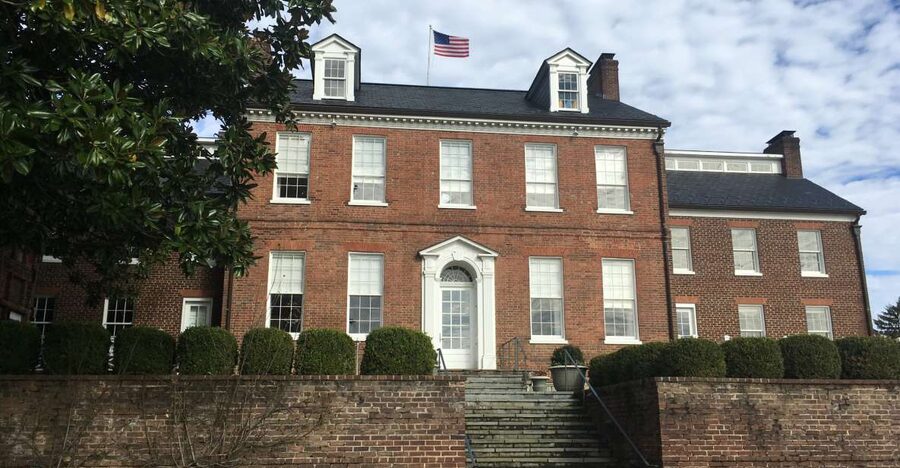
The Laird-Dunlop House and Newton D. Baker House bring the tour into Georgetown’s residential past. These are the kinds of buildings that can look like attractive old homes until a guide explains their owners, dates, design features, and place in the neighborhood.
The Lydia English Seminary School for Girls adds a different angle. It was a boarding school for upper-class students, giving you a glimpse of the education and social expectations tied to Georgetown’s well-to-do residents.
I find this part of the route useful because it connects architecture with status. A grand home and an established school tell you more than what people thought looked good. They also show who had access to money, education, and influence.
The tour’s story of Georgetown is often described as a rags-to-riches tale. That phrase is broad, but the route gives it physical shape. You see a neighborhood that grew from a working port setting into a place associated with prominent families, institutions, and refined homes.
The drawback for architecture fans is that the tour information is delivered outdoors. You should not expect a room-by-room look inside these houses. Their value here is in the exterior details and the stories attached to them.
Taverns, churches, and the small scale of old Georgetown
The Grafton Tyler Double House is another stop where the building itself carries a story. A double house can help explain how Georgetown’s older residential blocks were organized and how different households could share a single architectural form.
You’ll also pass Christ Episcopal Church and the Hyde-Addison School. Together, they widen the picture beyond private homes. Churches and schools are neighborhood anchors, and their presence shows how daily community life took shape around places of worship and education.
Then comes the historic Yellow Tavern, also called the White Horse Tavern. The two names alone make it a memorable stop, and the building adds a touch of old tavern culture to a route otherwise filled with formal homes and academic sites.
This portion should suit you if you like buildings with a practical past. Georgetown is not presented as a museum district frozen in one era. Taverns, schools, churches, homes, and later institutions all occupy the same walk, each pointing to a different use of the neighborhood.
More Georgetown tours in Washington DC:
- Historic Georgetown: History, Gossip, & Architecture Walking Tour
★ 5.0 · 321 reviews - Tastes of Georgetown Food & History Small Group Walking Tour
★ 4.5 · 203 reviews - The Escape Game DC: 60-Minute Adventure in Georgetown
★ 5.0 · 135 reviews - Acquired Taste Food Tour in Georgetown
★ 5.0 · 105 reviews
Pomander Walk and Georgetown’s most charming details
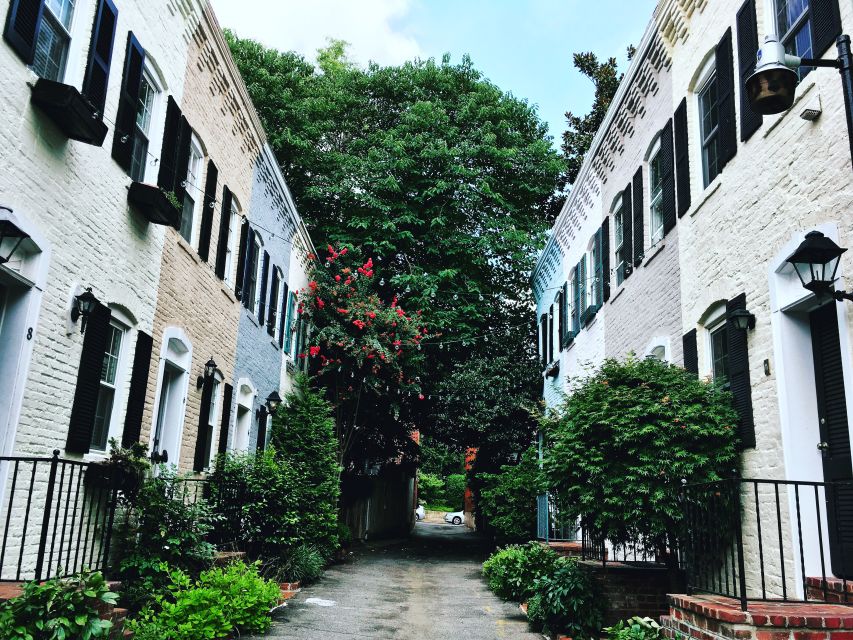
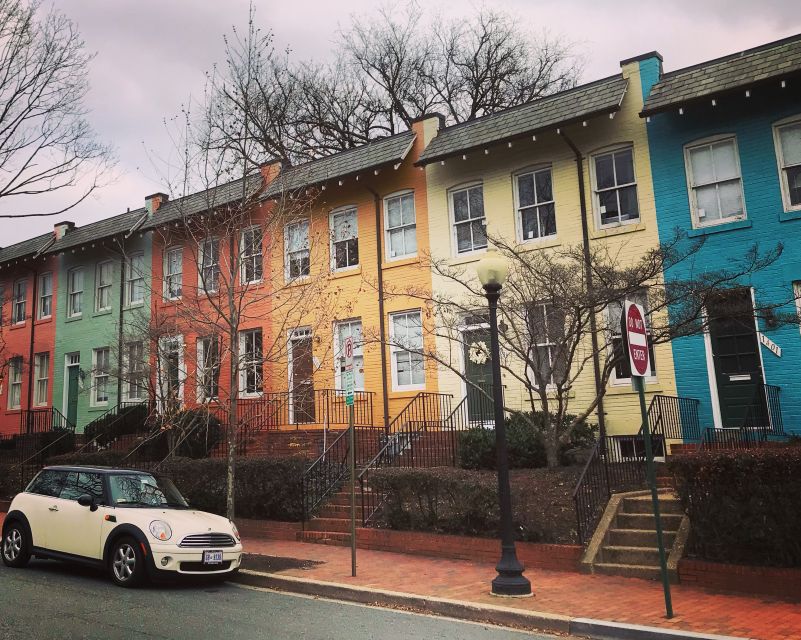
Pomander Walk is likely to be one of the route’s most visually distinctive sections. You’ll pass tiny, pastel row houses packed closely together, a sharp contrast to larger historic homes and formal academic buildings.
This is where the tour’s focus on architectural detail pays off. The houses give you a chance to notice scale, color, repetition, and how a short lane can feel separate from the larger streets around it.
I would not judge this stop only as a photo opportunity. The small row houses help show that Georgetown’s built character is not limited to grand buildings. Smaller homes and compact spaces are part of the neighborhood’s appeal too.
Bring your camera, but keep the group’s pace in mind. You may need to take quick photographs rather than stop for a long time. The walk is designed to keep moving, and the guide’s explanation is part of what you are paying for.
From Alexander Graham Bell to Georgetown’s academic core
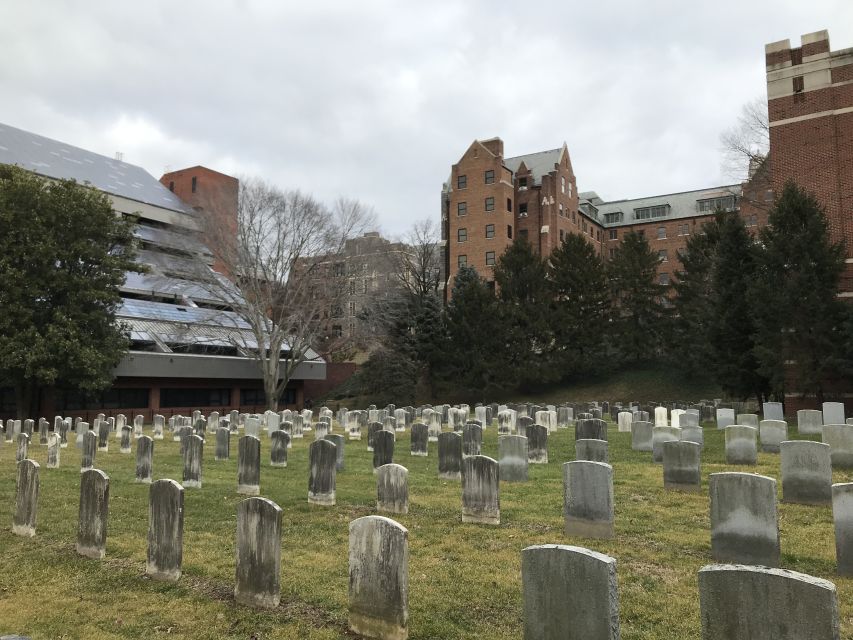
The route later reaches the site where Alexander Graham Bell founded Volta Laboratory. This stop adds invention and scientific work to the tour’s growing list of themes.
It is a good reminder that Georgetown’s story is not only about old money and historic facades. The neighborhood also played a role in research and new technology. A site connected to Bell gives the walk a clear link between local buildings and wider changes in American life.
The academic section follows with Georgetown Preparatory School, Healy Hall, and the University Library. These destinations give the tour some of its strongest institutional architecture.
Healy Hall is especially important to the visual rhythm of the walk, since it shifts the setting from narrow residential streets to the more formal world of a university campus. The University Library adds another layer, showing how education has helped shape Georgetown’s identity.
You’ll also get a look at campus nightlife at The Tombs. This is a useful contrast with the schools and library. Georgetown is not only about old stone, ceremonies, and classrooms. It also has places connected to student life and evening activity.
The academic section may be the best fit for anyone comparing a general Georgetown walk with a strictly residential architecture tour. You get homes and historic streets, but also schools, campus buildings, and the social spaces around them.
The Car Barn and Georgetown’s changing transport story
The Car Barn is a renovated streetcar depot, and it gives the route another practical piece of Georgetown’s past. By this point, you have already seen a canal tied to goods and markets. The Car Barn shows how later transport systems helped shape the area.
The building’s present condition also brings up a useful local theme: reuse. Georgetown’s older structures have not all remained locked in their original functions. Some have been adapted, renovated, or given new roles.
That makes the Car Barn a strong stop for people who care about urban change. You are not just looking at an old building. You are seeing how a neighborhood can carry its past forward while serving newer needs.
Since the tour is conducted outdoors, your guide will explain the significance of the depot as you move along. If you want a detailed interior architectural study, this may feel limited. If you want to understand how transport affected Georgetown’s growth, it fits the route well.
Toward the waterfront through Cady’s Alley
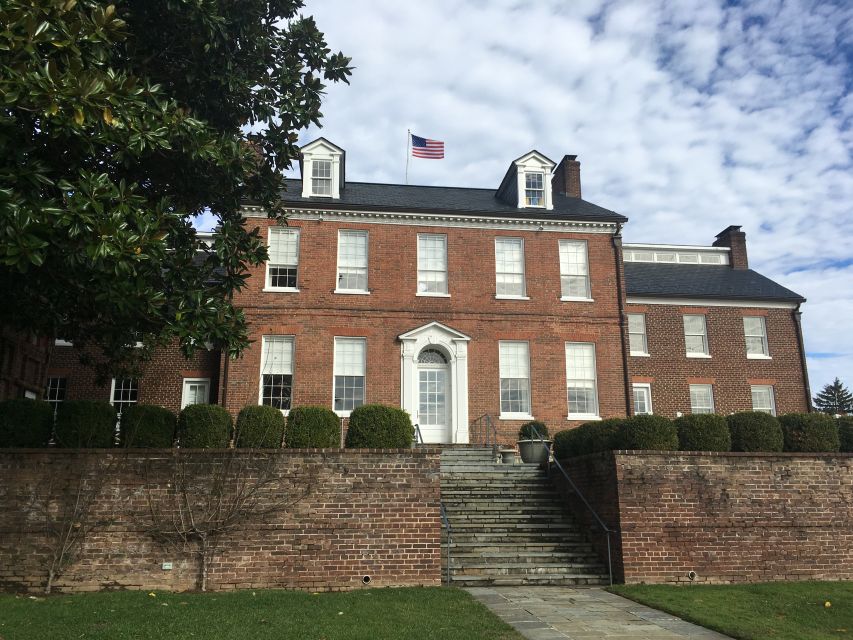
The final section includes the Francis Scott Key Memorial, Cady’s Alley, and the Georgetown Waterfront. These stops bring together memory, design, shopping-area architecture, and the river setting.
Cady’s Alley gives you another change of scale. After historic houses, schools, and university buildings, the route moves through a more modern setting with a different feel. The contrast helps you see Georgetown as a place that has changed over time rather than a single preserved period.
The Francis Scott Key Memorial adds a public commemorative site to the walk. It also helps shift the focus back toward the Potomac, setting up the final portion at the waterfront.
The tour ends at the Georgetown Waterfront, which is a sensible finish after beginning near the canal. Water and movement frame the whole experience. At the start, you learn how waterways helped Georgetown trade. At the end, you reach the riverfront in a setting suited to lingering after the guide departs.
The ending is also practical. You can continue exploring the area on your own, stop for food or a drink, or simply enjoy the river views. The tour itself does not include food or additional activities, so plan your next stop separately.
What the $43 price gets you
At $43 per person, this is not the cheapest way to walk around Georgetown. You can follow many of the streets on your own for free. The value comes from the guide’s ability to explain what you are seeing and connect stops that might otherwise feel unrelated.
A self-guided walk may show you a pretty house, a canal, a church, or a school. This tour explains why each belongs in the same story. It also reduces the planning work. You do not need to research the route in advance or decide which buildings are worth seeking out.
The price makes the most sense for you if you care about architecture but want more than design vocabulary. The tour mixes building details with Georgetown’s trade, education, invention, transport, and social history.
It is less useful if you prefer to stop wherever you like, enter buildings at your own pace, or spend a long time photographing one facade. The route has a schedule, and the group continues from stop to stop.
The tour has a 5 out of 5 rating based on eight ratings, with repeated praise for clear explanations and engaging guides. Sam is singled out for informative, lively commentary and fun facts, while Ellyn is praised for making the architecture and local history easy to enjoy. That pattern suggests the guide is a major part of the price, not an extra detail.
Who will enjoy this 150-minute walk
I would recommend this tour to first-time visitors who want a solid introduction to Georgetown without spending a full day on it. Two and a half hours gives you enough time to see a broad selection of landmarks while leaving room for lunch, museums, shopping, or a separate walk afterward.
It also suits repeat visitors who have already seen the main streets but want a stronger explanation of what they are looking at. The route reaches less obvious stops, including the Laird-Dunlop House, Lydia English Seminary School for Girls, Pomander Walk, Volta Laboratory, and the Car Barn.
Architecture fans should find plenty to notice, though you should set expectations correctly. This is a neighborhood tour with architecture at its center, not a specialist lecture devoted only to styles, materials, or interior design.
Families and mixed-age groups may appreciate the variety of subjects. Canals, taverns, inventors, schools, student life, and the waterfront give the guide several ways to hold your attention. The walking distance is moderate, but you still need comfortable shoes.
This is not the right pick for someone who wants an indoor activity or a tour that stops in bad weather. It runs rain or shine unless conditions become dangerous. Carry water and wear weather-appropriate clothing.
Practical details that can make the walk better
Arrive outside Baked & Wired five minutes early. The guide will wear a DC Design Tour T-shirt, which should make the meeting point easier to identify.
The tour is in English and includes a professional local guide. No food, drinks, or admission tickets are included, so bring water and budget separately for anything you want before or after the walk.
The route covers about 2 miles. The pace is described as leisurely, but Georgetown streets and the length of the walk still call for comfortable shoes. If you want photographs, stay close and be ready to take them without long pauses.
The tour takes place rain or shine unless conditions are dangerous. A light raincoat, sun protection, or an extra layer may be more useful than relying on a perfect forecast.
You can cancel up to 24 hours before the start for a full refund, and the reserve-now, pay-later option lets you hold a place without paying at once. Check the available start times when booking, since the duration is fixed but the departure time can vary.
Should you book the Georgetown Architecture Walking Tour?
Book it if you want Georgetown explained rather than simply photographed. The route gives you a well-shaped story, moving from canal commerce to historic homes, elite education, churches, taverns, small row houses, invention, university life, transport, and the waterfront.
The strongest reason to go is the guide. Sam and Ellyn have been praised for clear, engaging delivery, and the tour depends on that personal interpretation. You will see many of these streets for free, but you will not get the same connections without doing your own research.
Skip it if you dislike fixed walking routes, outdoor touring in uncertain weather, or moving on before you have finished taking pictures. For everyone else, $43 is a fair price for a focused introduction to one of Washington’s most layered neighborhoods, especially if you are interested in how buildings reveal the people and purposes behind them.
FAQ
How long is the Georgetown Architecture Walking Tour?
The tour lasts 150 minutes, or two and a half hours.
How much walking does the tour involve?
The route involves about 2 miles of walking at a leisurely pace.
Where does the tour meet?
Meet your guide outside Baked & Wired in Georgetown. The guide will wear a DC Design Tour T-shirt.
What language is the tour conducted in?
The tour is conducted in English with a live guide.
What landmarks are included?
The route includes the Chesapeake and Ohio Canal, Laird-Dunlop House, Newton D. Baker House, Lydia English Seminary School for Girls, Grafton Tyler Double House, Christ Episcopal Church, Hyde-Addison School, Yellow Tavern, Pomander Walk, Volta Laboratory, Georgetown Preparatory School, Healy Hall, the University Library, The Tombs, the Car Barn, Francis Scott Key Memorial, Cady’s Alley, and the Georgetown Waterfront.
What should I bring?
Bring comfortable shoes, water, and clothing suited to the weather.
Can I cancel for a full refund?
Yes. You can cancel up to 24 hours in advance for a full refund.
More Walking Tours in Washington DC
- Arlington National Cemetery Walking Tour & Changing of the Guards
★ 5.0 · 2,566 reviews - Ghosts of D.C. – Walking Tour
★ 4.5 · 344 reviews - Smithsonian Museums Walking Tour with Reserved Air & Space Entry
★ 5.0 · 297 reviews - DC’s Original Food and History Walking Tour
★ 5.0 · 255 reviews
Just added in Washington DC
- Washington DC: Express Morning or Night-Time Monuments Tour★ 3.2 · 3 reviews
- Washington D.C.: Georgetown Guided Secret Food Tour★ 3.9 · 7 reviews
- Washington DC: E-Bike Rental★ 4.3 · 7 reviews
- Washington DC: Christmas Eve Gourmet Brunch or Dinner Cruise★ 4.2 · 6 reviews
- Washington DC Day Tour – Private Tour★ 4.1 · 3 reviews
- Washington DC: After Dark Night-Time Sightseeing Tour★ 3.8 · 6 reviews
- Washington DC: Best of Capitol Hill Guided Bike Tour★ 3.2 · 7 reviews
- Washington DC: 1 or 2-Day Unlimited Water Taxi Pass★ 3.2 · 6 reviews
Georgetown Walking Tours, compared.

Ghosts of Georgetown & The Exorcist Steps Walking Tour
Read our review →
Georgetown Foodie Culinary Tour & Neighborhood Walk
Read our review →

Historic Georgetown: History, Gossip, & Architecture Walking Tour
Read our review →
Tastes of Georgetown Food & History Small Group Walking Tour
Read our review →
The Escape Game DC: 60-Minute Adventure in Georgetown
Read our review →

Browse the lists this tour appears in