
Reviewed · WALKING TOURS
Harlem Renaissance in DC Walking Tour
Washington’s Harlem Renaissance story unfolds not in a museum, but along ordinary-looking streets where musicians, singers, poets, and activists changed American culture. This two-hour walk connects the Howard Theatre, Lincoln Theatre, and former jazz clubs with the homes and gathering places of Black artists in Shaw and U Street.
I like the stop at Ben’s Chili Bowl, since it gives the walk a relaxed break and a taste of a local institution. I also like the focus on people and places that are easy to miss, including Lilian Evanti, Billie Holiday’s former performance spot, and Georgia Douglas Johnson’s home.
The main drawback is that most stops are exterior visits, with only short pauses at each site. You will walk at a moderate pace, and the tour is best for anyone who wants context, stories, and street-level history rather than lengthy interior museum visits.
Key points to know before you book
- The walk begins at the Howard Theatre, one of Washington’s earliest major venues for African American performers.
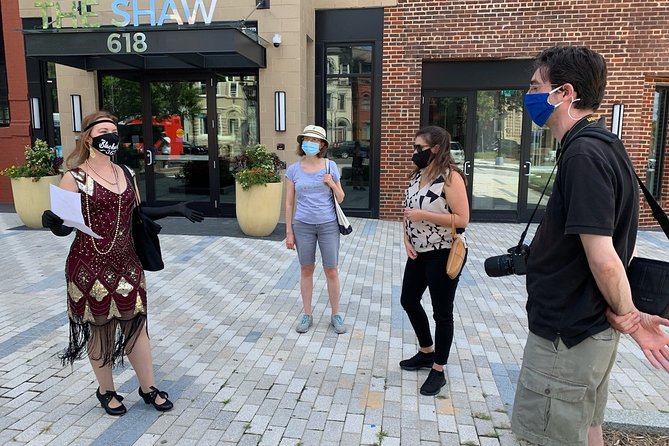
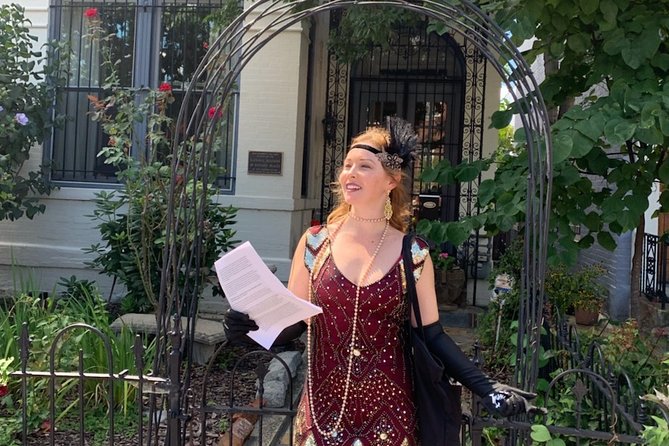
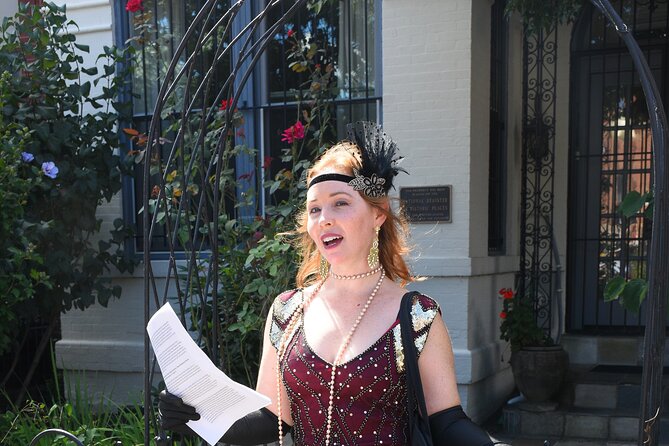
- Katie leads the tour with period costume and music, adding a theatrical touch to the stories.
- You visit former Black Broadway sites, including the Lincoln Theatre and Bohemian Caverns.
- Ben’s Chili Bowl is a 25-minute refreshment stop, but your food and drink cost extra.
- The tour ends at Georgia Douglas Johnson’s house, also called the Halfway House, on S Street.
- The $30 price covers a two-hour guided history walk, with a maximum group size of 20 people.
Why this Washington walk matters
The Harlem Renaissance is often taught as a New York story, but its ideas and artists reached far beyond Harlem. Washington’s Black neighborhoods had their own network of theaters, clubs, homes, newspapers, musicians, and intellectual circles. This tour gives you a way to see those connections on foot.
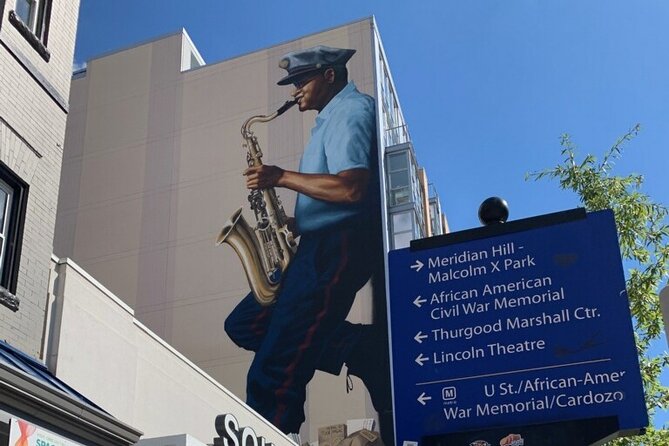
You begin in the Shaw area and move toward U Street, once known as Washington’s Black Broadway. That nickname points to the number of Black-owned businesses, theaters, clubs, and performance spaces that once lined these streets. The tour is not only about famous musicians. It also brings in opera, poetry, social justice, and Black cultural life.
That wider view is one of the tour’s strengths. Duke Ellington and Billie Holiday draw attention, but Lilian Evanti and Georgia Douglas Johnson show how much more was happening. You get a better sense of Washington as a place where artists worked, met, argued, performed, and built community.
The guide’s job is especially important here because many of the original buildings and clubs are gone. A storefront or residential block may not explain itself. The stories give those places meaning.
More walking tours in Washington DC:
- Arlington National Cemetery Walking Tour & Changing of the Guards
★ 5.0 · 2,566 reviews - Ghosts of Georgetown & The Exorcist Steps Walking Tour
★ 5.0 · 610 reviews - Georgetown Foodie Culinary Tour & Neighborhood Walk
★ 5.0 · 437 reviews
Starting at the Howard Theatre
The tour starts outside the Howard Theatre at 620 T Street NW. Founded in 1910, it was the first theater in Washington to offer a stage for African American performers. That makes it an ideal starting point, since the building represents both artistic opportunity and the limits imposed by segregation elsewhere in the city.
You spend about 10 minutes here. That is enough time for an introduction and a clear explanation of the theater’s role, but not enough for a long interior visit. Admission to the tour stop is free, and the experience is primarily outside.
I would arrive a few minutes early. The meeting point is specific, and the opening story sets up nearly everything that follows. If you enjoy asking questions, this is a good place to begin. One former participant specifically noted that the two-hour schedule moves quickly, so questions are worth asking as the tour goes along rather than saving them all for the end.
Duke Ellington’s first musical steps
The next stop is Right Proper Brewing Company, located at the site of Frank Holliday’s Pool Hall. This is where Duke Ellington first began experimenting with ragtime and jazz piano.
You spend only about five minutes here. The short visit reflects the nature of the site: you are learning what happened on the ground beneath or around a present-day business, rather than entering a preserved Ellington museum.
That contrast is useful. Washington’s music story is not locked inside a single landmark. It is spread through buildings that have changed use, streets that have changed names, and addresses that now look quite different from their earlier lives. You will need to picture the earlier scene, and the guide’s explanation does much of that work.
The stop also helps place Ellington in Washington before he became an international name. You are not simply hearing about a famous musician at the height of his career. You are hearing about an early stage in his development.
Lilian Evanti and the classical side of Black culture
At 1910 Vermont Avenue NW, the group pauses outside the former home of Lilian Evanti. She was an African American opera singer who earned acclaim abroad before returning to Washington and contributing to Black classical music at home.
This stop broadens the tour beyond jazz. If you come expecting only nightclubs and swing, Evanti’s story is a useful correction. The cultural life of Black Washington included opera and formal concert music as well as popular performance.
The stop lasts about five minutes, so do not expect to enter the home. Its value comes from the address and the story attached to it. You get a direct reminder that important cultural figures lived in these residential blocks, not only in famous theaters.
I particularly like this part of the route because it adds balance. A tour centered only on the biggest names can make a cultural movement seem smaller than it was. Evanti’s career shows the range of ambition and talent within Washington’s Black community.
A completely different kind of day in Washington DC:
- DC Memorials Night Tour: Glass-Roof Convertible Upgrade Option
★ 4.5 · 6,933 reviews - National Mall Monuments Night Tour with 10+ Stops, Entry Tickets
★ 4.5 · 4,863 reviews - Washington DC Monuments by Moonlight Tour by Trolley
★ 4.5 · 3,956 reviews - Hop-on Hop-off Sightseeing Tour by Open-top Bus with 18 Stops
★ 3.5 · 3,848 reviews
Bohemian Caverns and the lost club scene
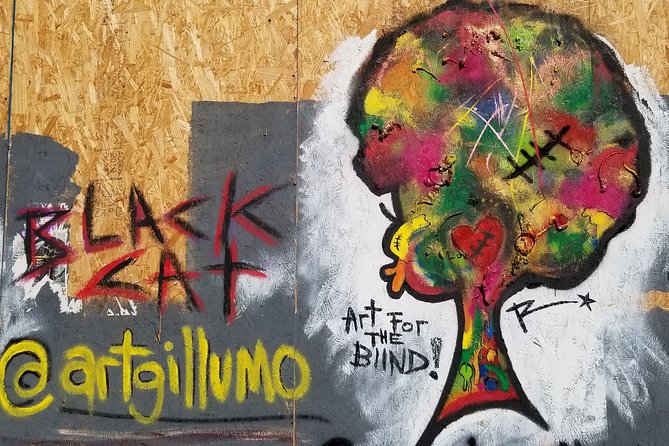
Bohemian Caverns was once a major jazz stop during U Street’s Black Broadway period. The tour pauses here for about five minutes, again focusing on what the site meant rather than offering a long building visit.
Former clubs can be hard to understand from the sidewalk. The room, music, crowds, and late-night energy are no longer visible. Still, learning where musicians performed helps you map the old entertainment district in your mind.
This is one place where expectations matter. If you want preserved interiors or live music, this tour will not provide them. If you want to understand the pattern of Washington’s old club scene, the stop works well as part of the larger route.
The steady sequence of former clubs and theaters also makes the walk feel connected. You begin to see U Street not as a collection of unrelated addresses, but as a performance corridor with its own identity.
The Lincoln Theatre and Washington’s Black Broadway
The Lincoln Theatre was a major theater and show house during the Black Broadway era. The tour allows about three minutes here, so the stop is brief, but its place in the route is important.
The Lincoln and Howard theaters give you two strong anchors. Together, they show how formal theater spaces helped support Black performers in Washington. The smaller clubs and private homes add another layer, showing where artists gathered and where cultural ideas circulated outside the main stage.
Because the stop is short, you may want to look carefully at the building and surrounding street before moving on. The tour is paced to cover several sites, not to linger at one landmark. That pace lets you see more, but it also means you should stay close to the guide.
A 25-minute break at Ben’s Chili Bowl
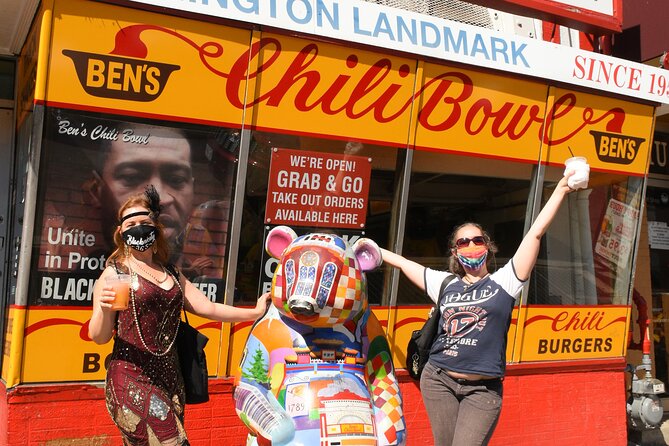
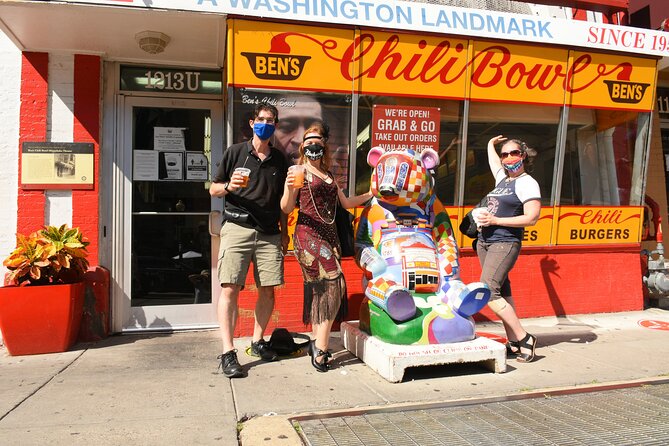
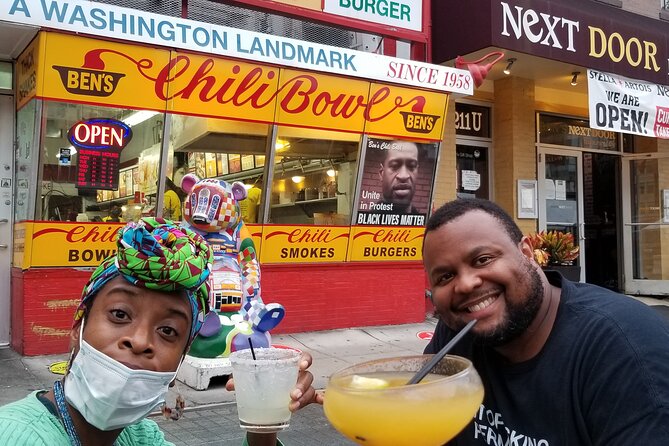
Ben’s Chili Bowl is the longest stop, with about 25 minutes for refreshments. Food and drink are not included, so bring money for anything you want to purchase at Ben’s Chili Bowl or Ben’s Next Door.
This break serves two purposes. First, it gives you a chance to sit or slow down after several stops. Second, it places the tour inside a working Washington institution rather than keeping the entire experience in the past.
Ben’s has been a destination for three generations, including presidents and tourists. You do not need to treat the stop as a formal meal. A small purchase may be enough, especially if you have lunch plans later. The key point is that the break is part of the experience, not an included tasting.
The pause also gives you a practical chance to ask follow-up questions. Since the walk covers a lot of ground in two hours, this is a useful moment to clarify a name or place before heading to the next address.
Club Bali and Billie Holiday
At 1901 14th Street NW, you visit the former site of Club Bali, known as a favorite performance spot of Billie Holiday. The stop lasts around five minutes.
Billie Holiday’s connection gives the route another direct link to the national jazz story, but the address also helps explain how performers moved through the city’s club circuit. A famous singer’s career was supported by many venues, not just the best-known theaters.
As with Bohemian Caverns, you should expect a historical marker in the guide’s storytelling rather than a preserved nightclub interior. That can feel modest if you prefer attractions with exhibits. The payoff is different: you get to stand at the actual address and understand how much of the old music scene was woven into the neighborhood.
The Saturday Nighters Club and Black intellectual life
The final major stop is 1461 S Street NW, a home where the Saturday Nighters Club met. The group gathered to discuss poetry, social justice, and Black culture.
This is a valuable change of pace after the performance venues. The Harlem Renaissance was not only about music and public shows. It also depended on private meetings, conversation, writing, and debate. A home used for these gatherings reveals the quieter side of cultural work.
You may find this stop especially rewarding if you enjoy literary history or the connection between art and social change. The five-minute visit is short, but the subject gives the tour a strong ending before the final stop.
The tour ends at Georgia Douglas Johnson’s house, also known as the Halfway House. The address is 1461 S Street NW, so the final meeting place and end point are connected to this part of the story.
What the $30 price includes
The tour costs $30 per person. For that price, you receive about two hours of guided Washington history, with admission to the outdoor stops included. You pay separately for any food or drink at Ben’s Chili Bowl or Ben’s Next Door.
I consider the price fair if you want a focused introduction to Shaw and U Street’s Black cultural history. You are paying for the guide’s connections between scattered places, not for admission to a museum or theater. Without that explanation, several stops would be easy to pass without noticing.
The value is strongest for first-time visitors to this part of Washington, people with a clear interest in African American history, and anyone who prefers walking tours to large institutions. It is less suited to you if you want extensive time inside buildings or a low-effort sightseeing route.
The group can include up to 20 people. That is large enough to provide a social feel but small enough for a guide to manage on a city walk. The tour is offered in English and comes with a mobile ticket.
Pace, comfort, and practical planning
You should have a moderate level of physical fitness. The walk lasts about two hours and includes several stops across the Shaw and U Street areas. The pace is described as moderate, and one participant found it comfortable, but the schedule still moves briskly because the tour covers eight locations.
Wear comfortable shoes and plan for outdoor time. The experience requires good weather, and it may be canceled if conditions are poor or if the minimum number of participants is not reached. In either case, you are offered another date or experience, or a full refund.
The tour is near public transportation, which makes it practical to reach the Howard Theatre without a car. Since the walk ends at Georgia Douglas Johnson’s house on S Street, plan your next stop from there rather than assuming you will return to the starting point.
Katie is the guide named in the tour feedback. Her approach includes period costume and music, which adds a little theater to the walk without changing its focus on local history. The strongest advice I can give is to ask questions as you go. Two hours can pass quickly when each address opens another part of the story.
Free cancellation is available up to 24 hours before the start time. Changes or cancellations made less than 24 hours ahead are not accepted for a refund.
Who should book this tour
I would choose this tour if you want to understand Washington through its Black artists, performance spaces, and neighborhood institutions. It suits adults, families with older children, and anyone who likes a guide to connect places that are not presented as one formal attraction.
It is also a good choice if you have already seen the National Mall and want a different side of the city. The route shifts attention from federal monuments to theaters, clubs, homes, and a long-running neighborhood eatery.
I would look elsewhere if you need an indoor activity, dislike walking, or want long visits at each site. The experience is strongest when you accept that many stops are brief and let the guide supply the missing context.
Should you book the Harlem Renaissance in DC Walking Tour?
Book it if you want a compact, personal introduction to the Black cultural history of Shaw and U Street. The Howard Theatre, Lincoln Theatre, Duke Ellington’s early music site, Billie Holiday’s Club Bali connection, Lilian Evanti’s home, and Georgia Douglas Johnson’s Halfway House create a strong two-hour arc.
The $30 cost is reasonable because the tour brings together places you would be unlikely to connect on your own. Just budget extra for Ben’s Chili Bowl, wear good shoes, and expect a guided outdoor walk rather than a series of interior admissions.
FAQ
How long is the Harlem Renaissance in DC Walking Tour?
The tour lasts approximately two hours.
How much does the tour cost?
The price is $30 per person.
Where does the tour begin?
It begins at the Howard Theatre, 620 T Street NW, Washington, DC 20001.
Where does the tour end?
It ends at 1461 S Street NW, at Georgia Douglas Johnson’s House, also called the Halfway House.
Is food included?
No. Food and drinks at Ben’s Chili Bowl or Ben’s Next Door are purchased separately.
How long is the stop at Ben’s Chili Bowl?
The refreshment stop lasts about 25 minutes.
Is the tour offered in English?
Yes. The tour is offered in English.
How many people can join the tour?
The maximum group size is 20 travelers.
Is the tour accessible by public transportation?
Yes. The experience is near public transportation.
What happens if the weather is poor?
If poor weather causes a cancellation, you are offered a different date or a full refund.
Just added in Washington DC
- Washington DC: Highlights Guided Walking Tour★ 4.6 · 6 reviews
- Washington DC: Private Custom Tour with a Local Guide★ 4.9 · 4 reviews
- Washington, DC: Thanksgiving Day Lunch Cruise★ 4.7 · 3 reviews
- Washington D.C.: The Ghosts of Washington D.C. Walking Tour★ 4.6 · 14 reviews
- Thomas Jefferson Monticello Small Group Day Tour from DC★ 4.8 · 16 reviews
- Washington: Mt. Vernon, Alexandria & Arlington Cemetery Tour★ 3.4 · 8 reviews
- Washington, DC: The Good Liar: Brian Curry★ 5.0 · 3 reviews
- From NYC: Washington DC 1 Day Tour and Free Time for Museums★ 4.4 · 5 reviews
Walking Tours, compared.

Arlington National Cemetery Walking Tour & Changing of the Guards
Read our review →
Ghosts of Georgetown & The Exorcist Steps Walking Tour
Read our review →
Georgetown Foodie Culinary Tour & Neighborhood Walk
Read our review →

Historic Georgetown: History, Gossip, & Architecture Walking Tour
Read our review →
Smithsonian Museums Walking Tour with Reserved Air & Space Entry
Read our review →
Browse the lists this tour appears in