

Reviewed · SELF-GUIDED TOURS
Washington DC Neighborhoods Personalized Self-Guided App Tour
Washington’s past comes into focus along this walking route from Union Station to the Library of Congress. In a few hours, you move from Daniel Burnham’s grand 1907 railroad terminal to the Supreme Court, the Capitol, women’s suffrage landmarks, and the former home of Frederick Douglass.
I like two things right away: the $5 price covers your whole group, not each person, and the route joins major sights with less obvious stops such as Florida House and Belmont Paul Women’s Equality Monument. The private format also lets your group move at its own pace.
The main concern is the technology. One participant had trouble getting the app and virtual guide to connect, and the Library of Congress requires a timed reservation even though admission is free. Handle that booking before you set out.
Key points to know before booking
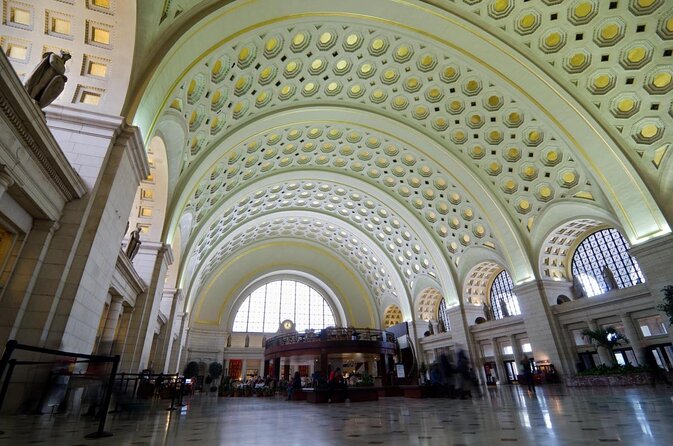
- Union Station begins the story: You start at one of America’s first major union railroad terminals, opened in 1907 and completed in 1908.
- The route is private: One booking covers up to 15 people, with no other group joining yours.
- Capitol Hill gets the most attention: The Supreme Court, Capitol, Folger Shakespeare Library, Library of Congress, and women’s suffrage sites all appear along the way.
- Frederick Douglass adds a human voice: His former home connects the route to Black history, President Ulysses S. Grant, and the struggle for freedom.
- The app needs preparation: A failed connection can disrupt the tour, so charge your phone and arrange the Library of Congress entry time first.
- The final stop is not automatic: The Library of Congress is free, but you still need a reservation to enter.
From Union Station into Washington’s political heart
The tour starts at 50 Massachusetts Avenue NE, outside Washington Union Station. This is a useful meeting point because it is easy to reach by public transportation and gives you an immediate sense of Washington as a national crossroads.
Union Station opened on October 27, 1907, with final completion in April 1908. Daniel Burnham, one of the era’s leading architects, designed it as one of the country’s great union railroad terminals. The building is not simply a place to catch a train. Its scale reflects the idea that Washington was becoming a national capital worthy of grand arrival halls.
The opening segment is planned for about 30 minutes. That is enough time to hear how the station shaped Washington and the rest of American history without spending half your day indoors. I like this beginning because it gives you context before the route reaches the familiar government buildings.
You should expect the app to guide the story rather than a conventional person walking beside you. The format can be convenient for a private group, but it also makes your phone the key piece of equipment. If the connection fails, the experience can quickly become a series of places without much explanation.
More self-guided tours in Washington DC:
- Best of DC: Hop-on Hop-off, Night Tour, and Arlington Audio Guide
★ 4.5 · 64 reviews - Washington DC Monuments Self-Guided Walking Audio Tour
★ 4.5 · 15 reviews - Washington DC Monuments self-guided walking tour & scavenger hunt
★ 3.5 · 6 reviews
Capitol Hill’s courts, lawmakers, and famous residents

From Union Station, the route moves toward Capitol Hill. Several stops are listed without individual numbers, but they cover some of the district’s most important institutions.
One stop focuses on the administrative headquarters of the federal judiciary and the legacy of Thurgood Marshall. This is a useful addition because it links a physical place to the legal battles that shaped American civil rights. The route promises background on Marshall’s contribution to Capitol Hill and the country, giving you a reason to look beyond the building’s formal exterior.
You also hear about Barack Obama’s former Washington neighborhood and where he lived during his time in the capital. This is a more personal piece of the route. Instead of concentrating only on presidents in office or famous monuments, it points to the ordinary residential side of political life.
The exact length of these unscheduled stops is not given, so your total time may vary. The advertised duration is about two to four hours, and the difference will depend on how quickly you move, how much time you spend at each location, and how smoothly the app works.
Frederick Douglass National Historic Site and Anacostia history
Frederick Douglass National Historic Site is listed as a 15-minute stop, with no admission charge. The site honors the former home of Frederick Douglass, one of the most important voices in the fight against slavery and for equal rights.
The route connects Douglass with President Ulysses S. Grant and explains more about his life and public work. That connection is valuable because it places Douglass within the larger political story of post-Civil War America, rather than treating him as a name detached from Washington’s institutions.
The short time allocation means this is an introduction, not a full house visit with an extended examination of every room or object. You should treat it as one strong historical chapter in a larger route. If Frederick Douglass is your main interest, you may want extra time beyond the tour’s planned stop.
This part also breaks up the concentration on government buildings. You get a personal home, a national figure, and a connection to Washington’s Black history before returning to Capitol Hill’s libraries and courts.
Folger Shakespeare Library, where books become history

The Folger Shakespeare Library receives about 20 minutes and admission is listed as free. It is described as the world’s largest Shakespeare library, making it one of the route’s most distinctive stops.
The app introduces the library’s place on Capitol Hill and adds Shakespeare facts. This gives you a change of pace from constitutional history and political landmarks. The appeal is not only Shakespeare himself, but also the idea that a working capital can contain a major center devoted to preserving and studying old books and manuscripts.
Twenty minutes is enough for an exterior look and a short explanation. It is not a long research-library visit. If you want time to explore exhibitions or examine the library in detail, the tour’s schedule may feel tight.
Still, this is exactly the kind of stop that makes a neighborhood tour worthwhile. The Capitol area is often reduced to the dome and the Supreme Court. Folger Shakespeare Library reminds you that the district also supports scholarship, literature, and cultural institutions.
A few more Washington DC tours worth putting side by side
- Washington DC in One Day: Guided Sightseeing Tour
★ 4.5 · 3,360 reviews - Washington DC “See the City” Guided Sightseeing Segway Tour
★ 5.0 · 1,924 reviews - Small-Group Guided Tour inside US Capitol & Library of Congress
★ 5.0 · 1,869 reviews - See DC In A Day: Guided Small Group Ultimate Day Tour
★ 5.0 · 1,257 reviews
Florida House, Washington’s unusual state embassy
Florida House is listed as a 20-minute stop. It is presented as the only state embassy in Washington, a place created to represent Florida and serve a role beyond that of a normal tourist attraction.
The tour explains why Florida House exists and how it functions today. Florida residents may find the stop especially useful because the site offers extra benefits to people from the state, though the specific benefits are not detailed here.
This is a good example of the route’s local angle. You are not simply ticking off federal buildings. You are learning how states maintain a presence in the national capital and how Washington serves as a meeting point between state and federal government.
Do not expect a major museum visit at this stop. The value lies in the explanation and the unusual purpose of the building. The 20-minute timing keeps it from taking over the day.
Belmont Paul and the long fight for women’s voting rights
The Belmont Paul Women’s Equality Monument is maintained by the National Park Service and was once the headquarters of the National Woman’s Party. The site commemorates the suffragists’ campaign for women’s right to vote.
This stop gives the route an important social and political balance. Washington’s monuments often focus on presidents, wars, and government power. Belmont Paul shifts attention to organized activism and the women who challenged the political system from within the capital.
The route promises background on the building’s role in the suffrage movement. That matters because the location is easy to overlook when you are hurrying between the Capitol and the Supreme Court. A short explanation can turn an otherwise quiet building into a meaningful part of the city’s political story.
The supplied information does not give a specific duration for this stop. Plan for the tour to take closer to the longer end of its two to four hour range if you pause to read, take photographs, or discuss the subject with your group.
The Supreme Court and the work of the Capitol
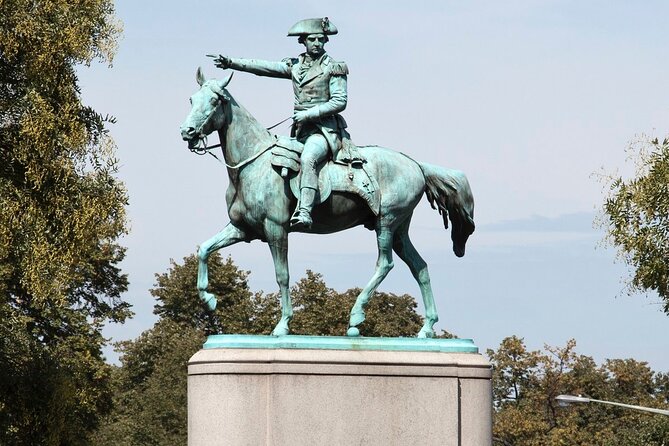
The Supreme Court is another major stop along the route. The app explains the court’s history, how it functions today, and its role on Capitol Hill.
Even without entering, the building provides a strong setting for a discussion of the federal judiciary. After hearing about Thurgood Marshall earlier in the route, you have a useful connection between one of the court’s most influential justices and the institution itself.
The tour then brings you to the United States Capitol, where you can see the architecture and hear about the building’s history and famous speeches. This is likely to be one of the busiest parts of the route in terms of sights, so the app’s commentary can help you focus on more than the standard photograph.
The Capitol is a place where the route’s themes meet: law, representation, national memory, and public speech. Since the tour does not specify a separate admission to the Capitol, treat this as an exterior viewing stop unless your booking details say otherwise.
Library of Congress, the planned finish
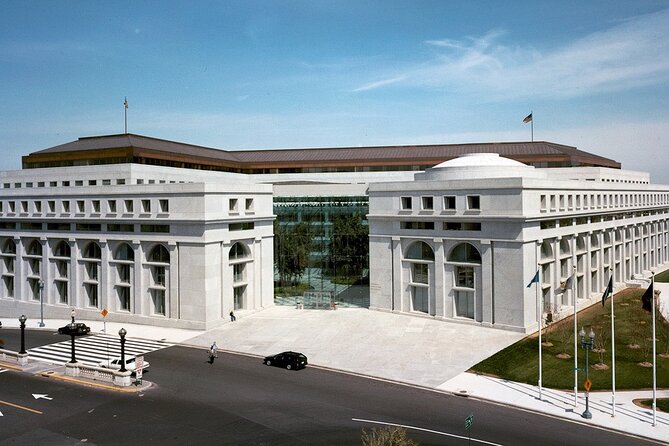
The tour ends inside the Library of Congress at 101 Independence Avenue SE. This is the final and longest listed stop, with about 45 minutes and admission included in the experience price.
The Library of Congress is described as the world’s largest library. The app covers its history and points to some of the treasures held inside. Forty-five minutes gives you a reasonable first look, though it will not allow you to cover a collection of this size in any serious depth.
The most important practical point is the reservation. Admission to the Library of Congress is free, but you still need to schedule a time before arriving. One person who used the tour was not told about this requirement until reaching the library and could not enter without a reserved slot.
Book that time before the day of your tour. Match it to the route’s advertised two to four hour window, and leave a cushion for wrong turns, app delays, and time spent at Union Station. The tour’s stated operating period lists daily hours from 6:00 AM to 11:00 PM, but those broad hours do not remove the need for a timed library reservation.
What $5 really buys you
At $5 per group of up to 15 people, this is unusually inexpensive. A full group could divide the cost into only a few cents per person. Even a couple can use it as a low-cost way to organize a half-day walk through important Washington neighborhoods.
The value is strongest if you want a route and a set of talking points. You get access to a private format, an English-language guide through the app, and a path that joins major institutions with less expected places. The price is less compelling if you expect a polished live guide, guaranteed app support, or a special admission benefit at the Library of Congress.
The library is free on its own, so the included admission should not be treated as a major financial saving. The real purchase is the organization of the route and the historical commentary.
You should also remember that the low cost may reflect the self-guided format. A live guide can adjust explanations, answer questions, and keep the group moving. An app cannot always do that, especially if your connection drops.
App problems and how to avoid a bad start
The main warning is technical. One participant could not get the guide to continue beyond a short introduction, then had trouble reconnecting to the virtual guide and later could not get the manual option to work. The app also repeatedly asked for access to a music library, which was unwanted and distracting.
That does not prove every booking will have the same problem, but it gives you a clear checklist:
- Confirm the app is installed and working before leaving Union Station.
- Charge your phone fully.
- Make sure your group knows the route does not rely on a person physically leading you.
- Allow extra time in case you need to restart the tour or move to a manual option.
- Do not assume the Library of Congress entry is automatic.
The tour is offered in English only. Most people can participate, and the route is near public transportation. The information does not specify accessibility details, exact walking distance, or restroom locations, so you should ask the provider if those points matter for your group.
Who should book this Washington DC route?
I would consider this a good fit for a small private group that wants a cheap introduction to Capitol Hill and prefers to move independently. Families, friends, and visitors with a few hours between other plans may like the freedom of a private booking for up to 15 people.
It also suits people who want more than the standard Washington highlights. Florida House, Belmont Paul, Folger Shakespeare Library, and the Obama neighborhood material give the route a broader reach than a simple Capitol photo walk.
I would be more cautious if you are not comfortable using a smartphone app or if you need a guide who can answer questions in real time. The low price does not compensate for a failed connection if you are counting on the commentary.
The rating is 3.7 from three reviews, so the sample is small. The useful lesson is not to treat the price as a guarantee of a smooth experience. Prepare the technology and reserve the Library of Congress before you go.
Should you book it?
Book this tour if you want a low-cost private route that connects Union Station, Capitol Hill, Frederick Douglass, women’s suffrage history, the Supreme Court, and the Library of Congress.
Skip it if you want a live human guide, a tightly managed schedule, or a tour that handles every admission detail for you. The best approach is to view it as a budget app-guided walk with strong locations and uneven technical risk. Reserve the library first, test the app, and keep your expectations in line with the $5 price.
FAQ
How much does the tour cost?
The price is $5 per group, with up to 15 people included.
How long does the tour take?
The approximate duration is two to four hours.
Where does the tour begin?
It begins at Union Station, 50 Massachusetts Avenue NE, Washington, DC 20002.
Where does the tour end?
It ends inside the Library of Congress at 101 Independence Avenue SE, Washington, DC 20540.
What language is offered?
The experience is offered in English.
Is the Library of Congress admission free?
Yes. Admission is listed as free, although a reservation is required before entry. The tour includes admission, but you still need to schedule a time.
Can I cancel the booking?
Yes. You can receive a full refund if you cancel at least 24 hours before the experience start time. Cancellations or changes made within 24 hours are not accepted for a refund.
Just added in Washington DC
- Washington DC: Highlights Guided Walking Tour★ 4.6 · 6 reviews
- Washington DC: Private Custom Tour with a Local Guide★ 4.9 · 4 reviews
- Washington, DC: Thanksgiving Day Lunch Cruise★ 4.7 · 3 reviews
- Thomas Jefferson Monticello Small Group Day Tour from DC★ 4.8 · 16 reviews
- Washington: Mt. Vernon, Alexandria & Arlington Cemetery Tour★ 3.4 · 8 reviews
- Washington D.C.: The Ghosts of Washington D.C. Walking Tour★ 4.6 · 14 reviews
- Washington, DC: The Good Liar: Brian Curry★ 5.0 · 3 reviews
- From NYC: Washington DC 1 Day Tour and Free Time for Museums★ 4.4 · 5 reviews
Self-Guided Tours, compared.

Best of DC: Hop-on Hop-off, Night Tour, and Arlington Audio Guide
Read our review →
Washington DC Monuments Self-Guided Walking Audio Tour
Read our review →
Washington DC Monuments self-guided walking tour & scavenger hunt
Read our review →
National Mall Expedition: Personalized Self-Guided App Tour
Read our review →
Washington DC Museums self-guided walking tour & scavenger hunt
Read our review →Browse the lists this tour appears in