
Reviewed · WASHINGTON DC
Sushi Masterclass in Washington D.C. (Includes 4-Course Meal)
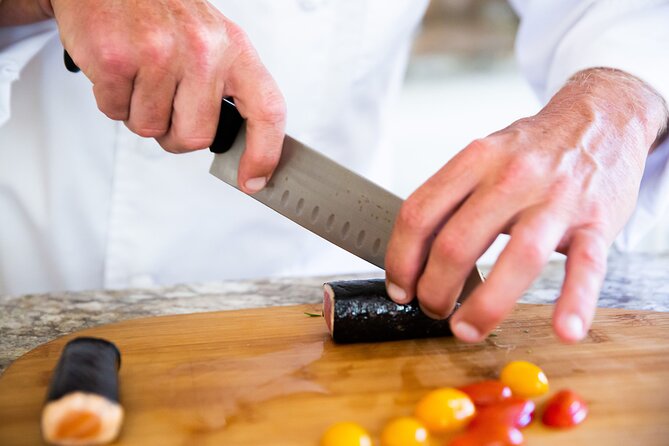
The best part of this three-hour class is that you do not simply watch a chef assemble sushi. You prepare seasoned rice, practice knife work, and build several kinds of rolls before sitting down to enjoy a four-course meal. Chef Made Master leads the session, and the small format gives you a fair chance to ask questions and fix a roll before it reaches the plate.
I like the maximum six-person group and the wide menu, which moves from tuna sesame salad to maki, special rolls, and hand rolls. I also like that wine and beer are welcome, making this a relaxed choice for a date or a small celebration. The main consideration is location: it is marketed as Washington DC, but the meeting point is in Centreville, Virginia, at 14327 Watery Mountain Ct.
Key points at a glance
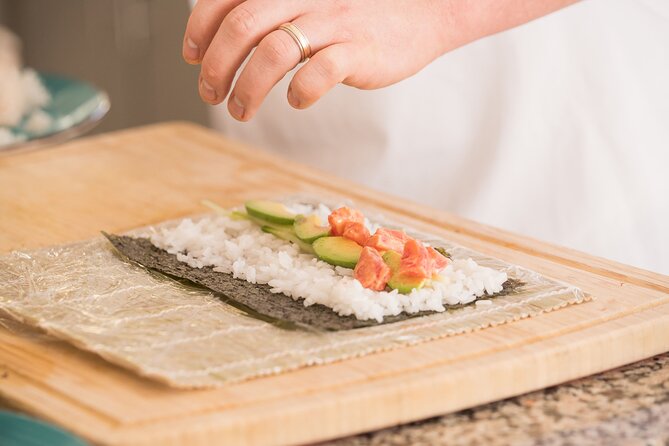
- Chef Made Master teaches practical skills: You work on rice, knife technique, maki rolls, special rolls, and hand rolls.
- Six people is the stated maximum: The intimate group should allow more direct help than a large cooking class.
- Four courses mean plenty of food: The menu includes tuna salad, assorted maki, special rolls, and three hand rolls.
- BYOB keeps the evening flexible: You may bring wine or beer to enjoy during class.
- The meeting point is in Centreville: Check the address carefully if you are staying in central Washington DC.
- Book dietary requests in advance: The class is designed to handle a range of dietary needs when notified ahead of time.
What the three-hour sushi class actually gives you
This experience is built around doing, not just eating. You spend about three hours with a local sushi chef and a small group, learning several parts of the craft in one sitting. That matters because sushi looks simple on the plate, yet the rice, cutting, filling, and rolling all need care.
The format also gives you a useful progression. You begin with an easier preparation, move into familiar maki rolls, then tackle more decorated rolls and cone-shaped hand rolls. By the end, you have handled a range of techniques rather than repeating one basic California roll.
The class is offered in English, with a mobile ticket and confirmation at booking. The stated capacity is a maximum of six people, although the general description also refers to a limit of eight. I would treat six as the practical group size and confirm the final number when booking.
Other Washington DC tours people book alongside this one:
- DC Memorials Night Tour: Glass-Roof Convertible Upgrade Option
★ 4.5 · 6,933 reviews - National Mall Monuments Night Tour with 10+ Stops, Entry Tickets
★ 4.5 · 4,863 reviews - Washington DC Monuments by Moonlight Tour by Trolley
★ 4.5 · 3,956 reviews
Starting with tuna sesame salad
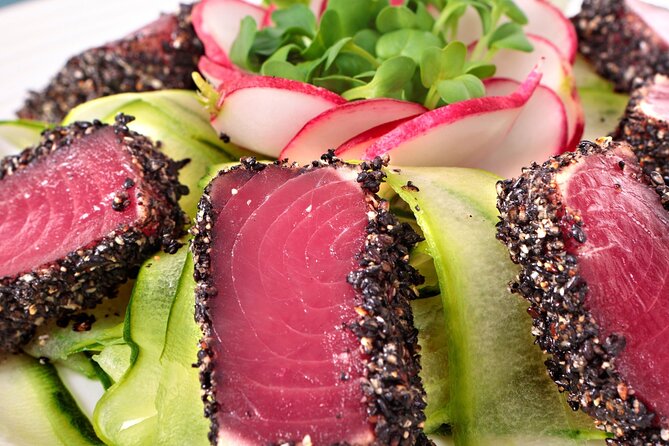
The first course is tuna sesame salad, made with fresh tuna, sesame, and a light dressing. It is a sensible opening dish because it lets you focus on the ingredients before rice and rolling become the main concern.
This course should appeal to you if you like clean flavors. The light dressing keeps the tuna at the center, while sesame adds a nutty note and a little texture. It is also a useful chance to see how the chef handles an ingredient that appears again in several later rolls.
I like this opening because it prevents the class from becoming a long lesson in sushi assembly alone. You get a proper first course, and the menu starts with something that feels fresh rather than heavy.
Building the maki roll course
The second course turns to assorted maki rolls. The listed choices include a spicy tuna roll and an avocado cream cheese roll, giving you two very different combinations to work with.
The spicy tuna roll brings fresh tuna together with spicy aioli. The heat adds a clear contrast to the mild rice and seaweed, while the tuna keeps the filling familiar. If you prefer more heat, this is one of the menu items to pay attention to.
The avocado cream cheese roll takes the opposite path. Avocado gives it softness and richness, and cream cheese makes the filling smooth and filling. It is a good reminder that sushi menus can include both traditional ingredients and modern combinations.
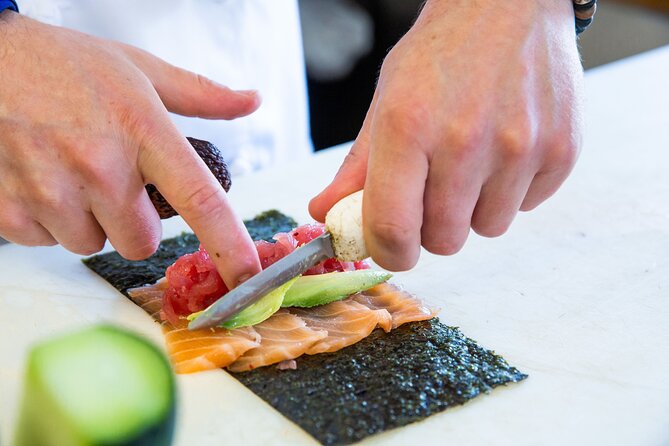
This part of the class is where the practical instruction matters most. You learn how to distribute the filling, keep the roll together, and cut it into pieces. The chef also teaches seasoned sushi rice, a basic skill that affects every roll you make. Poorly seasoned or badly handled rice can overwhelm a roll, so learning this early gives the rest of the class a stronger base.
Taking on the special rolls
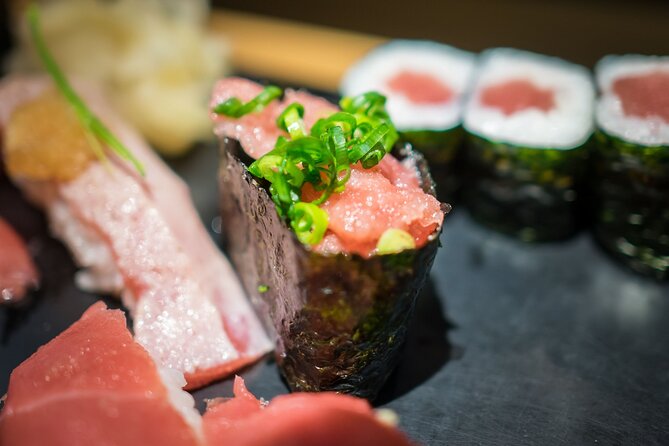
The third course includes a caterpillar roll, a spicy double tuna roll, and a spicy California roll. These are more decorative or layered than the first maki, so they give you a chance to try techniques that require a little more control.
The caterpillar roll is the visual centerpiece. It is layered with avocado slices on top, creating the look that gives the roll its name. You may find this the trickiest roll to shape and finish, but that is also what makes it useful. It tests neat cutting, careful placement, and patience.
The spicy double tuna roll is aimed at serious tuna fans. It combines fresh and spicy tuna in one roll, bringing together the clean flavor of tuna with the heat of the spicy filling. The spicy California roll offers a familiar base with an added kick, so the menu does not stay locked into one flavor profile.
I like that the class includes these special rolls instead of limiting you to basic maki. You leave with a better sense of how sushi presentation works. The drawback is that the more elaborate the roll, the less likely your first attempt is to look restaurant-perfect. That is normal, and the small group should make it easier to get help before you try again.
A completely different kind of day in Washington DC:
- Hop-on Hop-off Sightseeing Tour by Open-top Bus with 18 Stops
★ 3.5 · 3,848 reviews - Washington DC in One Day: Guided Sightseeing Tour
★ 4.5 · 3,360 reviews - DC Monuments and Capitol Hill Tour by Electric Cart
★ 5.0 · 2,841 reviews - Washington DC Moonlight Tour by Electric Cart
★ 5.0 · 2,610 reviews
Finishing with three hand rolls
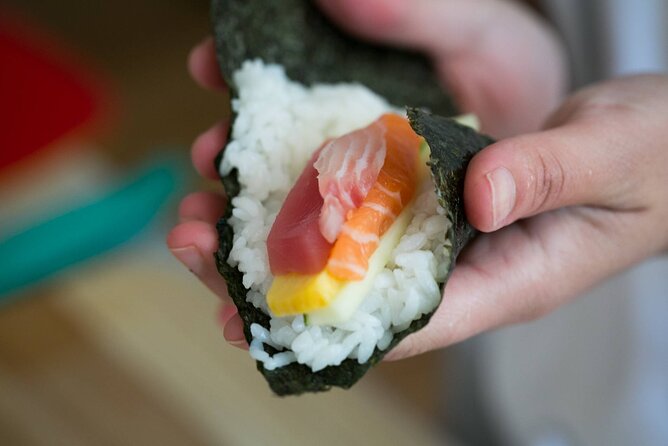
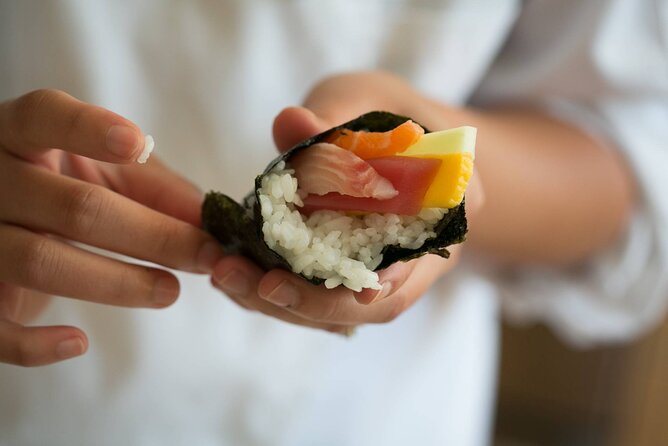
The fourth course covers hand rolls, including tuna, eel, and California versions. Unlike sliced maki, hand rolls are cone-shaped and are meant to be assembled and eaten in a different format.
The tuna hand roll combines fresh tuna with colorful vegetables and seasoned rice. The eel hand roll brings a savory filling with tender eel, while the California hand roll uses avocado and fresh crab. Together, these options give you three distinct fillings and a good comparison of texture and flavor.
Hand rolls are an especially practical skill for home cooks. You do not need to produce a long, perfectly even cylinder and cut it into identical pieces. Instead, you shape a cone, add the filling, and eat it soon after assembly. That makes the final course feel less formal and more hands-on.
The menu calls these items part of the fourth course, but the overall meal contains many separate roll preparations. You should arrive hungry, since the combination of salad, maki, special rolls, and hand rolls adds up to a substantial meal.
Learning rice, knife work, and roll control
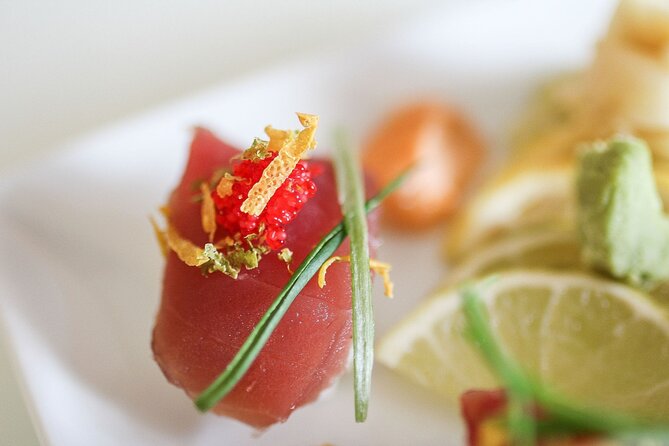
The value of this class is tied to what you learn, not only what you eat. The chef covers seasoned sushi rice and knife techniques, then applies those skills to different roll styles.
Knife work deserves attention. Clean cuts affect both the appearance and the way each piece holds together. You should expect instruction on handling the knife with care and precision, though the available details do not specify the exact knife model or preparation method.
Rice is just as important. It provides the structure for maki and hand rolls, and its seasoning shapes the flavor of the finished dish. A class that teaches rice gives you a more useful foundation than one that hands you pre-made portions without explanation.
Chef Made Master received especially warm praise for energy and lasting skills. That suggests the teaching is meant to be practical and encouraging rather than a demonstration from a distance. You should still remember that the final result depends on your own pace and coordination. Sushi takes some practice, and a class cannot turn every first attempt into a polished restaurant plate.
Why the small group matters
The stated maximum is six people, while the broader activity information mentions up to eight. Either way, this is a small class rather than a crowded public demonstration. I would confirm the group size if personal instruction is a major reason for booking.
A small group can make a real difference during rolling and cutting. If your rice spreads too far, your filling shifts, or your seaweed tears, you have a better chance of receiving direct correction. It also lets you ask about substitutions, seasoning, and technique without waiting through a long line of participants.
The class is a good fit for couples, close friends, and small groups who want to cook together. A past participant and their husband particularly valued leaving with skills they could use at home. That is the right way to think about the experience: not as a restaurant meal with a short demonstration, but as a social cooking lesson that ends with dinner.
The BYOB option and the overall mood
You may bring wine or beer to enjoy during the class. This is not included in the price, and the experience does not provide a beverage package. Still, the BYOB policy gives you control over what you drink and can make the evening feel more personal.
I would keep the alcohol secondary to the cooking. Knife work, rice handling, and rolling all benefit from attention, especially during the first attempts. A modest drink can fit the setting, but the main pleasure here is learning and eating what you make.
The venue is described as cozy and intimate. Since the meeting point is a specific address in Centreville, you should not assume this takes place in central Washington DC. If you are based in the city without a car, check the route and travel time before paying. The location is one of the most important practical points in the booking decision.
Price, value, and who should book
At $125 per person, this is not a budget meal. The price covers roughly three hours, instruction from a local sushi chef, a four-course menu, and a small-group setting. It does not include beer or wine, though you may bring your own.
I think the value is strongest if you care about learning a skill and want a complete meal at the same time. A simple restaurant dinner may cost less, but it will not teach you how to season rice, use a knife for sushi, or shape maki and hand rolls. If you are mainly looking for a quiet meal with no participation, this is probably not the right use of your money.
The menu also helps justify the cost. You are not making one roll and leaving. You work through tuna salad, spicy tuna, avocado cream cheese, spicy California, spicy double tuna, caterpillar, tuna hand roll, eel hand roll, and California hand roll. That is a broad sampling of sushi styles in one sitting.
The experience is also well suited to a birthday, date, or small group outing. The BYOB policy adds flexibility, and the small group supports conversation without turning the class into a large party. Families or groups with dietary restrictions should contact the provider before arrival, since the class can accommodate a variety of dietary needs when given advance notice.
Practical details before you book
The meeting point is 14327 Watery Mountain Ct, Centreville, VA 20120, and the activity ends at the same place. Despite the Washington DC label, this address is outside the city, so location should be your first check.
Confirmation is provided at booking, and you can use a mobile ticket. Service animals are allowed. The activity is offered in English.
Free cancellation is available if you cancel at least 24 hours before the start time. Changes or cancellations inside that window are not accepted for a refund. If the minimum number of participants is not reached and the class is canceled, you receive the choice of another date or experience, or a full refund.
Because the experience is often booked well ahead, with an average booking lead time of 39 days, I would not leave a preferred date until the last minute. The dietary policy also makes early contact sensible if you need changes to the menu.
Should you book this sushi class?
Book it if you want to learn by making several types of sushi, enjoy a small social class, and are comfortable traveling to the Centreville meeting point. The combination of Chef Made Master’s hands-on teaching, a full four-course menu, and a maximum of six people gives the experience real value for an active evening out.
Skip it if you want a central Washington DC activity, dislike handling food, or only want a restaurant meal. The $125 price also makes more sense for someone who values instruction and practice, not just the food.
For the right person, this is a useful introduction to sushi that sends you home with more than a full stomach. You learn rice, knife control, maki, special rolls, and hand rolls, then have a chance to enjoy the results with your own wine or beer.
FAQ
Where does the sushi masterclass meet?
The meeting point is 14327 Watery Mountain Ct, Centreville, VA 20120, USA. The activity ends back at the same location.
How long does the class last?
The experience lasts approximately three hours.
How many people can join the class?
The activity information states a maximum of six travelers. The general description also refers to a limit of eight, so confirm the final group size when booking if this matters to you.
What food will I prepare?
The four-course menu includes tuna sesame salad, assorted maki rolls, special rolls such as caterpillar and spicy double tuna, plus tuna, eel, and California hand rolls.
Can I bring alcohol?
Yes. This is a BYOB event, and you may bring wine or beer to enjoy during the class. Drinks are not included.
Can the class handle dietary needs?
The class is designed to accommodate a variety of dietary needs. You should notify the provider in advance so the menu can be adjusted where possible.
Just added in Washington DC
- Washington DC: Highlights Guided Walking Tour★ 4.6 · 6 reviews
- Washington DC: Private Custom Tour with a Local Guide★ 4.9 · 4 reviews
- Washington, DC: Thanksgiving Day Lunch Cruise★ 4.7 · 3 reviews
- Washington D.C.: The Ghosts of Washington D.C. Walking Tour★ 4.6 · 14 reviews
- Thomas Jefferson Monticello Small Group Day Tour from DC★ 4.8 · 16 reviews
- Washington: Mt. Vernon, Alexandria & Arlington Cemetery Tour★ 3.4 · 8 reviews
- Washington, DC: The Good Liar: Brian Curry★ 5.0 · 3 reviews
- From NYC: Washington DC 1 Day Tour and Free Time for Museums★ 4.4 · 5 reviews