
Reviewed · NATIONAL MALL TOURS
Castle to Capitol: Museums of the National Mall Architecture Tour
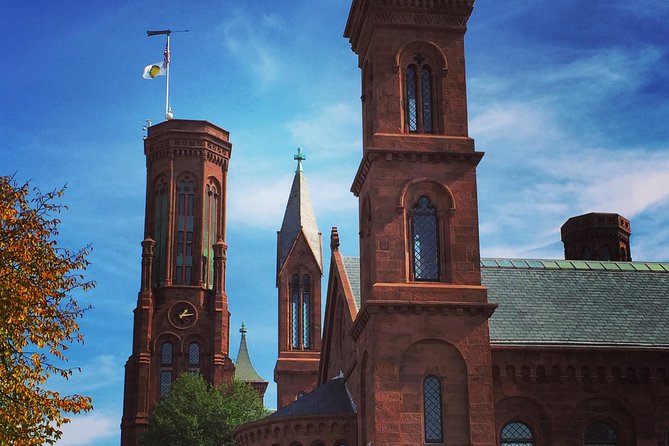
The best part of this Washington DC tour is its fresh way of looking at familiar sights. Instead of rushing through museum galleries, you study the buildings themselves, from the Smithsonian Castle’s red sandstone to the Hirshhorn’s stark concrete ring. The walk links the Castle and the Capitol along the east side of the National Mall.
I like the architecture-first approach, which gives you a new reason to notice buildings you might otherwise pass without a thought. I also like the small-group format, capped at 20 people, and the chance to hear guides such as Carolyn, Sam, or Cathryn explain design choices with historical images and plenty of room for questions.
The main drawback is that most stops are outdoor discussions rather than museum visits. You receive admission to the Smithsonian Castle, but the tour does not give you a full indoor tour of each museum. Bring good walking shoes, and check your start time carefully when booking, since one past scheduling mix-up caused a guest to miss the experience.
Key points about the Castle to Capitol walk
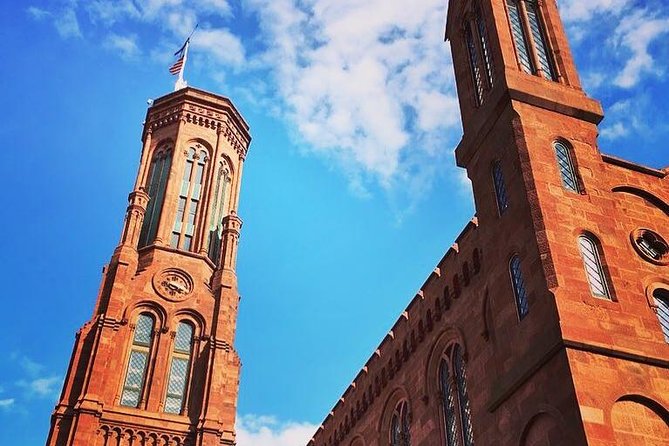
- Smithsonian Castle begins the story: Spend about 30 minutes learning how the Smithsonian shaped the National Mall.
- Architecture gets the spotlight: Compare the Hirshhorn’s modern form with the National Gallery of Art’s Neoclassical and Modern buildings.
- The route covers several major sights: You see the Arts and Industries Building, American Indian Museum, Botanic Garden, Bartholdi Park, and the Capitol.
- The tour ends with a classic view: The walk finishes on the west lawn of the US Capitol, facing the Mall.
- Small groups make questions practical: The maximum group size is 20, with a local guide leading the discussion.
- The price is $48: That is fair if you value context and interpretation, but less attractive if you want substantial museum time indoors.
Why this walk changes how you see the National Mall
The National Mall can feel like a parade of grand facades. You walk past one impressive building after another, take a photo, and move on. This tour slows that process down and asks you to consider why each building looks the way it does.
That shift matters. The Smithsonian museums do not share one single style, and their differences tell part of Washington’s story. Some buildings look formal and traditional. Others are deliberately strange, spare, or sculptural. A guide helps you connect those choices to the institutions inside them and to the changing ideas behind public architecture in the United States.
The route also gives you a useful sense of scale. The Smithsonian Castle is near the center of the Mall, while the Capitol anchors the eastern end. Walking between them lets you see how museums, gardens, government buildings, and open public space fit together.
I would think of this as an introduction to the National Mall rather than a museum tour. It works especially well at the start of a Washington trip, before you spend time inside the Air and Space Museum, National Gallery of Art, or another Smithsonian building.
More Capitol and Library of Congress tours in Washington DC:
- DC Monuments and Capitol Hill Tour by Electric Cart
★ 5.0 · 2,841 reviews - VIP Best of DC with US Capitol + National Archives Reserved Entry
★ 4.5 · 2,491 reviews - Small-Group Guided Tour inside US Capitol & Library of Congress
★ 5.0 · 1,869 reviews
Starting at the Smithsonian Castle and Garden

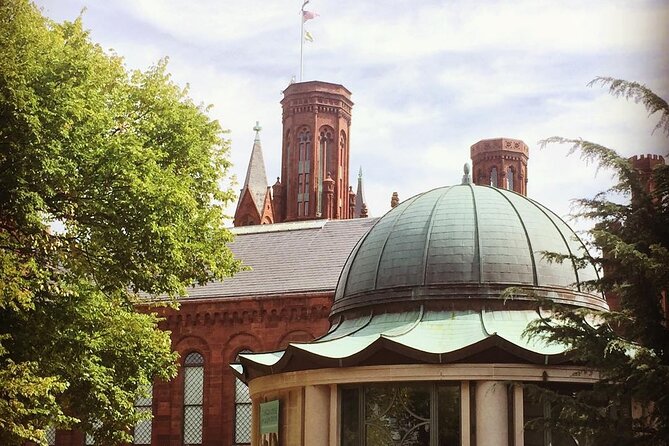
The tour begins outside the Smithsonian Institution Building, usually called the Smithsonian Castle, at 1000 Jefferson Drive SW. This red sandstone building is one of the most recognizable structures on the Mall, but its purpose is easy to misunderstand. It is the headquarters of the Smithsonian, not simply another exhibition hall.
You spend about 30 minutes here, making it the longest formal stop. That is sensible. The Castle gives your guide a place to explain the Smithsonian’s origins and its role in shaping the Mall from 1847 to the present.
Admission to the Castle is included. The tour information also describes the Castle and Garden as the starting point, so you can expect the first part of the experience to focus on the building’s exterior and institutional story. The Castle is a good place to get oriented before the walk heads east.
This is also where the guide’s style matters most. Carolyn has been praised for mixing humor with a large amount of information, while Sam has used historical pictures on his phone to show how buildings and monuments have changed. Cathryn, an architect by training, has been especially well suited to detailed questions about design.
The guide is not just pointing out dates and names. The goal is to help you read the building. Look at the material, shape, scale, and relationship to the garden. Those details give the rest of the walk a clear framework.
The Arts and Industries Building and the Smithsonian’s changing identity
The Arts and Industries Building is only a short stop, about five minutes, but it is an important one. It was the second home of the Smithsonian, and its design shows that the institution has never been limited to one narrow idea of what a museum should be.
Your guide will focus on its unusual design and explain how it fits into the Smithsonian’s larger story. Since the stop is brief, do not expect a detailed interior visit. This is an exterior architecture talk, with the building acting as a quick lesson in the institution’s growth.
I like this stop because it prevents the Smithsonian from feeling like a collection of unrelated museums. You begin to see a developing organization, adding new buildings and new subjects as public interests changed.
The Hirshhorn’s spaceship shape
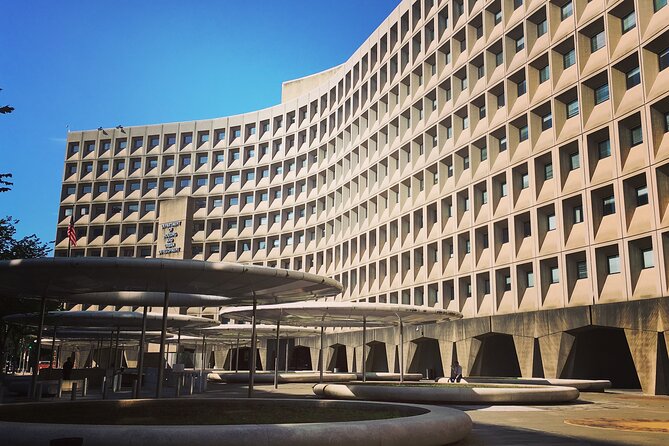
The Hirshhorn Museum and Sculpture Garden brings a sharp change in mood. Its round, concrete form is often compared to a spaceship, and that description gives you an immediate sense of how different it looks from the Castle.
The stop lasts about five minutes. That is enough for a focused explanation of the building’s form, but not enough for an extended study of the museum or sculpture garden. You will want to pay attention quickly, especially to the building’s mass and its unusual relationship to the open Mall.
This contrast is one of the tour’s strongest features. You have just considered an older Smithsonian building built in a more historic style. Now you are looking at a modern structure that makes no effort to blend into it.
If you enjoy architecture, this is the sort of comparison that makes the $48 price easier to justify. You are not only collecting facts about individual buildings. You are learning to compare them.
More National Mall tours in Washington DC:
- National Mall Monuments Night Tour with 10+ Stops, Entry Tickets
★ 4.5 · 4,863 reviews - National Mall Night Tour with 10+ Monuments (Public or Private)
★ 4.5 · 2,207 reviews - Small Group National Mall Night Tour with 10 Top Attractions
★ 5.0 · 1,658 reviews - National Mall Tour with 10+ Stops, Boat Cruise, Entry Tickets
★ 4.5 · 1,212 reviews
National Gallery of Art: two buildings, two design languages
The National Gallery of Art is discussed from a distance, rather than entered. The focus is the contrast between its Neoclassical West Building and Modern East Building.
That pairing gives the tour one of its clearest visual lessons. The West Building presents a formal, traditional image, while the East Building uses a modern design language. Seeing both as part of one national art institution raises useful questions about taste, era, and public expectations.
This stop may disappoint you if you hoped to step inside the National Gallery. It is better suited to people who want an outside reading of the complex before visiting on their own. If you already plan to explore the gallery interiors, the guide’s explanation can give you a helpful starting point.
The American Indian Museum and a more complicated story
The National Museum of the American Indian is one of the most visually distinctive buildings along the route. Its exterior is intended to look shaped by wind and water, with a form that feels organic rather than rigid.
The stop takes about five minutes, but the building carries more than a design story. Its past is described as tumultuous, so the guide connects its appearance with the institution and the difficult history it represents.
That combination is valuable. It keeps the tour from treating architecture as decoration alone. A building’s shape, location, and public meaning can all affect how you understand it.
Again, you should expect an exterior discussion, not time inside the museum. If this museum is high on your list, plan a separate visit. The tour gives you context and a reason to look closely when you return.
The Botanic Garden and Bartholdi Park
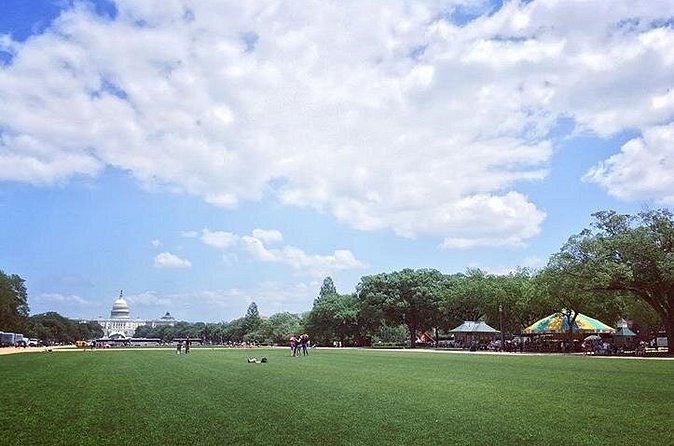
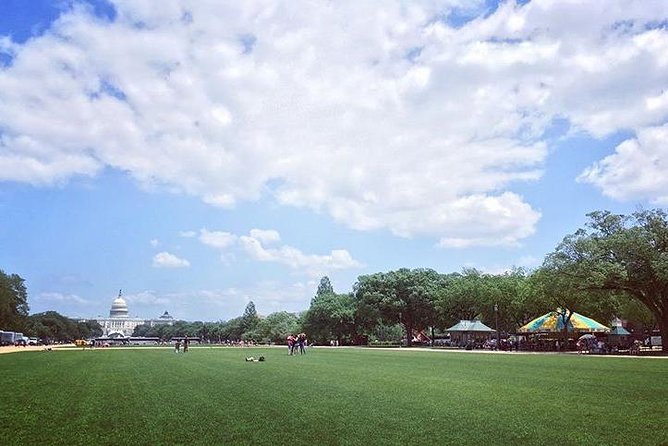
The United States Botanic Garden is a ten-minute stop and one of the more relaxed parts of the walk. It offers a change from monumental museum facades, with plant life and garden space entering the route.
The tour calls attention to the Botanic Garden as an easily missed part of the Mall area. That is practical advice. The main museums often take all your attention, while smaller public spaces can slip past unnoticed.
Nearby Bartholdi Park adds another five-minute stop. The park has a historic fountain, and the guide explains the unexpected person who sculpted it. The supplied information does not identify that sculptor, which means you will need to hear the guide’s explanation on the day.
These stops help break up the architecture talk. You get a little more breathing room, a different scale, and a chance to notice how gardens contribute to Washington’s public spaces. If you need a slower pace, this middle section should feel more comfortable than a museum-hopping schedule.
The Capitol finish and the route’s sense of direction

The walk ends at the foot of Capitol Hill, on the west lawn of the United States Capitol. The final formal stop lasts about ten minutes and gives you broad views back across the Mall.
Ending here makes good geographic sense. You begin at the Smithsonian Castle and finish at the Capitol, so the tour has a clear eastward direction rather than circling back to its starting point.
The Capitol view is also a strong close to an architecture tour. You can look back at the public space you have crossed and see how the museums relate to the seat of Congress. The ending is outdoors, so the quality of the experience depends partly on weather and your comfort standing or walking in the open.
The tour lasts about two hours. The listed stop times add up to roughly 70 minutes, leaving the rest for walking and transitions. That means the pace should be manageable for most people who can take part in an ordinary walking activity, but it is not a fully leisurely stroll with long breaks.
What $48 gets you
At $48 per person, this is not the cheapest way to see the National Mall. Many of the buildings and public spaces on the route can be viewed without paying for a tour, and the tour does not include extended entry to most museums.
The value comes from the guide. You are paying for a planned route, a clear theme, historical context, and the chance to ask questions in a small group. Admission to the Smithsonian Castle is included, though the Castle itself is free to enter, so that inclusion is useful but not the main reason to book.
I think the price works best for three types of visitors:
- You have limited time and want one organized introduction to several major buildings.
- You are interested in architecture, planning, or design rather than only museum collections.
- You prefer a guide who can connect what you see instead of reading facts from a sign.
The value is weaker if your priority is spending most of your day inside museums. In that case, use the route as a map for independent sightseeing and save the $48 for a ticketed activity or another guided experience.
Group size, guide style, and practical planning
The group can include up to 20 people. That is small enough for a personal feel in most cases, though a full group may make it harder to hear or ask long questions at busy outdoor points.
Past guide experiences have varied by person, but the named guides associated with this experience include Carolyn, Sam, and Cathryn. The strongest descriptions focus on preparation, humor, clear explanations, and an ability to answer architecture questions. Sam has brought historical images on his phone, which can be useful when discussing how a building or monument looked in another period.
The experience uses a mobile ticket and starts at the Smithsonian Castle. It finishes at Capitol Hill, so do not plan to return to the Castle immediately afterward unless you arrange transportation or allow time to walk back.
The route is near public transportation, and service animals are allowed. Most people can participate, but remember that this is a walking tour with outdoor stops. Wear comfortable shoes and check the forecast.
Book about a week ahead if your schedule is fixed. The experience is booked an average of eight days in advance, and a minimum number of participants applies. If that minimum is not met, the tour can be canceled after confirmation, with an alternative or full refund offered.
Free cancellation is available up to 24 hours before the start time. Changes or cancellations inside that window are not accepted for a refund. Check the confirmed time carefully, especially if you book through a third-party seller, because a past time error caused a guest to arrive when no guide was present.
Who should book this architecture tour
I would recommend the Castle to Capitol walk to anyone who has looked at Washington’s museums and wondered why they were designed so differently. It is also a good choice for repeat visitors who have already seen the major collections and want a new way to read the Mall.
Families can enjoy it because the route connects real buildings with stories, shapes, and comparisons rather than requiring quiet museum time for two straight hours. The subject is educational, but the guide’s humor and visual examples can keep it from feeling like a lecture.
Architecture students, design-minded visitors, and people with a work interest in buildings may get the most from it. The reviews from people interested in architecture are especially strong, with the easy walk and accessible explanations singled out as major benefits.
I would skip it if you want an interior-heavy museum day, a Capitol tour inside the building, or a fast list of Washington highlights. This is a focused walk, not a general sightseeing tour.
Should you book Castle to Capitol?
Book it if you want to understand how the Smithsonian museums, gardens, National Gallery, and Capitol fit together as public architecture. The route is easy to follow, the subject is more unusual than a standard monument walk, and the small group gives you a fair chance to ask questions.
At $48, the tour earns its cost through interpretation rather than admission. Go for the guide, the comparisons, and the stories behind the facades. If you only want to see the buildings and enter museums at your own pace, save the money and walk the Mall independently.
FAQ
Where does the Castle to Capitol tour begin?
The tour begins outside the Smithsonian Castle and Garden at 1000 Jefferson Drive SW, Washington, DC 20560.
Where does the tour end?
The tour ends on the west lawn of the United States Capitol, with views of the Capitol and the National Mall.
How long does the tour last?
The walking tour lasts approximately two hours.
Is admission to the Smithsonian Castle included?
Yes. Admission to the Smithsonian Castle is included in the experience.
Does the tour enter every museum along the route?
No. The tour focuses on the exterior architecture and stories of the museums and buildings. The National Gallery of Art is discussed from a distance, and the other listed stops are primarily outdoor visits.
How many people can join the tour?
The maximum group size is 20 travelers.
Can I cancel for a refund?
Yes. You can cancel up to 24 hours before the experience starts for a full refund. Cancellations or changes made less than 24 hours before the start time are not accepted for a refund.
More Museum Tours in Washington DC
- Guided African American History Tour with Reserved Museum Entry
★ 4.5 · 1,180 reviews - Smithsonian Museum of Natural History – Exclusive Guided Tour
★ 5.0 · 446 reviews - African American History Tour with Museum of African American History Ticket
★ 4.5 · 390 reviews - National Mall Tour with 10 Stops & U.S. Capitol or Museum Entry
★ 4.5 · 331 reviews
Just added in Washington DC
- Washington DC: Express Morning or Night-Time Monuments Tour★ 3.2 · 3 reviews
- Washington, DC: Georgetown Architecture Walking Tour★ 5.0 · 8 reviews
- Washington D.C.: Georgetown Guided Secret Food Tour★ 3.9 · 7 reviews
- Washington DC: E-Bike Rental★ 4.3 · 7 reviews
- Washington DC: Christmas Eve Gourmet Brunch or Dinner Cruise★ 4.2 · 6 reviews
- Washington DC Day Tour – Private Tour★ 4.1 · 3 reviews
- Washington DC: After Dark Night-Time Sightseeing Tour★ 3.8 · 6 reviews
- Washington DC: Best of Capitol Hill Guided Bike Tour★ 3.2 · 7 reviews
National Mall Tours, compared.

National Mall Monuments Night Tour with 10+ Stops, Entry Tickets
Read our review →
National Mall Night Tour with 10+ Monuments (Public or Private)
Read our review →
Small Group National Mall Night Tour with 10 Top Attractions
Read our review →
National Mall Tour with 10+ Stops, Boat Cruise, Entry Tickets
Read our review →
National Mall Tour with 10 Stops & U.S. Capitol or Museum Entry
Read our review →

White House, National Mall and Lincoln Memorial Tour
Read our review →
Celebrate 250th: Washington Monument Ticket & National Mall Tour
Read our review →Browse the lists this tour appears in