
Reviewed · GEORGETOWN WALKING TOURS
Historic Georgetown Architectural Walking Tour
Georgetown is where Washington feels oldest and most lived-in. On this two-hour walk, you move from the C&O Canal and the city’s oldest building to grand homes, old schools, Georgetown University, and the Potomac River. The stories connect famous residents, ambitious merchants, students, inventors, and a few colorful local scandals.
I like the small-group format, capped at 20 people, because a good guide can answer questions instead of delivering a speech to a crowd. I also like the route’s variety: you get architecture, local history, university life, and a waterfront finish rather than two hours of looking at similar row houses.
The main consideration is the title. This is partly an architectural tour, but it is even more a neighborhood history walk. You cover about 2 miles on foot, with cobblestones, slopes, and steps, so wear good shoes and expect a moderate level of exertion.
Key points at a glance
- The C&O Canal sets the scene: Learn how Georgetown connected Potomac communities with markets and goods.
- Old Stone House adds a rare interior stop: You get a look inside the oldest building in Washington, DC.
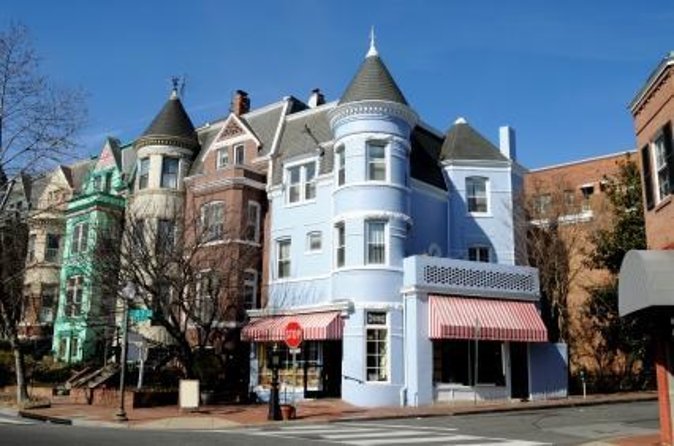
- The route mixes famous and lesser-known places: See Kennedy connections, Pomander Walk, Yellow Tavern, Volta Laboratory, and quiet residential streets.
- Georgetown University brings a lively change of pace: Healy Hall, the library, The Tombs, and the Exorcist Steps add campus history and pop-culture appeal.
- The guide makes the difference: Brian, Kim, Sam, Caroline, Christine, and Ellery have led this walk, with praise focused on clear stories, humor, and friendly answers.
- The finish is easy to enjoy: The walk ends at Georgetown Waterfront Park, close to food, views, and the Potomac.
Starting at Baked & Wired and the C&O Canal
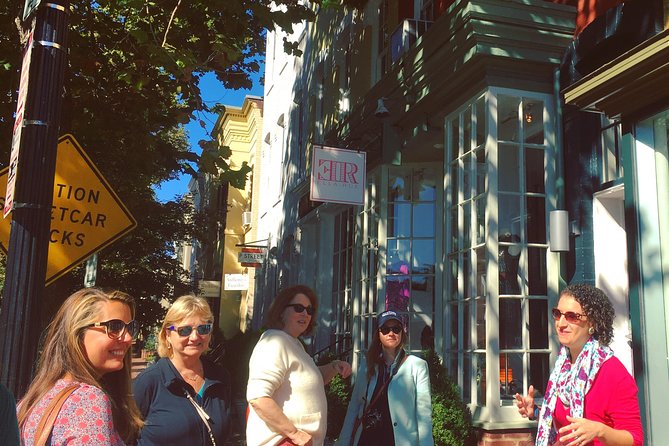
The meeting point is outside Baked & Wired at 1052 Thomas Jefferson Street NW, a useful Georgetown landmark and a popular place for coffee or something sweet. The 10am start gives you a calm beginning before the day’s sightseeing gets going. You can grab a snack before meeting the guide, but the food stop is not part of the tour itself.
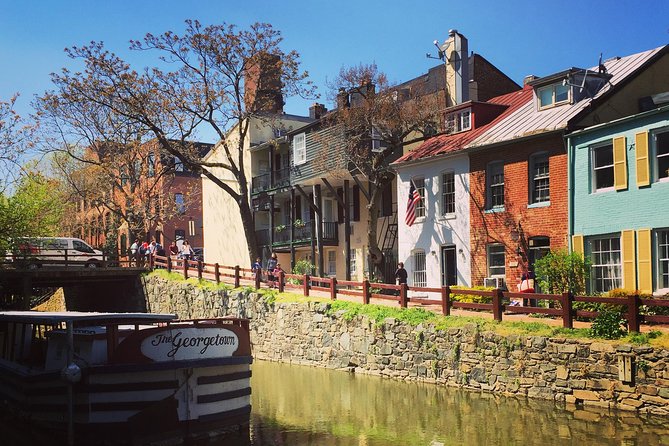
From there, the guide brings the group to the C&O Canal. This waterway is more than a photogenic strip of old stone and still water. It explains why Georgetown mattered. The canal connected communities along the Potomac with markets and supplies, helping turn the waterfront into a working commercial center.
I like beginning here because it gives the rest of the walk a clear purpose. Instead of viewing Georgetown as a collection of handsome homes, you see how trade, transport, money, and social status shaped the neighborhood. The narration also helps you get your bearings before the route turns into quieter streets.
The pace is described as leisurely, but two miles in two hours still means you will be on your feet most of the time. The route includes cobblestone streets and later reaches the Exorcist Steps, so comfortable footwear matters more than dressing up for Georgetown’s polished storefronts.
More Walking Tours in Georgetown
- Ghosts of Georgetown & The Exorcist Steps Walking Tour
★ 5.0 · 610 reviews - Georgetown Foodie Culinary Tour & Neighborhood Walk
★ 5.0 · 437 reviews - Gastronomic Georgetown Walking Food Tour
★ 4.5 · 373 reviews
Old Stone House and Georgetown’s early character
The first listed stop is Old Stone House, where you get a look inside the oldest building in Washington, DC. The stop is brief, about five minutes, but it gives the tour a physical link to Georgetown’s earliest period.
The value here is scale. Large mansions can make the past feel distant, while an older, more modest building helps you picture the working neighborhood that existed before Georgetown became known for boutiques, restaurants, and expensive homes. The building also helps balance the grander architecture later in the walk.
After Old Stone House, the group leaves the main shopping streets. This is one of the route’s better choices. You move into residential Georgetown, where the stories attach to individual houses rather than only to broad national events.
The Laird-Dunlop House and Newton D. Baker House are among the homes discussed. You also hear about the Lydia English Seminary School for Girls, a boarding school that served upper-class families. These places show how education, politics, and social connections shaped who lived in Georgetown and who had access to its institutions.
The Grafton Tyler Double House adds another architectural detail. A double house may sound less dramatic than a mansion, but it helps you read the street more closely. Your guide can point out how buildings were arranged and how neighbors of different status occupied the same part of town.
Mansions, churches, and the stories behind the facades
The route continues through streets lined with imposing homes and stately churches. The homes connected with figures such as Jackie Kennedy and Ben Bradlee give the walk a modern Washington angle, while older houses take you back to Georgetown’s merchant and political past.
You also pass Christ Episcopal Church and the Hyde-Addison School. These are useful reminders that Georgetown was not only a district of private homes. Churches, schools, and civic buildings helped hold the neighborhood together and gave it an everyday rhythm.
A particularly entertaining part of the walk involves the Yellow Tavern, also called the White Horse Tavern. The name itself hints at Georgetown’s layered past, and the guide uses the site to explain a former drinking establishment with a more salacious reputation.
This is where a good guide can turn a building into a story. Sam, one of the guides who has led the route, has been praised for telling amusing stories about famous houses and their residents. One memorable subject is a feud between two tobacco merchants. That sort of local dispute can make the streets easier to remember than a list of dates.
The tour’s strongest theme is local color backed by historical context. You are not only told who lived somewhere. You learn why the place mattered, what sort of people passed through it, and how Georgetown’s public image changed over time.
Pomander Walk and Volta Laboratory
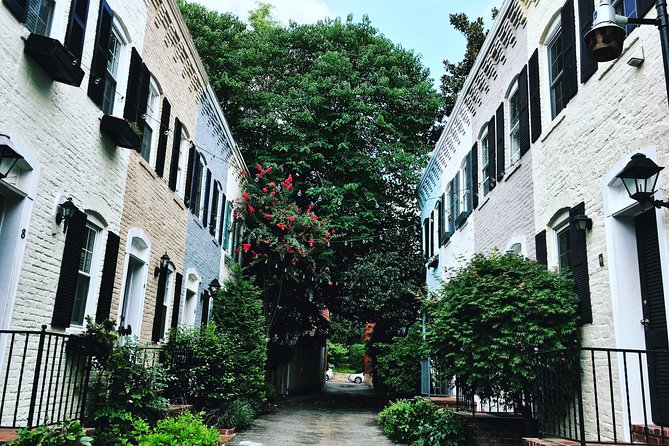
Pomander Walk brings a sudden change in scale. The route passes tiny, pastel-colored row houses that feel tucked away from Georgetown’s larger residences. It is one of the more distinctive visual moments because the architecture is intimate and playful rather than formal.
You should not expect a long stop at every location. The walk covers many sights, and some are discussed from the street as the group continues. That makes the tour good for orientation and storytelling, but less suited to anyone seeking extended architectural analysis of each building.
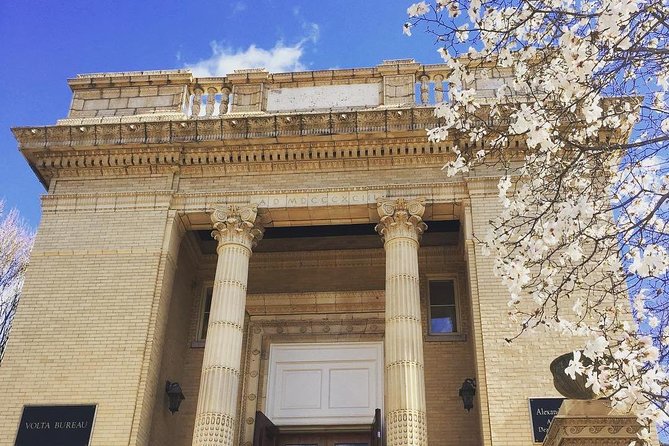
The route then points out where Alexander Graham Bell founded Volta Laboratory. The laboratory connects Georgetown to the history of invention and scientific work, adding another layer to the neighborhood’s identity.
This variety is one of the main reasons I find the route useful early in a Washington visit. Georgetown is often treated as a shopping district or a pretty place for lunch. Here you see it as a port, residential quarter, educational center, political neighborhood, and site of technical innovation.
More Georgetown tours in Washington DC:
- Historic Georgetown: History, Gossip, & Architecture Walking Tour
★ 5.0 · 321 reviews - Tastes of Georgetown Food & History Small Group Walking Tour
★ 4.5 · 203 reviews - The Escape Game DC: 60-Minute Adventure in Georgetown
★ 5.0 · 135 reviews - Acquired Taste Food Tour in Georgetown
★ 5.0 · 105 reviews
Georgetown University, Healy Hall, and The Tombs
The walk continues toward Georgetown University, where the mood shifts from private residential streets to an academic setting. Georgetown Preparatory School, Healy Hall, and the university library are among the destinations discussed.
Healy Hall is the visual centerpiece for many people. Even if your main interest is not campus architecture, the building helps explain the scale and importance of the university within the neighborhood. The route also gives you context for how academic life fits into Georgetown rather than treating the university as a separate attraction.
The university section works especially well for families with older children and teenagers. One recent family outing included middle-school-aged participants, and the route’s combination of history, famous people, invention, campus life, and the Exorcist connection gives younger visitors several ways into the story.
The Tombs adds a look at Georgetown nightlife. It is a student gathering place with a name that sounds far more mysterious than a standard campus restaurant. The stop helps you see the university as a living community, not just a set of historic facades.
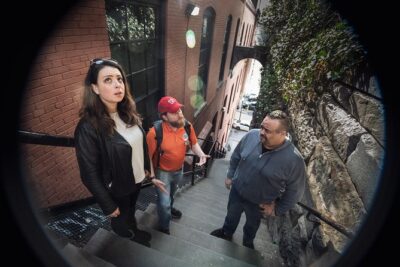
The famous Exorcist Steps come later in this section. They are a pop-culture stop, but the stairs also bring a physical challenge to the route. You should be ready for a real climb or descent, depending on how the guide approaches it. The steps are not the entire tour, but they are one reason to avoid flimsy shoes.
The Car Barn, Cady’s Alley, and the waterfront finish
The Georgetown Car Barn is a renovated streetcar depot and another reminder that the neighborhood once depended on different forms of urban transport. It gives the route a useful connection between Georgetown’s commercial past and its modern university setting.
From there, the route reaches the Francis Scott Key Memorial, Cady’s Alley, and Georgetown Waterfront Park. These final stops widen the view again. Instead of looking only at houses and campus buildings, you get open space beside the Potomac.
The Francis Scott Key Memorial adds a patriotic and literary note, while Cady’s Alley brings you back to Georgetown’s narrower lanes and commercial character. The waterfront is the natural place to end a walking tour because you can pause, take in the river, and decide what to do next without needing to retrace the route.
The endpoint is Georgetown Waterfront Park at 3303 Water Street NW. It is close to places to eat and continue exploring, although the tour itself does not include a meal or a return transfer. If you plan to visit another part of Washington afterward, allow time to arrange your next trip from Georgetown.
What the guides add to the walk
The experience depends heavily on who leads it. Brian has been praised for tying Georgetown’s story to Washington’s broader development while keeping the two hours focused. Kim is described as friendly and clear, while Sam is known for an engaging style and amusing stories.
Caroline received praise for adding local color and explaining historical details. Christine has been noted for patience, useful answers, and practical recommendations for what to do afterward. Ellery brings an especially personable approach, with a presentation style that mixes facts, humor, and conversation.
You cannot choose a specific guide from the information provided, so it is best to think of those names as examples of the tour’s approach rather than a promise about your departure. The common thread is a guide-led experience, not an audio walk or a rigid lecture.
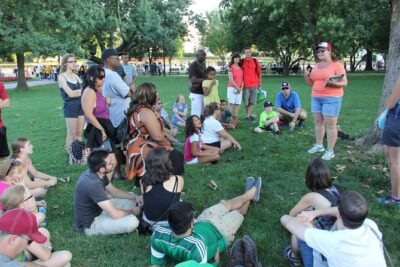
A small group helps here. With a maximum of 20 people, you have a better chance of hearing the narration on residential streets and asking about a particular house. It is still possible for the group to feel full, especially around narrow sidewalks, but the size is much more personal than a large sightseeing bus tour.
Is the $48 price fair?
At $48 per person, this is not a bargain-priced stroll, but the value depends on how you use it. You are paying for a local guide, a planned route, and two hours of connected stories across a large part of Georgetown. There are no major admission fees built into the experience, so the price is mainly for the guide’s time and interpretation.
I think the cost makes sense if you want a strong first orientation to Georgetown. In two hours, you cover the canal, Old Stone House, residential streets, schools, churches, university landmarks, the Car Barn, and the waterfront. Doing that on your own would be free, but you would need to research the buildings and decide on an efficient route.
The price is harder to justify if you prefer to explore at your own speed or spend ten minutes photographing each facade. This walk keeps moving because it has many points to cover. You get breadth, context, and stories rather than long pauses at a small number of buildings.
The 97 percent recommendation rate and 4.9 rating from 77 reviews suggest a strong level of satisfaction, but I would still match the tour to your interests. If you want architecture alone, you may find the history and personalities take up more space than expected. If you want to understand why Georgetown feels different from central Washington, the mix works well.
Practical details before you book
The tour begins at 10am outside Baked & Wired and ends at Georgetown Waterfront Park. A mobile ticket is provided, and the experience is offered in English.
Plan on about 2 miles of walking over roughly two hours. The route includes cobblestones, residential streets, campus areas, and the Exorcist Steps, so a moderate level of fitness is needed. Service animals are allowed, and the meeting point is near public transportation.
The maximum group size is 20 people. The tour is often booked about 12 days ahead, so booking earlier is sensible if your Washington schedule is fixed.
Free cancellation is available until 24 hours before the start time for a full refund. Cancellations or changes made less than 24 hours before the tour do not qualify for a refund, and the activity requires a minimum number of participants. If that minimum is not met, you are offered another date or experience, or a full refund.
Who should book this Georgetown walk?
I would choose this tour for a first visit to Georgetown, a family with older children, a solo visitor who wants local context, or anyone who likes history delivered through streets and buildings. It also suits visitors who have already seen the National Mall and want a quieter part of Washington with a strong sense of place.
The route is especially good for you if names such as Alexander Graham Bell, Jackie Kennedy, Ben Bradlee, Georgetown University, and the Exorcist Steps all sound interesting for different reasons. You get enough variety that the walk rarely depends on one subject holding your attention.
I would choose another format if you need step-free sightseeing, dislike steady walking, or want a detailed technical study of architectural styles. The tour is not a museum visit with long indoor stops. It is an outdoor route with short pauses, street-level views, and a guide who connects the pieces.
Should you book the Historic Georgetown Architectural Walking Tour?
Book it if you want Georgetown explained rather than simply photographed. The route gives you the C&O Canal, Old Stone House, handsome residences, local scandals, Pomander Walk, Volta Laboratory, Georgetown University, the Exorcist Steps, and the Potomac waterfront in one well-shaped morning.
Skip it if you would rather wander without a schedule or focus narrowly on interiors and formal design. For most visitors who want an accessible introduction to Georgetown’s people, buildings, and past, $48 is a reasonable price for a personable small-group walk.
FAQ
Where does the Historic Georgetown Architectural Walking Tour begin?
The tour begins outside Baked & Wired at 1052 Thomas Jefferson Street NW in Georgetown, Washington, DC.
What time does the tour start?
The scheduled start time is 10am.
How long is the walking tour?
The tour lasts approximately two hours and covers about 2 miles, or 3.2 kilometers.
Where does the tour end?
The route ends at Georgetown Waterfront Park, at 3303 Water Street NW.
What sights are covered?
The route discusses the C&O Canal, Old Stone House, Laird-Dunlop House, Newton D. Baker House, Lydia English Seminary School for Girls, Grafton Tyler Double House, Christ Episcopal Church, Hyde-Addison School, Yellow Tavern, Pomander Walk, Volta Laboratory, Georgetown Preparatory School, Healy Hall, the university library, The Tombs, the Car Barn, the Francis Scott Key Memorial, Cady’s Alley, and the Georgetown Waterfront.
Is the tour suitable for all fitness levels?
Participants should have a moderate level of physical fitness. The route involves about 2 miles of walking and includes cobblestone streets and the Exorcist Steps. Service animals are allowed.
More Walking Tours in Washington DC
- Arlington National Cemetery Walking Tour & Changing of the Guards
★ 5.0 · 2,566 reviews - Ghosts of D.C. – Walking Tour
★ 4.5 · 344 reviews - Smithsonian Museums Walking Tour with Reserved Air & Space Entry
★ 5.0 · 297 reviews - DC’s Original Food and History Walking Tour
★ 5.0 · 255 reviews
More History Tours in Washington DC
- Guided African American History Tour with Reserved Museum Entry
★ 4.5 · 1,180 reviews - DC Monuments & History Guided E-Cart Tour-Blankets
★ 4.5 · 450 reviews - Smithsonian Museum of Natural History – Exclusive Guided Tour
★ 5.0 · 446 reviews - African American History Tour with Museum of African American History Ticket
★ 4.5 · 390 reviews
Just added in Washington DC
- Washington DC: Express Morning or Night-Time Monuments Tour★ 3.2 · 3 reviews
- Washington, DC: Georgetown Architecture Walking Tour★ 5.0 · 8 reviews
- Washington D.C.: Georgetown Guided Secret Food Tour★ 3.9 · 7 reviews
- Washington DC: E-Bike Rental★ 4.3 · 7 reviews
- Washington DC: Christmas Eve Gourmet Brunch or Dinner Cruise★ 4.2 · 6 reviews
- Washington DC Day Tour – Private Tour★ 4.1 · 3 reviews
- Washington DC: After Dark Night-Time Sightseeing Tour★ 3.8 · 6 reviews
- Washington DC: Best of Capitol Hill Guided Bike Tour★ 3.2 · 7 reviews
Georgetown Walking Tours, compared.
Ghosts of Georgetown & The Exorcist Steps Walking Tour
Read our review →
Georgetown Foodie Culinary Tour & Neighborhood Walk
Read our review →
Historic Georgetown: History, Gossip, & Architecture Walking Tour
Read our review →
Tastes of Georgetown Food & History Small Group Walking Tour
Read our review →
The Escape Game DC: 60-Minute Adventure in Georgetown
Read our review →

Browse the lists this tour appears in